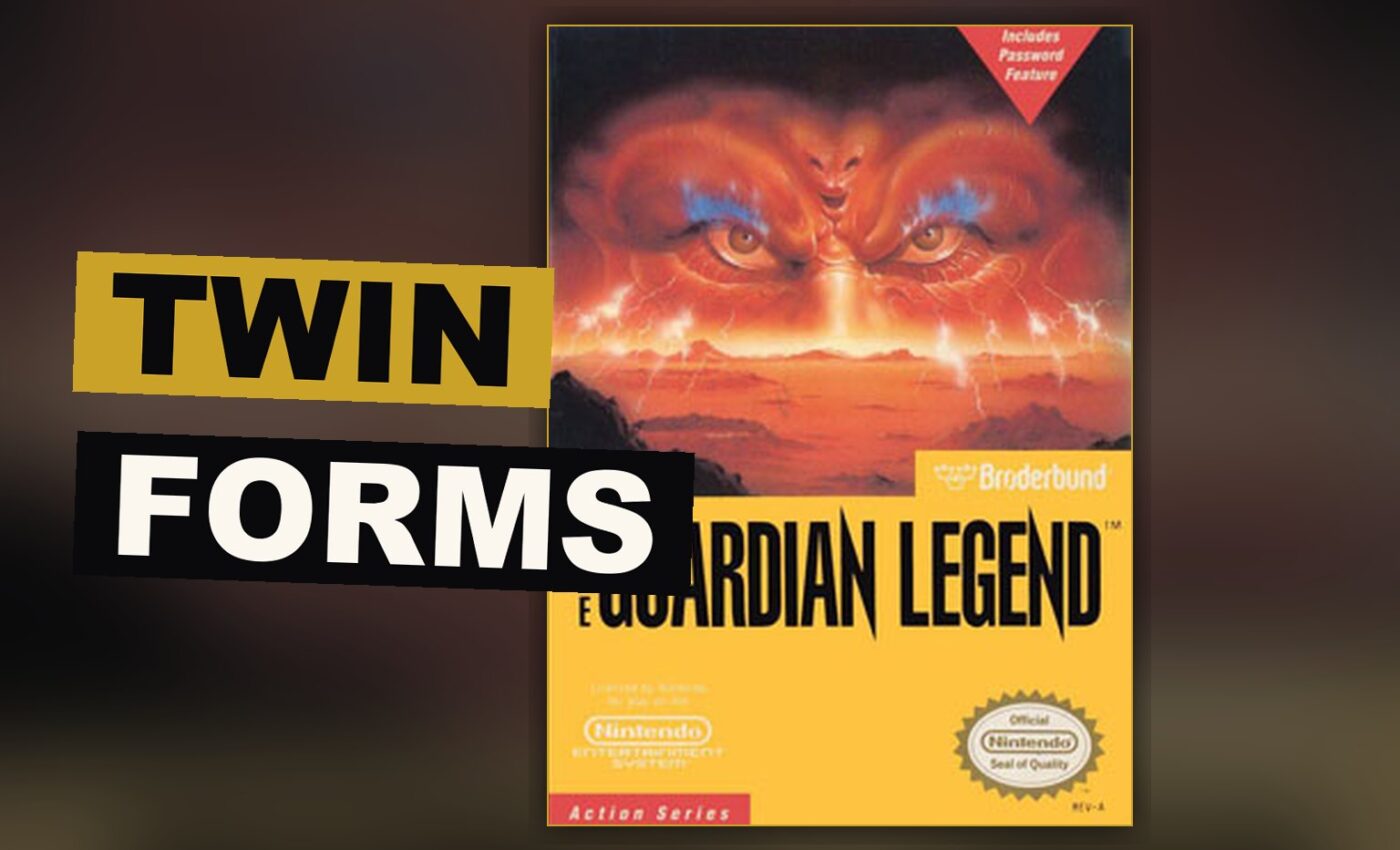
Guardian Legend asks players to master two different kinds of play at once. One part is a game of searching a wide world seen from above. The other is a straight shooting game, fast and hard, allowing no mistakes. Moving between the two is the whole point of the game.
A Ship That Changes Form
The player controls a ship that can change into a form with arms and legs. In ship form, the action moves into narrow, tight stages built for shooting. In the walking form, the game opens into a wide world full of enemies, locked doors and secret rooms.
That change of form is the game’s biggest strength. Few NES titles ask players to move between two kinds of play in this way, and Guardian Legend does it without feeling like two unfinished games joined together by force.
Searching And Fighting
The parts spent searching the wide world reward care. Players have to find keys, find secret rooms, and work out where to go next with little help from the game. The shooting stages, by contrast, are fast and hard, with tight enemy moves and bosses that punish careless play.
Here is how the two kinds of play compare:
| Kind of Play | Style | Pace | Main Test |
|---|---|---|---|
| Walking form (open world) | Search and puzzle | Patient, careful | Finding keys and paths |
| Ship form (narrow stages) | Fast shooting | Quick, testing a fast answer | Escaping enemy fire and bosses |
The difference between the two keeps the game from settling into one pace for too long. Just as the parts spent searching the world begin to feel like the same thing again and again, the game drops the player into a shooting stage, and back again.
Guns And Extra Items
Players find a good variety of extra guns and items as they move through the game, each suited to different enemies and different stages. Working out which gun to carry into which stage becomes part of the plan. The way the game builds up the player’s tools gives it a sense of advance that many action games from that time did not have.
Enemies come in good variety throughout. Bosses stand out in particular, with their own moves that force players to learn and change how they play rather than push through by force alone.
Where It Falls Short
The level of difficulty does not stay equal from stage to stage. Some parts of the open world are easy to get lost in, with little sign of where to go next. That can bring the pace of the game almost to a stop, most of all for players new to how it works.
The shooting stages, while well built on their own, can also punish the player without warning. A single mistake near the end of a stage can send a player back further than the size of that mistake seems to call for.
Sound And Look
The music holds up well next to other NES games from that time. The stage themes change in tone between the parts spent searching the world and the shooting stages, matching the feel of each. The look of the game is bright and full of detail for its hardware, with the bosses in particular showing real care in their design.
The Verdict
Guardian Legend does not perfect either of the two kinds of play it borrows from, but it joins them in a way few other NES games tried. The search through the open world gives the shooting stages weight, and the shooting stages give the search parts new spirit. The difficulty that does not stay equal and the times the game gives little sign of where to go keep it from reaching the very top rank of NES titles, but its ambition and its mixed design make it a game worth returning to.