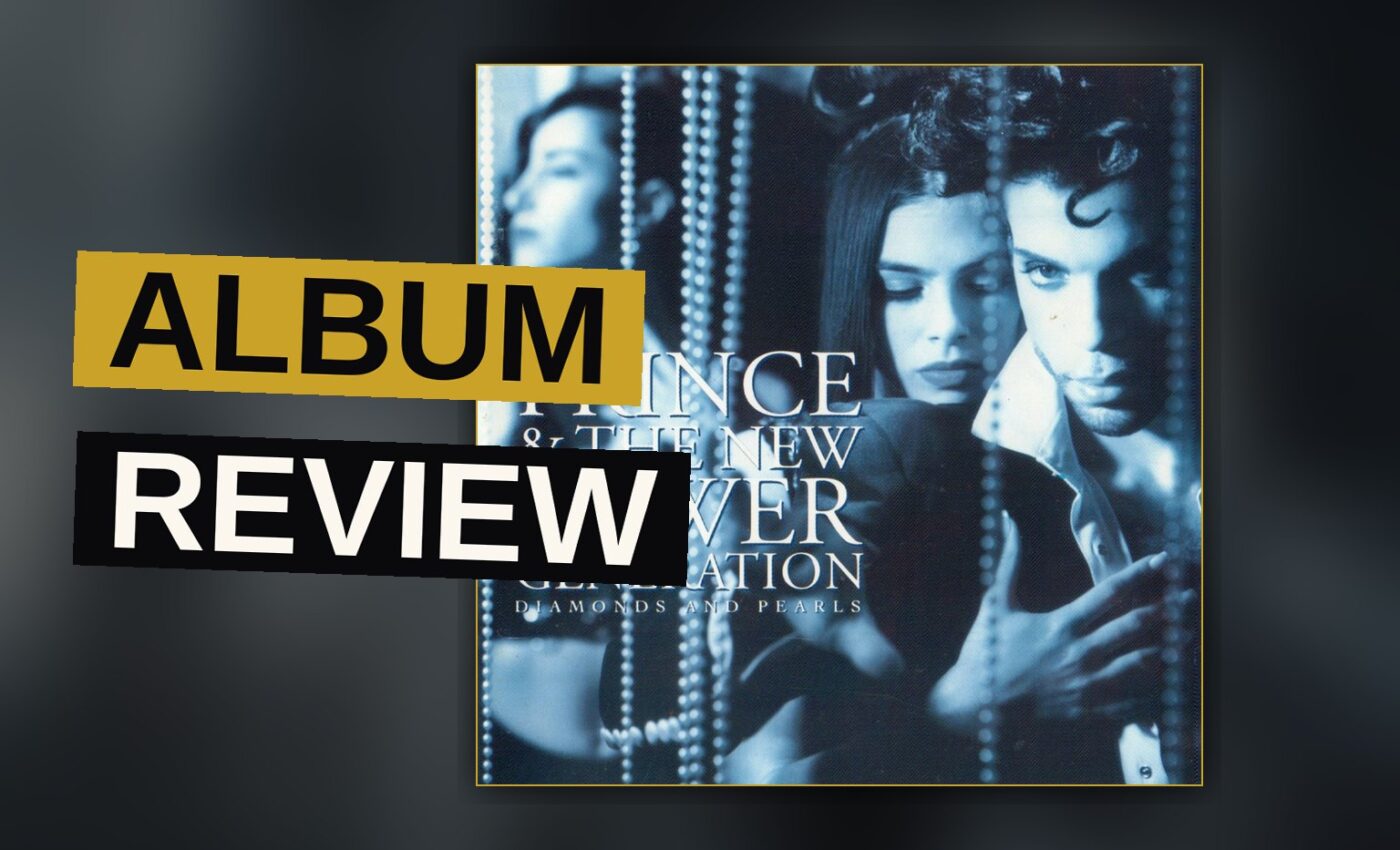
In 1991, Prince was the biggest pop star on the planet, and Diamonds and Pearls is the sound of him trying to keep it that way. It is a record built for crossover radio, for MTV, for the mainstream that he had spent the previous decade bending to his will. With The New Power Generation at his back, Prince trades the stark funk of his late-80s work for:
- glossy, polished R&B
- hip-hop textures
- arena-sized ballads
It is a strategic move, and it mostly works, even when it costs him some of his edge.
A Band Takes the Wheel
The album opens with “Thunder,” a track that runs nearly six minutes and sets the tone for the record’s ambitions. It is big, it is loud, and it leans heavily on the band’s live energy. The New Power Generation is not just a backing group; they are the engine here, and Prince gives them room to drive. The track builds from a simmering groove into a full-throttle rock-funk hybrid, complete with a guitar solo that reminds you he can still shred when he wants to.
“Daddy Pop” follows, and it is one of the most interesting cuts on the record. The title is a wink at his own status, and the track itself is a slick, self-aware piece of pop-funk. It is Prince commenting on his own commercial instincts, wrapped in a hook that is almost too easy to digest. The song is a standout, precisely because it knows exactly what it is: a polished piece of entertainment from a man who built his career on being anything but predictable.
The title track, “Diamonds and Pearls,” is where the album’s mainstream pivot becomes unmistakable. It is a slow-burning ballad, built on a simple keyboard riff and a vocal performance that is pure, unguarded romance. This is Prince at his most accessible, and it works because he commits to the sentiment without irony. The song became one of his biggest hits, and hearing it in context, it is easy to understand why. It is warm, it is melodic, and it is entirely without the weirdness that defined his earlier work.
Cream and the Singles That Carried the Year
“Cream” is the record’s undeniable peak. Released as a hit single, it is a four-minute burst of effortless funk-pop that sounds like Prince on autopilot in the best possible way. The bassline is filthy, the chorus is immediate, and the vocal delivery is pure swagger. It is the kind of song that makes the case for the album’s entire approach: if you are going to chase the mainstream, chase it with something this good. The track earned Prince another number-one single, and it remains one of the defining songs of his career.
“Strollin'” is a lighter moment, a mid-tempo groove that feels like a breather between the big statements. It is pleasant enough, but it lacks the urgency of the tracks around it. “Willing and Able” follows, and it is a more interesting proposition. The track features vocal interplay that gives the song a gospel-inflected warmth that stands out. It is not a classic, but it shows the band’s range.
“Gett Off” was the album’s first single, and it is the closest the record comes to the raw, sexual funk of Prince’s earlier work. The track is built on a relentless groove, and the lyrics are pure innuendo, delivered with a smirk. It is a reminder that even when he was courting the mainstream, Prince could still get nasty. The song is longer and more drawn out than “Cream,” but it earns its length with a mid-song breakdown that lets the band stretch out.
The Middle of the Record Drags
“Walk Don’t Walk” is where the album starts to lose its footing. It is a funk workout that feels more like filler than a statement, and the lyrics are among the weakest on the record. “Jughead” is similarly slight, a rap-inflected track that leans heavily on the band’s MC. The song is fun in the moment, but it lacks the staying power of the record’s best material. These two tracks, back to back, are the weakest stretch of the album.
“Money Don’t Matter 2 Night” is the standout of the album’s second half. The track is a social commentary, delivered with a Steely Dan vibe and a beautiful, soulful vocal. It is a serious song, tackling inequality and the corrupting power of wealth, and it lands with more weight than anything else on the record. Prince had always been political, but here he sounds mature, measured, and genuinely angry. It is the song that proves he could still make a statement while making a hit.
“Push” is a return to the funk, but it is a more restrained version than the album’s opening tracks. It is a groove that builds slowly, with a vocal that shifts between sung and rapped sections. It is effective, but it feels like a warm-up for the record’s final stretch. “Insatiable” is a slow, seductive ballad that is pure Prince. It is the kind of song he could write in his sleep, but the execution is flawless, with a vocal that is intimate and commanding at once.
Live 4 Love and the Long Goodbye
“Live 4 Love” closes the album as a seven-minute anthem, and it is a fitting end. The track is a slow-building anthem, with a gospel-tinged chorus and a message of unity and perseverance. It is the album’s most ambitious statement, and it mostly works, even if it overstays its welcome slightly. The song gives The New Power Generation a final showcase, and it ends the record on a note of uplift.
The album’s total running time is 65 minutes, and it feels it. At 13 tracks, Diamonds and Pearls is overstuffed, and the middle section drags in a way that a tighter edit would have fixed. The record’s best moments are undeniable, but they are surrounded by tracks that feel like they were included to pad the running time.
Ranking the Highs
Critics described the album as polished but uneven, and the standout moments carry the record. Here is how the strongest tracks rank:
- “Cream” is a career-defining single.
- “Gett Off” proves he could still be raw.
- “Money Don’t Matter 2 Night” is the album’s most mature moment.
- “Diamonds and Pearls” is a perfect pop ballad.
- “Daddy Pop” is the most self-aware track here.
This is a polished, uneven record. Prince was chasing contemporary trends rather than leading them, and the results are mixed. But the highs are high enough to carry the whole thing.
The album sold millions, and it gave Prince some of his biggest hits. It is not his best work, but it is far from his worst. It is the sound of a genius deciding to play the game, and winning at it, even if the victory came at a cost.
Diamonds and Pearls is a record that rewards the highlights and forgives the filler. It is a mainstream Prince album, and that is not a sin. The sin would have been making it boring.
It is not boring.
Get the Notebook.
The day's best stories and every fresh verdict, in plain English, in your inbox by seven. One email a day, no more.
- Thunder5:46
- Daddy Pop5:18
- Diamonds and Pearls4:45
- Cream4:13
- Strollin’3:47
- Willing and Able5:01
- Gett Off4:31
- Walk Don’t Walk3:08
- Jughead4:57
- Money Don’t Matter 2 Night4:47
- Push5:54
- Insatiable6:40
- Live 4 Love7:00