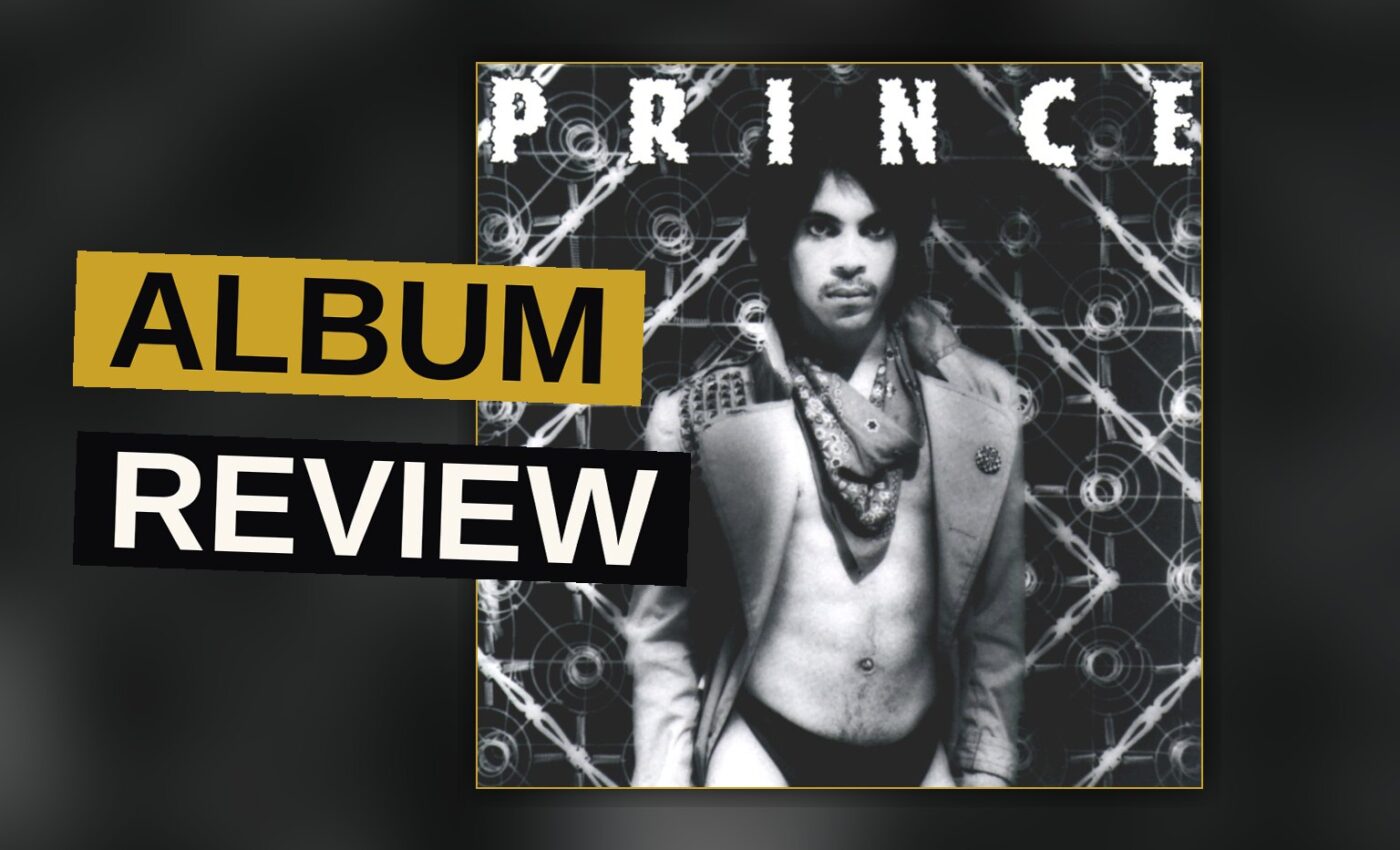
Prince’s third album, Dirty Mind, is the sound of an artist torching his own blueprint. After two albums of polished, virtuosic funk-pop, Prince stripped everything back — the arrangements, the patience, the radio-friendly sheen — and replaced it with a raw, wiry, sexually charged sound that had no real precedent in 1980. This is not a record about showing off. It is a record about shedding skin.
The album runs just 30 minutes across eight tracks, a tight, restless burst that plays like a single extended dare. It fuses funk, new wave, punk, R&B and rock into something that refuses to sit still, and its lyrics are unapologetically explicit, delivered with a knowing smirk that made the record feel dangerous then and still feels bracing now. Dirty Mind is not a refinement of Prince’s early sound. It is a break from it.
Opening Fire: “Dirty Mind” and “When You Were Mine”
The title track opens the album with a synth line that sounds like a warning. “Dirty Mind” is a four-minute proposition built on a sparse, clattering groove, and Prince’s vocal is a half-whisper, half-snarl that sets the tone for everything that follows. He is not asking permission. He is stating a fact. The song’s minimalism is its power — every sound feels deliberate, every pause loaded.
“When You Were Mine” follows and remains one of the most structurally fascinating songs Prince ever wrote. It is a pop song in shape but not in spirit — a tale of a lover who has moved on to other partners, told with a matter-of-factness that undercuts any hint of self-pity. The chorus is deceptively bright, but the lyrics cut deeper than the melody suggests. It is a song about jealousy that refuses to sound jealous, and the guitar work is sharp, economical and utterly memorable.
Middle Stretch: “Do It All Night” and “Gotta Broken Heart Again”
“Do It All Night” is the album’s most straightforward invitation. The groove is relentless, the bassline is the engine, and the lyrics leave little to the imagination. It does not have the wit of the title track or the emotional complexity of “When You Were Mine,” but it earns its place by sheer momentum. This is music made for the body, not the head, and it knows exactly what it is doing.
“Gotta Broken Heart Again” is the album’s quietest moment — a rare pause in the relentless forward motion. It does not overstay its welcome, and its brevity is a strength. Prince gives you just enough of the ache before moving on, and the restraint is notable.
“Uptown”: The Mission Statement
“Uptown” is the album’s centerpiece and its clearest statement of intent. At over five minutes, it is the longest track here, and it uses that space to stretch out into a loose, celebratory groove that feels like a party and a manifesto at once. The lyrics are about a place where people can be themselves, where race, gender and sexuality do not matter — a utopian vision delivered with a strut rather than a sermon.
The song’s power comes from its refusal to preach. Prince is not lecturing anyone; he is describing a world he wants to live in, and the music backs him up. The groove is infectious, the guitar lines are playful, and the whole thing builds to a climax that feels earned. “Uptown” is the album’s heart, and it remains one of the most ambitious songs Prince ever wrote.
Closing Run: “Head,” “Sister” and “Partyup”
“Head” is the track that made the album notorious. It is a song about a woman who is about to get married and changes her mind, told with a frankness that was almost unheard of in mainstream pop at the time. The music is deceptively light — a bouncy, almost playful groove — which makes the explicit content land even harder. It is provocative, yes, but it is also funny, and that humor is what keeps it from feeling cheap.
“Sister” is the shortest track on the album, and it is the most uncomfortable. The subject matter — a young man’s relationship with his older sister — is handled with a bluntness that is genuinely unsettling, and the music reflects that unease. It is a jagged, noisy burst that feels like a nightmare compressed into a minute and a half. It is not an easy listen, and it is not meant to be.
“Partyup” closes the album with a protest song that sounds like a party. The lyrics take aim at war and militarism, and Prince delivers them with a fury that is masked by the celebratory groove. It is a clever juxtaposition — the sound of joy against the reality of violence — and it ends the record on a note of defiance rather than despair. The album does not wind down; it punches out.
Short Tracks, Grouped
The two briefest tracks, “Gotta Broken Heart Again” and “Sister,” are the ones that get the least attention in most discussions of the album, but they serve a clear purpose. They are the shadows that give the record its shape. Without the quiet ache of “Gotta Broken Heart Again,” the relentless energy of the surrounding tracks would feel exhausting. Without the jagged discomfort of “Sister,” the record would lose its edge. Neither is a throwaway — they are the moments that make the album feel like a complete statement rather than a collection of singles.
Verdict
Dirty Mind is a landmark, and it has only grown in stature with time. It is the album where Prince stopped trying to prove he was the best musician in the room and started trying to be the most interesting one. The result is a record that sounds unlike anything else from its era, and it paved the way for the decade of experimentation that followed.
The album’s influence is everywhere — in the new wave funk of the early ’80s, in the androgynous pop that followed, in the willingness of artists to be explicit without being crude. But it is not just historically important. It is a great record on its own terms, a tight, confident, endlessly listenable statement from an artist at the peak of his powers.
Whereas Prince’s ’70s albums proclaimed his virtuosity, here he achieves much more by confining himself to the simplest, boldest strokes.
That line from Pitchfork gets at the core of why Dirty Mind works. The songs are not complex, but they are precise. Every note feels chosen, every word feels deliberate. Prince did not need to show off anymore — he had nothing left to prove, and that freedom made him more dangerous than ever.
The album’s running order is a model of pacing:
| Track | Title |
|---|---|
| 1 | Dirty Mind |
| 2 | When You Were Mine |
| 3 | Do It All Night |
| 4 | Gotta Broken Heart Again |
| 5 | Uptown |
| 6 | Head |
| 7 | Sister |
| 8 | Partyup |
It is a short record, and that is part of its genius. There is no filler, no padding, no moment where the energy flags. Prince gets in, makes his point and gets out.
Dirty Mind is not an album that needs defending. It is an album that does the defending itself.
Get the Notebook.
The day's best stories and every fresh verdict, in plain English, in your inbox by seven. One email a day, no more.
- Dirty Mind4:11
- When You Were Mine3:44
- Do It All Night3:42
- Gotta Broken Heart Again2:13
- Uptown5:30
- Head4:44
- Sister1:32
- Partyup4:24