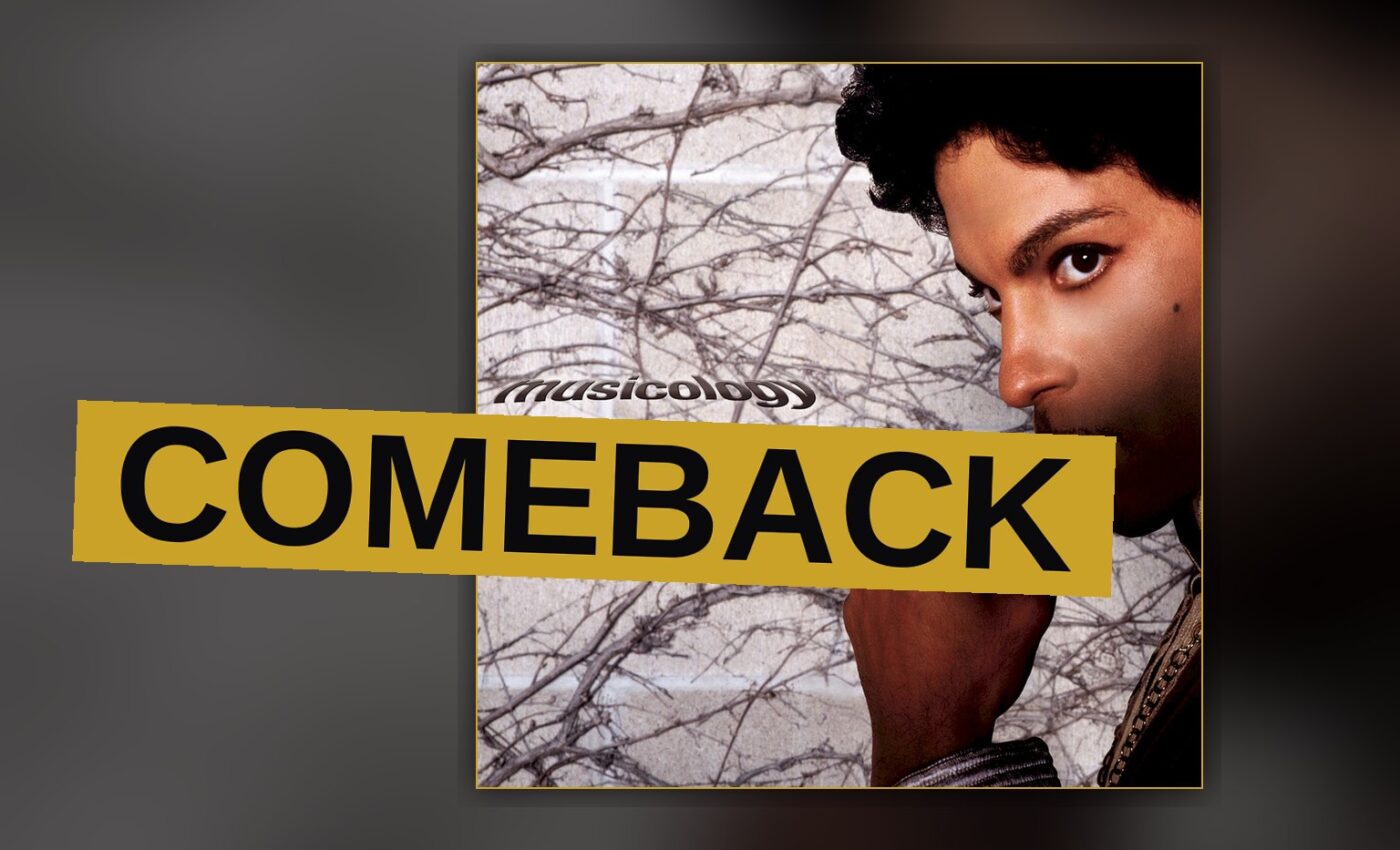
Prince’s 2004 album Musicology arrived with a mission: to remind the world that he was still the most gifted musician of his generation. After years of fighting his label, releasing experimental records to a shrinking audience, and changing his name to an unpronounceable symbol, Prince wanted back in the mainstream. The album is a direct appeal, a funk-and-soul record built on live instrumentation, classic songcraft, and the kind of confident swagger that made him a star in the 1980s. It is not a reinvention. It is a reclamation.
Opening With “Musicology”
The title track opens the record with a mission statement. “Musicology” is a slab of funk groove, complete with a horn section and a bassline that demands movement. Prince sings about the history of black music, name-checking the artists who came before him. It is a warm, knowing opener that sets the tone: this is a man showing you his roots. The song works because it never feels like a lecture. It feels like a party with a syllabus.
“Illusion, Coma, Pimp & Circumstance” follows, a darker, jazzier cut that critiques the music industry and its manufactured stars. The track is dense, with shifting time signatures and a spoken-word bridge. It is not the easiest listen, but it shows Prince stretching. “A Million Days” pulls the tempo back, a gentle ballad about devotion that leans on his falsetto. It is pretty, though it does not leave much of a mark.
“Life ‘o’ The Party” is the first real highlight, a mid-tempo funk number with a chorus that sticks. It is the sort of song that makes you understand why critics kept hoping for a comeback.
Tracks From “Call My Name” to “Reflection”
- “Call My Name” is a slow-burning soul ballad, all aching vocals and sparse piano. It is the album’s emotional center.
- “Cinnamon Girl” is a sweet, pop-leaning tribute to a young fan, built on an acoustic guitar and a simple melody.
- “What Do U Want Me 2 Do?” is a pleading, synth-heavy track that finds Prince at his most vulnerable.
- “The Marrying Kind” is a short, punchy rocker that gets in and out in under three minutes.
The middle stretch of the album is where Musicology shows its range. “If Eye Was the Man in Ur Life” is a clever, jazzy number where Prince imagines himself as the partner of a woman in a failing relationship. The title is a wink, but the performance is serious. “On the Couch” is a bluesy, funny track about relationship therapy, with Prince playing both sides of the conversation. It is the loosest moment on the record, and it benefits from the lack of polish.
“Dear Mr. Man” closes the main body of the album with a political turn, a funky protest song about the state of the nation. It is pointed and angry, and it lands. The final track, “Reflection,” is a quiet, almost ambient piece that finds Prince looking back at his own career. It is a fitting end, a moment of stillness after an album that spends most of its time moving. The record runs 47 minutes across 12 tracks, and it never overstays its welcome.
Retro Production, Divided Critics
The production on Musicology is deliberately retro. Prince recorded the album with his live band, and the sound is warm, analog, and human. There are no drum machines dominating the mix, no glossy digital sheen. This was a choice. Prince was making a statement about what he thought modern music lacked: soul, musicianship, and a sense of history.
| Album | Year | Metacritic Score | Signature Sound |
|---|---|---|---|
| Musicology | 2004 | 72/100 | Live funk, retro soul |
| Purple Rain | 1984 | N/A (pre-Metacritic) | Classic pop-rock fusion |
| Sign o’ the Times | 1987 | N/A (pre-Metacritic) | Eclectic, experimental pop |
The comparison to his 1980s peak is unavoidable, and it is where the album gets complicated. Musicology is a strong record, but it is not Purple Rain. It is not even Sign o’ the Times. The songwriting is consistent, but it rarely reaches the heights of those classics. Some of the gentler tracks, in particular, tend to blur together. “A Million Days” is pleasant, but it does not demand repeat listens.
The critical reception at the time reflected this divide. Pitchfork was dismissive, writing: “I fail to see how anyone could seriously call it a comeback, or a return to his intimidating good form.” MusicCritic was more sympathetic, noting that “Prince is an artist that people desperately want to be good.” The same outlet added: “This time, however, even Prince seems convinced he is back in shape.” The album earned a Metacritic score of 72 out of 100, a solid but not spectacular mark.
A Good Album, Not a Great One
That score feels right.
Musicology is a good album, not a great one. It is the work of a master musician reminding everyone he still has the skills, but it is not the work of a master reinventing himself. The best moments — “Life ‘o’ The Party,” “Call My Name,” “Dear Mr. Man” — stand alongside anything Prince released in the 1990s. The lesser moments are simply filler, the kind of tracks that pad a record rather than elevate it.
What Musicology does accomplish is clarity. Prince is telling his audience exactly who he is and what he values. He is not chasing trends. He is not hiding behind a symbol. He is playing his instruments, singing his songs, and trusting that the music is enough.
The album is not a comeback in the sense of matching past glory. It is a comeback in the sense of a man returning to himself.
- Musicology4:24
- Illusion, Coma, Pimp & Circumstance4:46
- A Million Days3:50
- Life ‘o’ The Party4:29
- Call My Name5:15
- Cinnamon Girl3:56
- What Do U Want Me 2 Do?4:15
- The Marrying Kind2:49
- If Eye Was the Man in Ur Life3:09
- On the Couch3:33
- Dear Mr. Man4:14
- Reflection3:06