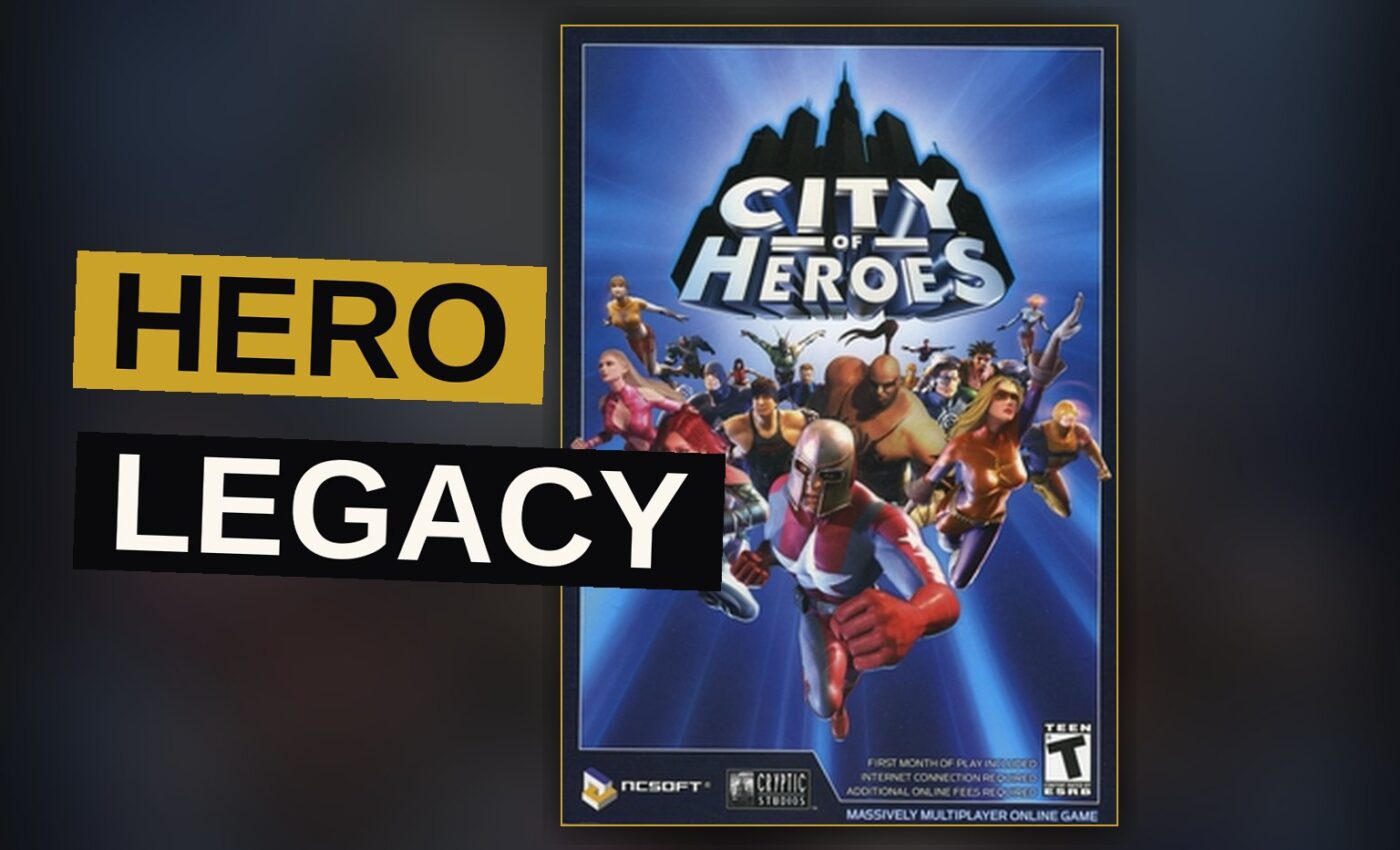
City of Heroes launched in North America on April 28, 2004, and it did the one thing a superhero game has to do before it does anything else: it let you build the hero. Cryptic Studios made the character creator the front door, and that door stayed open for roughly eight years. The game ran on PC and Mac until NCsoft shut it down on November 30, 2012, after terminating Paragon Studios on August 31 of that year. It ended with 23 free major updates behind it, the last one, “Where Shadows Lie,” shipped on May 31, 2012.
That is a long run for any MMO. It is 22 years since the game first launched, and the interest in it has not gone away.
Paragon City and the War Walls
The setting is Paragon City, Rhode Island, a fictional metropolis split into zones and stitched back together by in-game transit. The divisions are not arbitrary, or at least the game bothers to explain them: giant energy barriers called War Walls, derived from alien technology, separate the regions and are connected by direct access points and a monorail. Villains get the Rogue Isles instead, a chain of islands linked by ferries and helicopters.
It is a clean piece of world-building, and it solves a real problem. A single seamless city would have been a loading-screen nightmare in 2004. The War Walls turn a technical limit into a story beat, and the map stays legible because of it.
The danger scales with you. Heroes start on low-powered street gangs in the opening zones and work up through organized crime, corrupt corporations, hostile aliens and supernatural threats. Hazard and Trial zones, marked in red on the in-game map, pack in larger groups of enemies and hit far harder than the neighborhoods around them.
Names, Levels and Experience Debt
Character creation came first, and it came with a name check against the server. From there you either ran an isolated tutorial zone or skipped it and dropped straight into a low-level open zone.
Progression ran on experience points, earned three ways:
- Defeating foes in combat.
- Completing missions.
- Exploring zones, then reporting back to named NPCs called Trainers.
Leveling paid out in concrete ways. More health. More powers to pick. More slots to assign Enhancements to those powers. Bigger inventories for Inspirations, the quick-use items, and Salvage, the crafting materials.
Death had its own system, and it is the detail that dates the design most clearly. Losing all your health meant you were temporarily defeated, and you could come back through an item, an ally’s power, or an instant teleport to a hospital on the map. Past level 10, a defeat also stuck you with Experience Debt, which made the next stretch of leveling slower until you worked it off.
- Health, powers and Enhancement slots on every level.
- Larger Inspiration and Salvage inventories.
- Experience Debt as a penalty once you passed level 10.
That debt mechanic is a punishment for dying layered on top of the punishment for dying. Modern MMOs mostly dropped it, and they were right to.
The Rogue Isles and the Villain Side
Villains did not get a mirror of Paragon City. They got the Rogue Isles, a separate setting built from islands connected by a network of ferries and helicopters, and the split gave the game two distinct geographies instead of one map with a coat of paint.
That structure mattered less than it sounds. The zones still gated progression by level, and the same transit logic applied on both sides.
What the Servers Did After the Shutdown
NCsoft ended production in 2012. Then, in April 2019, source code capable of running a City of Heroes server was distributed widely. That single event made it possible to run the game outside NCsoft’s direct purview, and it revived interest in a title that had been out of development for more than six years.
For years, NCsoft did not move to shut those servers down. As of January 2024, that was still true. Then, on January 4, 2024, the company granted Homecoming Servers LLC, which ran the rogue server Homecoming: City of Heroes, an official license to host the game.
The game is now developed by several private servers, Homecoming among them, operating under that limited license from NCsoft. A publisher that killed a game and a community that refused to let it die ended up signing paperwork. That is not a normal arc for a live-service title, and it is the most interesting thing that has happened to City of Heroes since it went dark.
Where the 8.9 Comes From
City of Heroes carries an 8.9 out of 10 critic aggregate across five outlets, and that number holds up. The character creator was the best in the genre for years, and the War Walls turned a hard technical limit into the game’s most memorable piece of fiction. Paragon City had a shape you could learn, and the Hazard zones gave that shape teeth.
The flaws are real and they are structural. Experience Debt punished players twice for the same mistake, and the leveling curve assumed a patience that most people do not have. The combat never matched the fantasy of the character you had just spent an hour building.
None of that undid the core promise. City of Heroes let you make a hero who looked like the one in your head, then put that hero on a team.
The 23 updates and the eight-year run say the studio kept feeding it. The 2019 code release and the 2024 license say the players never stopped wanting it. Very few MMOs get either. City of Heroes got both.
Get the Notebook.
The day's best stories and every fresh verdict, in plain English, in your inbox by seven. One email a day, no more.