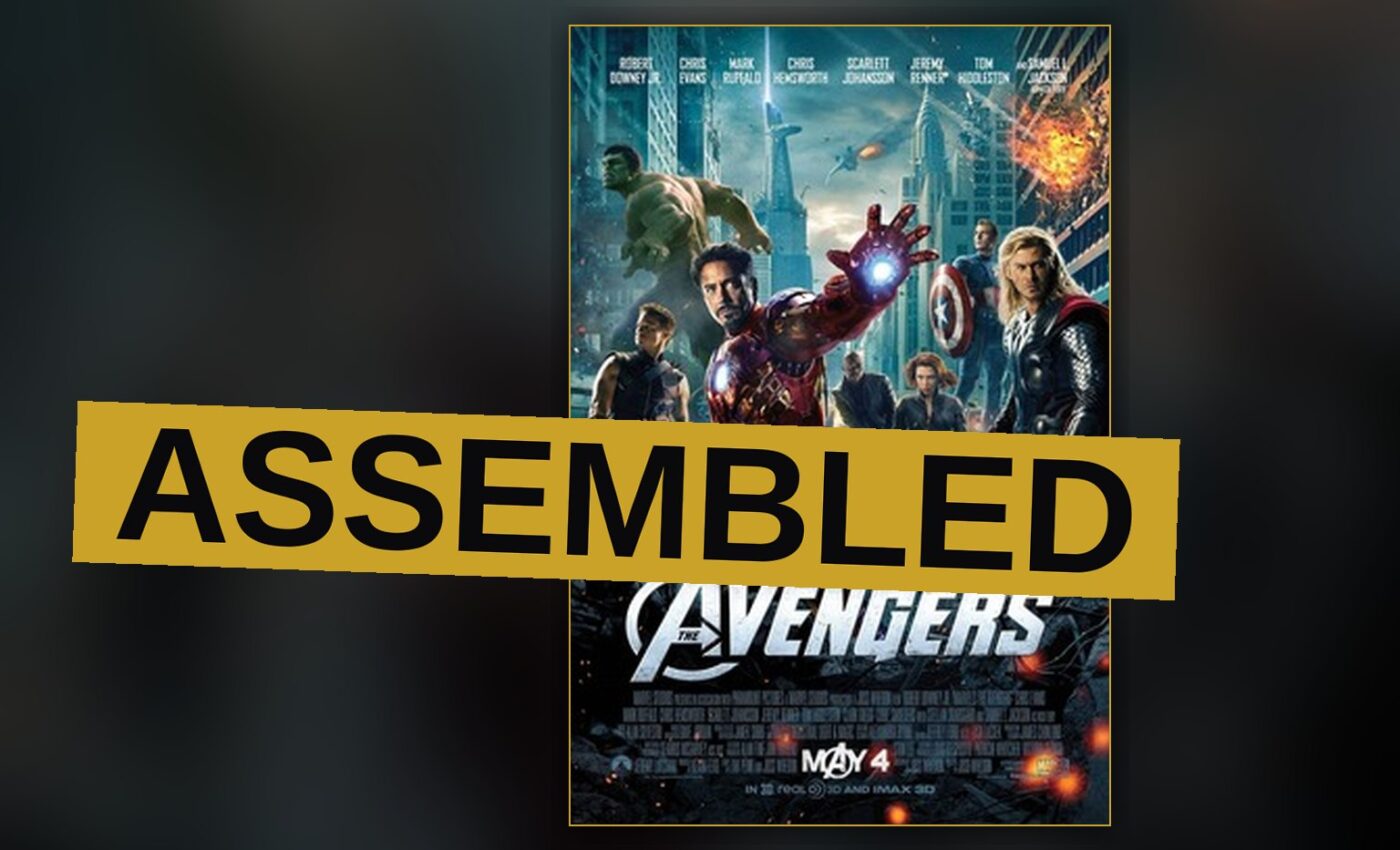
Joss Whedon’s The Avengers is the rare blockbuster that earns its own hype. It took five solo superhero movies to get here, and the payoff was a single picture that felt like a comic book event rather than a studio obligation. The film does not just assemble a team; it builds a machine of clashing egos, sharp dialogue, and set pieces that still define the modern superhero genre. It is loud, funny, and surprisingly disciplined, and it remains the template for how to make a shared universe feel like a single story.
The plot is simple. Loki, Thor’s adopted brother, arrives on Earth with an army of alien soldiers called the Chitauri. He steals the Tesseract, a cube of limitless energy, and uses it to open a portal above New York City. Nick Fury, the director of S.H.I.E.L.D., activates the Avengers Initiative and brings together Tony Stark, Steve Rogers, Thor, Bruce Banner, Natasha Romanoff, and Clint Barton. They bicker, they fight each other, and then they fight the aliens. The structure is a classic three-act arc, but Whedon’s script makes the familiar feel fresh by treating the characters as people first and superheroes second.
What makes The Avengers work is not the plot. It is the chemistry. Whedon understands that a team of gods and soldiers is only as good as the friction between them. The film spends its first hour letting these characters argue, test each other, and find their footing. The second hour is a nonstop battle sequence that gives each hero a moment to shine. The third act is a victory lap. The pacing is tight, the jokes land, and the action has a clarity that many later superhero films would lose.
Trailer, via Marvel Entertainment.
Loki’s Opening Move
The film opens with a cold sequence that sets the stakes. Loki arrives through a portal, takes control of Clint Barton and a S.H.I.E.L.D. scientist named Erik Selvig, and steals the Tesseract. The attack is swift and brutal. It establishes Loki as a genuine threat, not a cartoon villain. Tom Hiddleston plays him with a mix of venom and wounded pride, and his performance gives the film its emotional core. He is not just evil; he is broken.
The opening also introduces the central conflict. S.H.I.E.L.D. has been using the Tesseract to build weapons, and that decision comes back to haunt them. Nick Fury, played by Samuel L. Jackson, is a man who believes in preparation, but his preparation causes the very crisis he hoped to prevent. This theme of overreach runs through the film, and it gives the action a moral weight that is easy to miss on first viewing.
Six Heroes, One Table
The film’s greatest asset is its ensemble. Robert Downey Jr. returns as Tony Stark, and he is in peak form. His Stark is arrogant, impulsive, and endlessly quotable, but Downey gives him a layer of vulnerability that keeps him from being insufferable. Chris Evans plays Steve Rogers as a man out of time, a soldier who believes in right and wrong in a world that has grown cynical. The contrast between Stark and Rogers drives much of the film’s tension, and their arguments feel real rather than manufactured.
Chris Hemsworth brings a godly gravity to Thor, but he also gets some of the film’s best comedic beats. Mark Ruffalo takes over the role of Bruce Banner, and his performance is a revelation. He plays Banner as a man perpetually on the edge, calm and measured on the surface but terrified of what lives inside him. The moment when Banner finally lets go, turning into the Hulk and smashing Loki like a rag doll, is one of the most satisfying payoffs in superhero cinema.
Scarlett Johansson’s Natasha Romanoff gets more to do than she did in Iron Man 2. She is a spy, a fighter, and a moral compass, and her interrogation scene with Loki is a highlight. Jeremy Renner’s Clint Barton spends much of the film under Loki’s control, but his eventual redemption is handled well. Clark Gregg returns as Agent Phil Coulson, and his role in the film is small but crucial. His death, and the speech that follows it, is the emotional turning point that unites the team.
Where Loki Falls Short
Loki is a strong villain, but he is not the film’s real antagonist. The real threat is the Chitauri, a faceless alien army that exists only to be destroyed. This is a common problem in superhero films, and The Avengers does not fully solve it. The Chitauri are generic, and their motivations are never explained. They are a plot device, a wave of bodies that the heroes can cut through without moral complication.
Loki himself is more interesting. His plan is vague, and his motives are rooted in a family drama that the film only sketches. He wants to rule Earth because he believes humanity deserves a master, and he wants to prove himself to an unseen force called the Other. The film does not spend much time on this, but Hiddleston’s performance makes it work. He is a villain who has been humiliated, and his cruelty is a response to that humiliation. It is not deep, but it is effective.
The Battle of New York
The third act is the reason people bought tickets. The Battle of New York is a sprawling, city-wide fight that lasts nearly twenty minutes. Whedon keeps the action clear and coherent, cutting between the heroes as they take on different threats. Stark flies through skyscrapers, Thor summons lightning, Natasha commandeers a flying chariot, and the Hulk punches everything in sight. The sequence is a masterclass in blockbuster filmmaking, and it has aged better than most CGI-heavy battles from the same era.
The film’s signature moment comes when the Hulk punches Thor. It is a joke, but it is also a statement. This is a film that knows how to have fun. The battle is not grim or gritty. It is thrilling, and it allows each character to show off their specific skills. The camera work is steady, the geography is clear, and the stakes feel real even though the audience knows the heroes will win.
Quips That Land
Whedon’s script is the film’s secret weapon. The dialogue is sharp, and the humor is woven into the characters rather than pasted on top. Stark’s quips are the most obvious, but every character gets a moment to be funny. When Rogers tells Stark that he is not the kind of man to go in alone, Stark replies that he is not the kind of man to go in at all. Banner delivers the film’s best line when he tells Loki that he is always angry, right before transforming.
The humor does not undercut the drama. It enhances it. The jokes come from character, and they make the heroes feel human. The film’s tone is confident enough to laugh at itself, and that confidence is what separates it from the grimdark superhero films that followed. The Avengers is not ashamed of being a comic book movie. It embraces the absurdity and turns it into charm.
Craft Behind the Camera
Whedon’s direction is efficient and unflashy. He does not try to reinvent the wheel. He trusts the material, and he lets the actors do their work. The film’s cinematography, by Seamus McGarvey, is clean and bright, a stark contrast to the murky look of many modern blockbusters. The editing, by Jeffrey Ford and Lisa Lassek, keeps the film moving at a brisk pace. The running time is 143 minutes, and it never drags.
The score, by Alan Silvestri, is a mix of heroic brass and pounding percussion. The main theme is memorable, and it swells at the right moments. The sound design is robust, and the visual effects hold up well. The Chitauri look a bit dated in close-up, but the wide shots of the battle are still impressive.
What Followed
The Avengers was a gamble. No one had ever made a film like this before. The idea of combining multiple franchises into a single story was untested, and the potential for disaster was high. The film succeeded beyond expectations. It set the stage for the Marvel Cinematic Universe, and it proved that serialized storytelling could work in Hollywood.
The film’s influence is still visible today. Every shared universe, from the DC Extended Universe to the various attempts at cinematic universes from other studios, owes a debt to The Avengers. It also set a new standard for superhero ensemble films. The genre has evolved since 2012, but few films have matched the balance of character, humor, and spectacle that Whedon achieved here.
Cracks in the Armor
The film is not perfect. The villain is underdeveloped, and the Chitauri are forgettable. The middle section, where the team fights each other on the Helicarrier, is strong, but it relies on a misunderstanding that feels contrived. The film also spends very little time on the collateral damage of the Battle of New York. The city is destroyed, but the film barely acknowledges the civilians who must have died. This is a common blind spot in superhero films, but it is still a flaw.
The female characters are also underserved. Natasha is the only woman on the team, and while she gets a few good scenes, she is still outnumbered. The film does not have room for more, but it is a limitation of the source material that the film does not try to address. These are minor complaints, though. The film knows what it wants to be, and it achieves that goal with confidence.
The Verdict at 8.1
The Avengers is a triumph of planning and execution. It takes five disparate characters and turns them into a team without losing what made them interesting individually. The film is funny, exciting, and emotionally satisfying. It is not a deep work of art, but it is a masterful piece of entertainment. It understands its genre, and it delivers exactly what the audience wants.
The film’s success comes from good writing and strong casting. Whedon’s script respects the characters, and the actors bring them to life. The film has aged well, and it remains a benchmark for superhero cinema. It is the rare blockbuster that rewards repeated viewing, and it set a high bar that many later films have failed to clear.
The verdict is clear. The Avengers is a great film, and it earns its place in the canon of modern cinema. It is not a masterpiece, but it is close. It is a film that knows how to entertain, and it does so with skill and heart. The score reflects this. It is a strong, confident film that deserves its reputation.
When ranking the film’s strengths, the order matters:
- The ensemble chemistry, which carries every scene.
- The script’s sharp dialogue and character-driven humor.
- The clarity of the Battle of New York action.
- Alan Silvestri’s memorable score.
- The pacing, which never drags across 143 minutes.