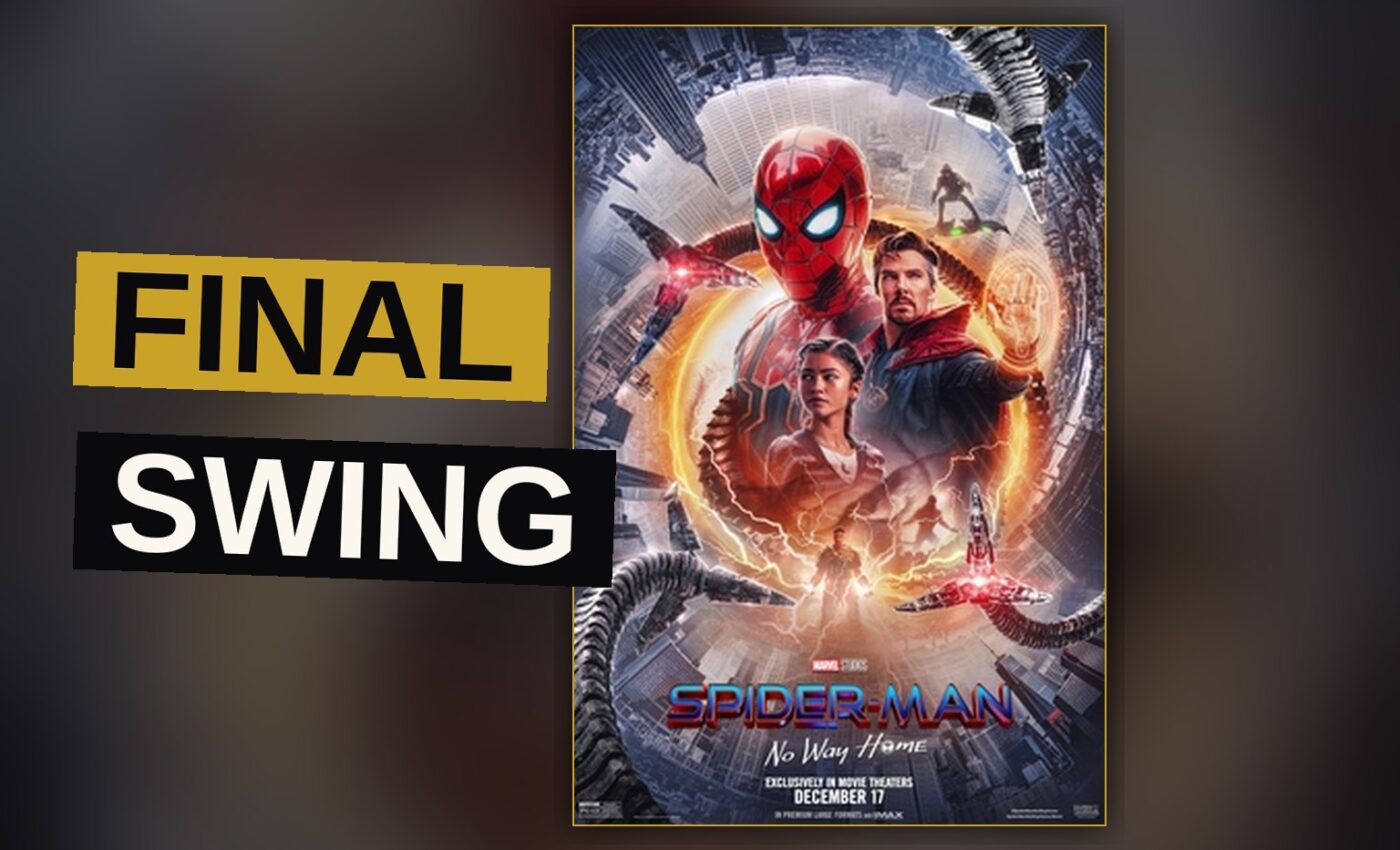
Spider-Man: No Way Home is the rare blockbuster that works as both a spectacle and a payoff. It closes the trilogy of Tom Holland’s Peter Parker with a story about consequence, not just cameos. The film brings back villains from earlier Spider-Man films, but it uses them to push Peter toward a hard decision about what heroism actually costs.
Trailer, via Marvel Entertainment.
Opening the Multiverse
The premise is simple. Peter asks Doctor Strange to cast a spell that makes the world forget his secret identity. The spell goes wrong, and it pulls in people who know Spider-Man from other universes. That includes Doctor Octopus, Green Goblin, Electro, Sandman and the Lizard. Each actor returns to their old role, and the film does not waste them.
The action set pieces are clear and inventive. A fight in a mirrored dimension is a visual high point. The final battle on the Statue of Liberty site is chaotic but readable. Director Jon Watts keeps the camera steady enough that the stakes land.
Peter Carries the Weight
The film’s core is Peter’s growing guilt. He tries to save every villain instead of fighting them. That choice leads to tragedy, and the movie does not soften it. Aunt May tells Peter that “with great power, there comes great responsibility,” and the film treats that line as a burden, not a slogan.
Holland carries the weight well. His Peter is still a kid, but he is no longer naive. Zendaya’s MJ and Jacob Batalon’s Ned get real moments, not just quips. The supporting cast keeps the film grounded when the plot gets loud.
Returns That Matter
Spider-Man: No Way Home brings back Tobey Maguire and Andrew Garfield as their versions of Peter Parker. Their presence is not just fan service. They give Holland’s Peter a chance to talk to older versions of himself. Maguire offers quiet support. Garfield gets a redemption beat that lands hard.
The villains are not all equal. Willem Dafoe’s Green Goblin is the clear threat, and he is terrifying. Alfred Molina’s Doctor Octopus is more sympathetic. Jamie Foxx’s Electro is fine, but he has the least to do. The film balances them well enough that no one feels wasted.
The Cost of a Secret
The last act forces Peter to choose between his own happiness and the safety of everyone he loves. He does not get a clever way out. The film commits to the cost, and that is what makes it feel serious. The ending is quiet, and it sets up a new direction for the character without a cliffhanger.
| Film | Villains | Tone |
|---|---|---|
| Spider-Man: No Way Home | Green Goblin, Doc Ock, Electro, Sandman, Lizard | Emotional, action-heavy |
| Spider-Man: Homecoming | Vulture | Light, teen comedy |
| Spider-Man: Far From Home | Mysterio | Road trip, twist-heavy |
Running Order and Final Score
The film moves through three clear acts, and each one shifts the mood.
| Act | Key Event | Mood |
|---|---|---|
| 1 | Identity spell goes wrong | Confusion, comedy |
| 2 | Villains arrive and Peter tries to cure them | Tension, hope |
| 3 | Final battle and the sacrifice | Grief, resolution |
Spider-Man: No Way Home is not perfect. The runtime is long, and some jokes land flat. But it delivers on its promise. It is a story about growing up, told with real stakes.
The film earns a 7.9/10.