
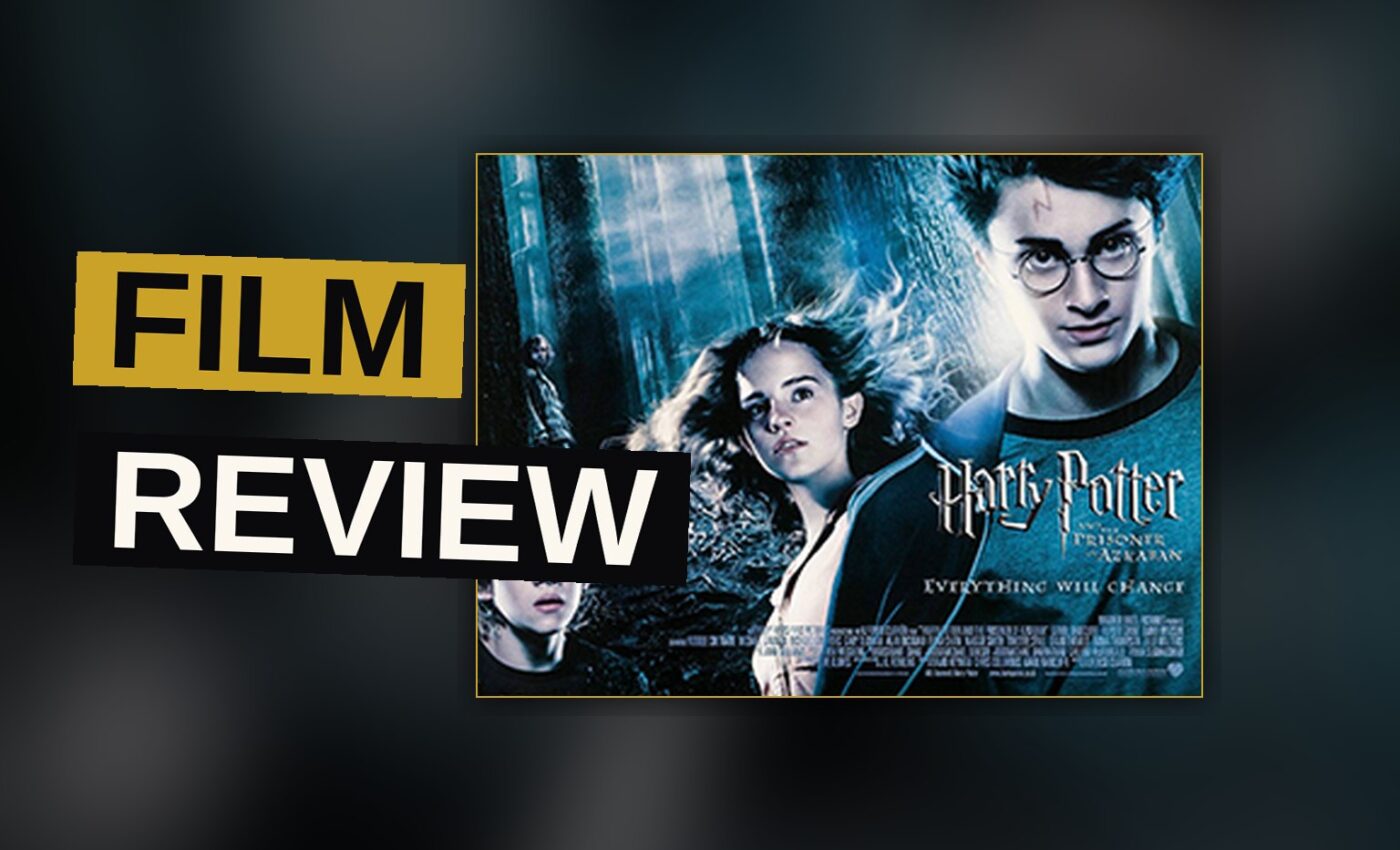
Alfonso Cuarón took over the Harry Potter series for its third film and changed how it looked, moved and felt. Harry Potter and the Prisoner of Azkaban arrived in 2004 with a longer eighteen-month production cycle behind it, a new Dumbledore in Michael Gambon, and a director chosen from a shortlist that included Callie Khouri and Kenneth Branagh. The result is the first entry in the series that feels like a film rather than an adaptation.
Trailer, via Warner Bros. UK & Ireland.
Daniel Radcliffe Grows Into the Role
The plot turns on an escape. Sirius Black has broken out of Azkaban prison and is expected to come after Harry. In the film, Black is described as an alleged supporter of Lord Voldemort; that is the story’s framing of him, not a settled fact, and the source does not say how his case resolves. Dementors — the ghostly guards who were holding him — are sent to patrol Hogwarts until he is caught. One of them causes Harry to faint on the Hogwarts Express.
Radcliffe plays Harry at thirteen, and the performance carries the weight the story needs. He is angry at the Dursleys, frightened of the Dementors, and desperate to know what Sirius Black has to do with his dead parents. The film follows his third year at Hogwarts and his quest to uncover the truth about his past.
Gary Oldman and David Thewlis Join the Cast
Two additions do the heaviest lifting. Gary Oldman plays Sirius Black as a man the audience cannot read, which is exactly right for a film built on a question about his guilt. David Thewlis plays Remus Lupin, the new Defense Against the Dark Arts teacher, who repels a Dementor with a Patronus Charm and later agrees to teach Harry the same spell.
Timothy Spall arrives as Peter Pettigrew and Emma Thompson as Sybill Trelawney. The returning cast is intact: Rupert Grint as Ron Weasley, Emma Watson as Hermione Granger, Robbie Coltrane as Rubeus Hagrid, Alan Rickman as Severus Snape and Tom Felton as Draco Malfoy.
Michael Gambon Replaces Richard Harris
Richard Harris, who played Albus Dumbledore in the first two films, died of Hodgkin’s disease on 25 October 2002, three weeks before the release of Chamber of Secrets. Despite his illness, Harris was determined to film his part, telling a visiting David Heyman not to recast the role.
Four months after Harris died, Cuarón chose Gambon. Gambon was unconcerned with bettering or copying Harris, giving his own interpretation instead, but putting on a slight Irish accent as an homage. He completed his scenes in three weeks.
The producers first offered the part to Ian McKellen. McKellen turned it down, saying he had played a similar character in Gandalf in The Lord of the Rings trilogy, and that it would have been inappropriate to take Harris’s role — Harris had previously called McKellen a “dreadful” actor. Christopher Lee was also considered and later said it would have been in very “bad taste” if he had been offered it.
Scotland, London and Leavesden
Prisoner of Azkaban was the first film in the series to use real locations extensively. Sets were built in Scotland and scenes were shot in London. Principal photography began in February 2003 at Leavesden Film Studios and wrapped in November 2003.
The film opened on 31 May 2004 in the United Kingdom and on 4 June 2004 in North America, distributed by Warner Bros.
| Date | Event |
|---|---|
| February 2003 | Principal photography begins at Leavesden Film Studios |
| November 2003 | Filming wraps |
| 31 May 2004 | UK release |
| 4 June 2004 | North American release |
Buckbeak, the Marauder’s Map and the Knight Bus
The film’s best passages are its smallest. Hagrid is appointed Care of Magical Creatures teacher, and his first class goes wrong when Draco Malfoy provokes a hippogriff named Buckbeak to attack him. Draco’s father has Buckbeak sentenced to death.
Harry, unable to visit Hogsmeade without permission from his guardians, tries to sneak out and is caught by Fred and George Weasley, who give him the Marauder’s Map. After inflating Vernon’s sister Marge and running away from the Dursleys, Harry is picked up by the Knight Bus and taken to The Leaky Cauldron, where Minister for Magic Cornelius Fudge tells him he will not be punished. The Fat Lady’s portrait warns that Black is in the castle. The Dementors attack Harry during a Quidditch match, and Dumbledore saves him, though his broomstick is destroyed.
What Cuarón Changed
The camera moves. Cuarón lets the grounds breathe, and the castle stops looking like a set. The Dementors are cold, drifting, and shot so their faces stay unclear.
Steve Kloves wrote the screenplay from J. K. Rowling’s 1999 novel. When Harry asks Lupin to teach him the Patronus Charm, the film slows down and stays there.
Where It Stands
The eighteen-month production cycle the series adopted here is the detail that matters most. It is the structural change that separates this film from the two before it, and it is the reason the pacing feels different.
The weaknesses are real. The Marauder’s Map arrives with less explanation than it needs. Draco’s arc is thin. But the film’s instincts are sound: it treats thirteen-year-olds as capable of grief, and it does not explain away the Dementors.
Against the published audience score of 8.0 out of 10 across 23,603 votes, that holds up. Prisoner of Azkaban is a franchise finding its footing by getting darker, quieter and more confident.
Get the Notebook.
The day's best stories and every fresh verdict, in plain English, in your inbox by seven. One email a day, no more.


