
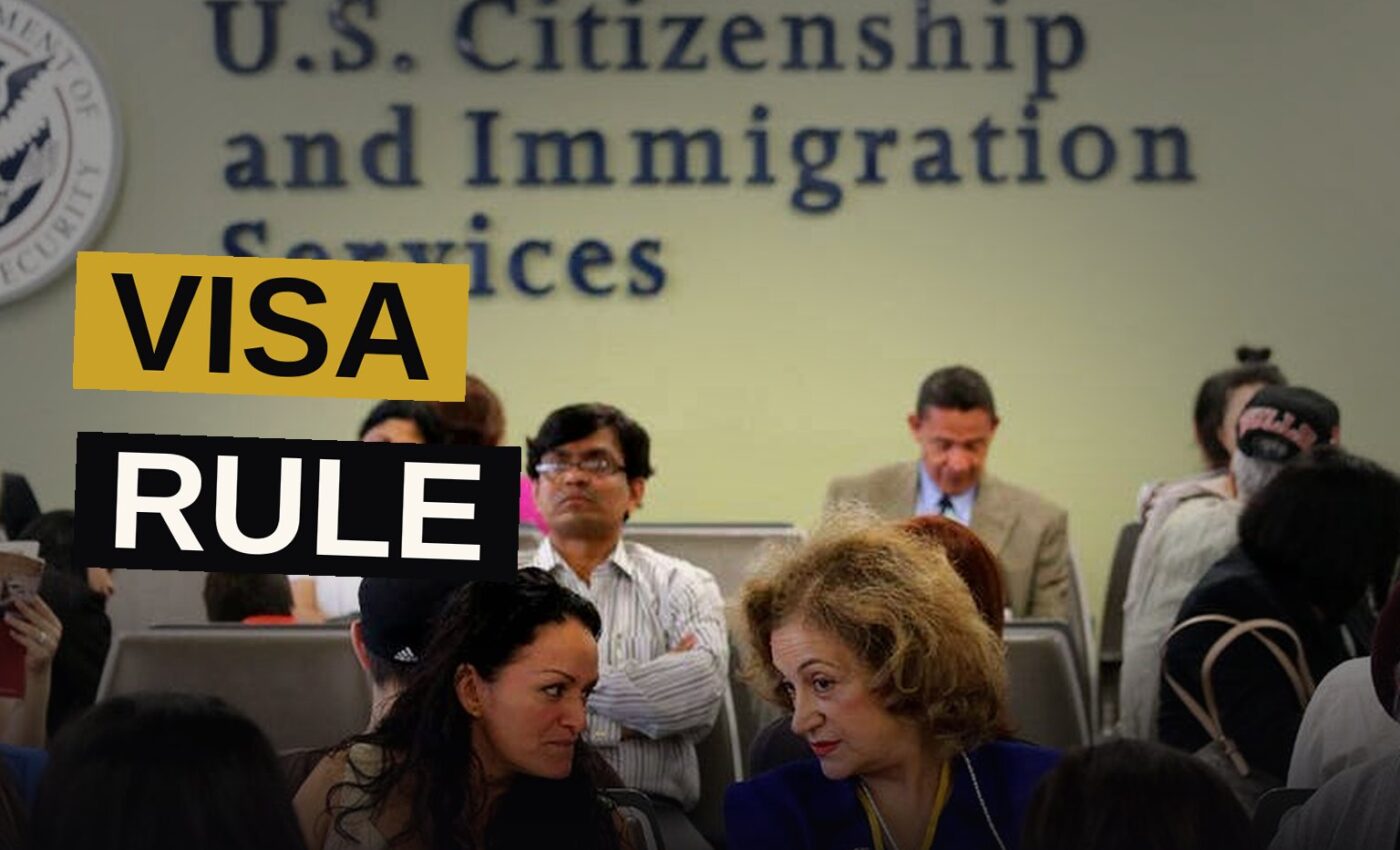
The Trump administration is proposing to eliminate the 60-day grace period that lets H-1B visa holders and other nonimmigrant workers stay in the U.S. after losing their jobs.
The U.S. Citizenship and Immigration Services (USCIS) and the Department of Homeland Security (DHS) have posted an unpublished rule to the Federal Register that would scrap the grace period entirely. Under current law, workers on visas like the H-1B — which lets employers sponsor skilled staff with a Bachelor’s degree or higher — get two months to find a new job if they lose the employment tied to their visa. If the new rule takes effect, a noncitizen who stops working for the employer sponsoring their visa would have to leave the country immediately.
The proposal is scheduled to publish on Friday, Sept. 11, 2026, according to the Federal Register. After that, it faces a two-month public comment period before it can become law.
What DHS Says the Rule Does
DHS frames the change as a return to first principles. The document argues that the grace period broke the intended link between a visa holder’s status and the job that justified it.
“This proposal restores a direct relationship between an alien’s nonimmigrant status and the specific employment or activity that formed the basis of his or her admission or grant of status in the United States and reduces administrative burden,” the document reads.
The agency goes further, arguing the current system undermines the integrity of the visa program. “DHS believes that restoring the expectation that aliens depart the United States upon cessation of the employment or activity upon which the alien’s status was based, would better promote program integrity and be more consistent with statutory purpose,” the rule proposal reads.
That language reframes the entire premise of the nonimmigrant visa. A worker is not in the U.S. to seek opportunity. They are here for a specific job, and when that job ends, so does their right to stay.
The Burden Argument
The agency also claims the grace period is a bureaucratic headache. DHS says determining when the up to 60-day window applies, reviewing submitted information, and deciding whether to shorten or eliminate the period is “time consuming and complex for the agency and confusing or unpredictable for the petitioner, alien and the alien’s dependents.”
That is a practical argument, but it lands with some irony. The rule would not simplify the system for the worker. It would simply push the complexity onto them, forcing an immediate departure or a frantic scramble for a new sponsor with no runway at all.
The current 60-day window gives skilled workers time after losing their job. Removing it turns any job loss into an immediate immigration emergency.
A Rule That Dates to 2017
The grace period is not an ancient feature of U.S. immigration law. It is relatively new, and its history is tied directly to the current president.
Before 2017, the document states, there was no 60-day grace period. In 2016, DHS established it in a rule that came into effect on Jan. 17, 2017 — three days before President Donald Trump first took office.
That timing is worth noting. The grace period was finalized just before Trump’s first inauguration. Now, nearly a decade later, the administration is moving to undo it.
The rule’s elimination would favor U.S. workers, DHS wrote, because employers who previously filled jobs with foreign workers would have less foreign-born labor to choose from.
The Claim About U.S. Workers
The agency’s economic logic is straightforward. If employers cannot keep foreign workers on the payroll during a job search, they will hire Americans instead.
“DHS assumes that almost all these entities would offer the same jobs to equally qualified U.S. workers, go through the I-129 petition process to sponsor nonimmigrant workers, or reassign the work to other current employees,” the rule proposal reads.
The agency acknowledges a cost. “DHS acknowledges that some of these petitioners may incur a temporary loss of productivity due to labor turnover,” the document reads.
That is a concession that the rule will disrupt businesses. But DHS argues the disruption is worth it, betting that the jobs vacated by foreign workers will go to U.S. citizens.
What Losing the Grace Period Means
The practical effect of the rule is stark. A visa holder who is laid off would have no legal status the moment their employment ends. They would have to leave the U.S. immediately.
There is no buffer. No time to pack, no time to line up interviews, no time to sort out their visa status. The current system gives a worker 60 days after losing their job. The proposed rule removes that entirely.
For H-1B holders, this is a life-altering shift. A single layoff would uproot their lives with no notice.
The document’s mention of “the alien’s dependents” in its burden argument makes clear that the consequences ripple beyond the worker.
A Pattern of Restriction
This proposal does not exist in a vacuum. It is part of a wider pattern of restriction under the current administration.
The U.S. State Department has yanked more than 175,000 visas under the Trump administration so far, according to a separate report.
In a related case, a federal judge recently struck down Trump’s $100K H-1B visa fee, ruling it an unconstitutional tax. The proposed rule takes a different approach from that fee.
Instead of making H-1B visas more expensive, the proposed rule makes them more precarious. It does not reduce the number of visas issued. It reduces the security of holding one.
The Path Forward
The rule is not law yet. It is scheduled to publish on Friday, Sept. 11, 2026, and will then be subject to a two-month period of public comment before becoming law.
That comment period is the administration’s next hurdle. The exact outcome of that process is not yet known.
Fox News Digital contacted DHS and the White House for further comment.
Key Dates and Deadlines
| Date | Event |
|---|---|
| Jan. 17, 2017 | 60-day grace period rule takes effect, three days before Trump’s first inauguration |
| Sept. 11, 2026 | Proposed elimination rule scheduled to publish in the Federal Register |
| After publication | Two-month public comment period before the rule can become law |
The clock is now running. Workers, employers, and immigration attorneys will be watching the Federal Register on Sept. 11 to see the exact language of the proposal.
Until then, the grace period remains in effect.
Source: foxnews.com
Get the Notebook.
The day's best stories and every fresh verdict, in plain English, in your inbox by seven. One email a day, no more.