
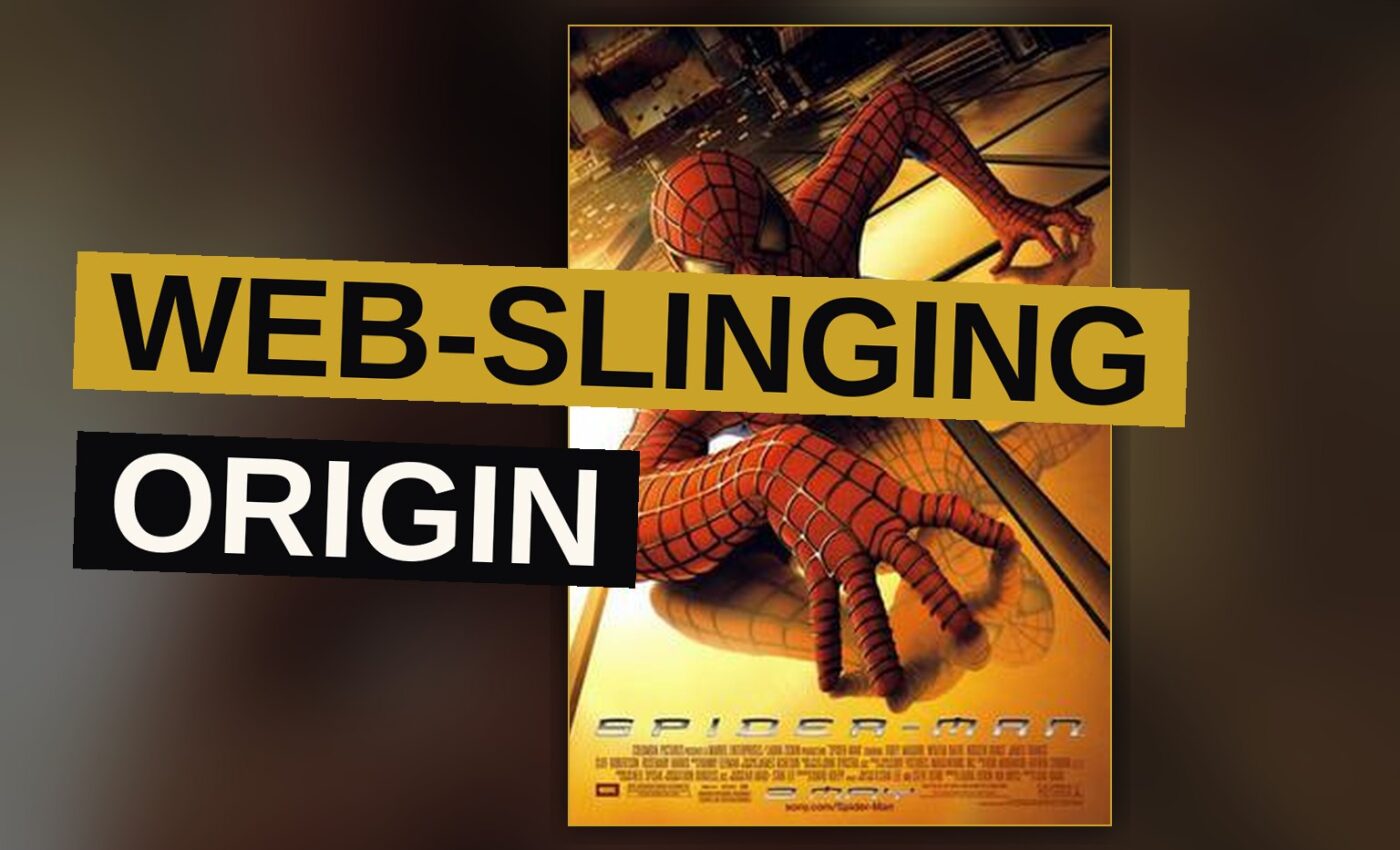
Sam Raimi’s Spider-Man arrived in 2002 carrying a quarter-century of stalled development, and the miracle is that it moves like nothing was ever in its way. Tobey Maguire plays Peter Parker, a high school student bitten by a genetically engineered spider during a field trip to a Columbia University genetics lab. He wakes up able to cling to walls, with organic webbing in his wrists and senses sharp enough to feel danger before it lands.
That premise is the whole engine. Raimi never treats the powers as a joke or a burden alone — he treats them as a kid’s sudden, unearned luck, then spends the rest of the film charging interest on it.
Trailer, via Spider-Man.
Willem Dafoe’s Norman Osborn
The film’s best decision is pairing Peter with a villain who got his powers the same way and paid a worse price. Willem Dafoe’s Norman Osborn tests a performance-enhancing chemical on himself to win a military contract for Oscorp, the company he founded. It gives him strength and takes his mind. He kills one of his own scientists before the first act is over.
Dafoe plays the split without winking. Norman is a father first, a corporate animal second, and a costumed killer third.
Kirsten Dunst’s Mary Jane Watson is dating Harry Osborn, Peter’s best friend, played by James Franco. Cliff Robertson and Rosemary Harris anchor the film as Uncle Ben and Aunt May. J. K. Simmons arrives as Daily Bugle publisher J. Jonah Jameson and steals every scene he stands in.
The supporting bench is deep:
- Joe Manganiello as the bully Flash Thompson
- Bill Nunn as Daily Bugle editor Joseph “Robbie” Robertson
- Michael Papajohn as the carjacker who kills Ben Parker
- Ron Perkins as Dr. Mendel Stromm, Norman’s head scientist
- Randy Savage as Bonesaw McGraw
- Bruce Campbell as the ring announcer
- Stan Lee, Spider-Man’s co-creator, in a cameo at the World Unity Fair
The Wrestling Match and the Thief
The film’s moral spine is one scene. Peter enters an underground wrestling event hoping to buy a car to impress Mary Jane, wins his match, and gets swindled out of his earnings. When the organizer is robbed, Peter steps aside and lets the thief run.
That thief then kills Uncle Ben. Peter chases him down, and the man falls to his death.
Raimi stages this without a speech, and it lands harder than any line could. Everything Peter does afterward — the costume, the alias, the freelance photography for the Daily Bugle — grows from that one petty decision. Jameson hires him because he can supply high-quality images of Spider-Man, and Jameson considers Spider-Man a menace. The irony is not subtle, and it does not need to be.
David Koepp wrote the screenplay, with later rewrites by Scott Rosenberg and Alvin Sargent. Danny Elfman composed the score. Sony Pictures Imageworks handled the visual effects, and the film was shot in Los Angeles and New York City from January to June 2001. It runs 121 minutes.
The third act puts Norman on a glider, hunting the Oscorp board that voted to oust him and sell the company. He kills them during the Unity Day festival in disguise. Spider-Man fends him off and rescues Mary Jane. Jameson then hands the masked killer his name: the Green Goblin.
Norman offers Peter a place at his side. Peter refuses.
Some of this has aged. The effects show their seams in the swinging shots, and the romance between Peter and Mary Jane gets less room than the origin deserves. But the casting holds, Dafoe holds, and the film’s understanding of guilt as a motor holds hardest of all. This is the template the genre still works from, and it earned that status.
Get the Notebook.
The day's best stories and every fresh verdict, in plain English, in your inbox by seven. One email a day, no more.


