
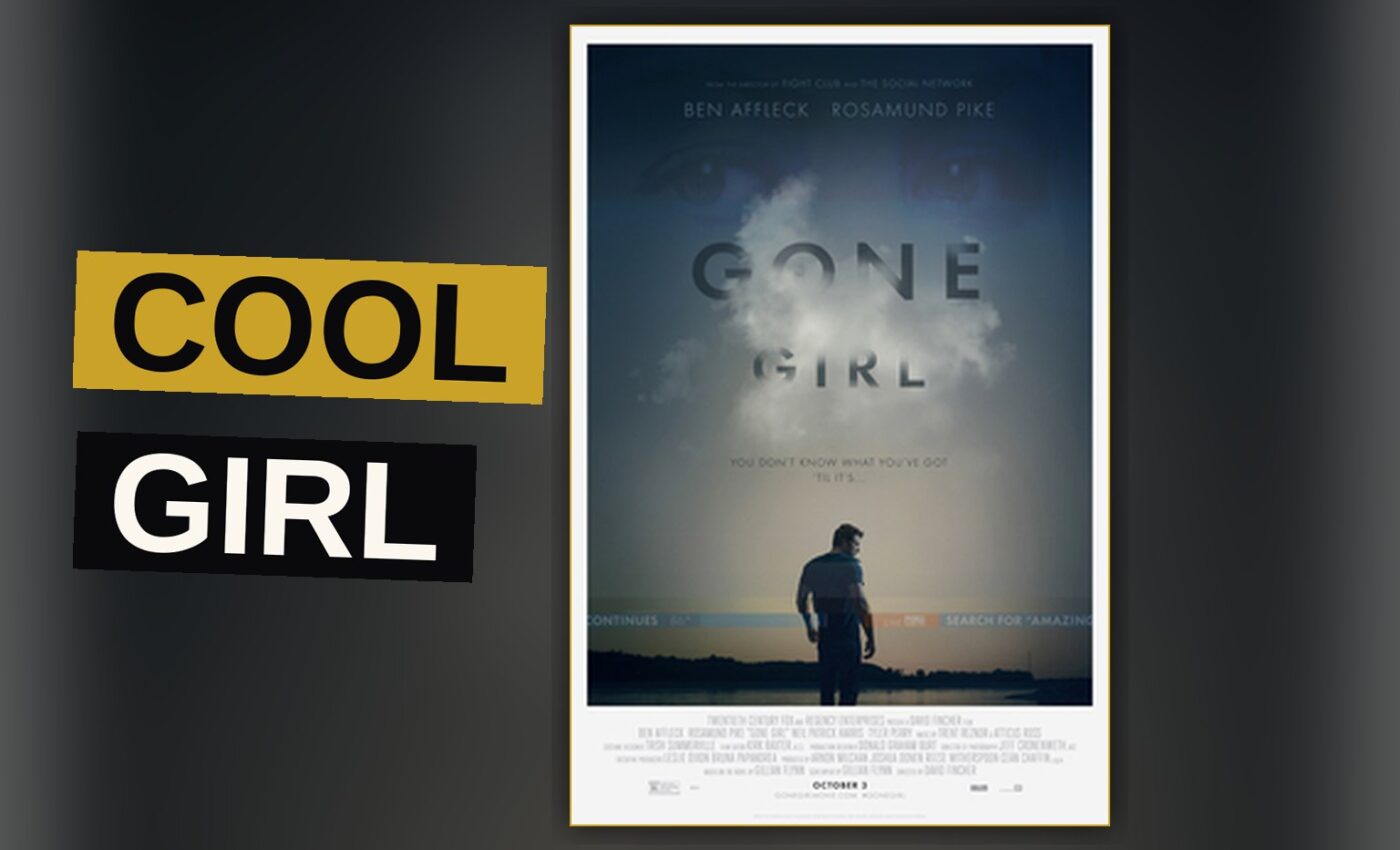
David Fincher’s Gone Girl turns a missing-person case into a public trial, and the public decides before the police do. Ben Affleck plays Nick Dunne, a writing teacher in Missouri whose wife, Amy, vanishes on the couple’s fifth anniversary. Rosamund Pike plays Amy, the inspiration for her parents’ Amazing Amy children’s books — a fame that guarantees the case becomes a media circus.
Trailer, via 20th Century Studios.
A Writing Teacher in Missouri
The setup is a procedural with a knife in it. Detective Rhonda Boney, played by Kim Dickens, and her forensic team find evidence of a struggle and blood loss in the house. They learn about the couple’s financial problems, their disputes, and Amy’s attempt to buy a gun. Medical reports say Amy was pregnant. Nick denies knowing.
That denial is where the film’s real subject starts. Fincher and Flynn, adapting her own 2012 novel, are less interested in who took Amy than in how quickly a husband becomes a suspect when he fails to perform grief correctly. The media finds Nick’s apathy suspicious. The film finds the media suspicious right back, and it is not subtle about it.
The Woodshed and the Diary
The evidence piles up in places Nick cannot explain. Thousands of dollars’ worth of items were bought with his credit card and hidden in his sister Margo’s woodshed. Carrie Coon plays Margo, Nick’s sister, in her film debut. Tyler Perry plays Tanner Bolt, the defense attorney Nick hires. Neil Patrick Harris plays Desi Collings, an old admirer of Amy’s who surfaces in the case.
Then Amy’s anniversary treasure hunt — the elaborate clues she sets for Nick every year — leads authorities to a diary documenting her growing fear that her husband will kill her. The clues point to places where Nick had sex with his student Andie, played by Emily Ratajkowski. The diary and the affair together make the case against him look closed.
You don’t know what you’ve got ’til it’s…
The tagline is the whole trick, and the film knows it.
Amy’s Plan
The turn is that Amy is alive, hiding in a campground in the Ozarks, and she built the case against Nick herself. After discovering his affair, she conceived an elaborate plan to frame him for her murder. She had him increase her life insurance. She secretly used his credit card to buy the woodshed items. She stole a sample of her pregnant neighbor’s urine to fake a pregnancy and win media sympathy. She wrote increasingly fabricated diary entries and placed incriminating evidence for police to find. On the morning of her disappearance, she drained and splattered her own blood across the kitchen.
This is the part that earns Gone Girl its reputation. The mechanics are not a twist for shock’s sake; they are a thesis about a marriage in which both people have been performing for an audience. Nick’s affair is real. Amy’s plan is real. Neither one is innocent, and the film refuses to hand out a clean verdict to either.
Pike carries the heaviest load, and the Academy, BAFTA, Critics’ Choice, Golden Globe and Screen Actors Guild all nominated her for Best Actress. The film premiered as the opening night selection of the 52nd New York Film Festival on September 26, 2014, opened in US theaters on October 3, 2014, and grossed $370 million worldwide — Fincher’s highest-grossing film.
What the Money Says
The gross is the number worth noting. A 149-minute psychological thriller with an unreliable narrator and no sympathetic lead became Fincher’s biggest commercial hit. That says audiences will follow a story that trusts them to sit with a marriage this ugly.
What matters less is the mystery itself. Once Amy’s plan is clear, Gone Girl stops being a whodunit and becomes a study of two people who cannot stop narrating themselves. The film is strongest when it lets that sit — Nick on camera, Amy in her diary, both of them writing a version of events that flatters them.
The weakness is the back half. The film keeps stacking evidence after the reveal has already landed, and the runtime starts to feel like a sentence. Fincher’s control never slips, but the story runs out of new things to say about its own cruelty before it runs out of minutes.
Gone Girl is a postmodern mystery that works because it never asks you to like anyone in it. It asks you to watch, and to notice how fast watching turns into judging. That is a colder trick than most thrillers attempt, and it holds up.
Get the Notebook.
The day's best stories and every fresh verdict, in plain English, in your inbox by seven. One email a day, no more.


