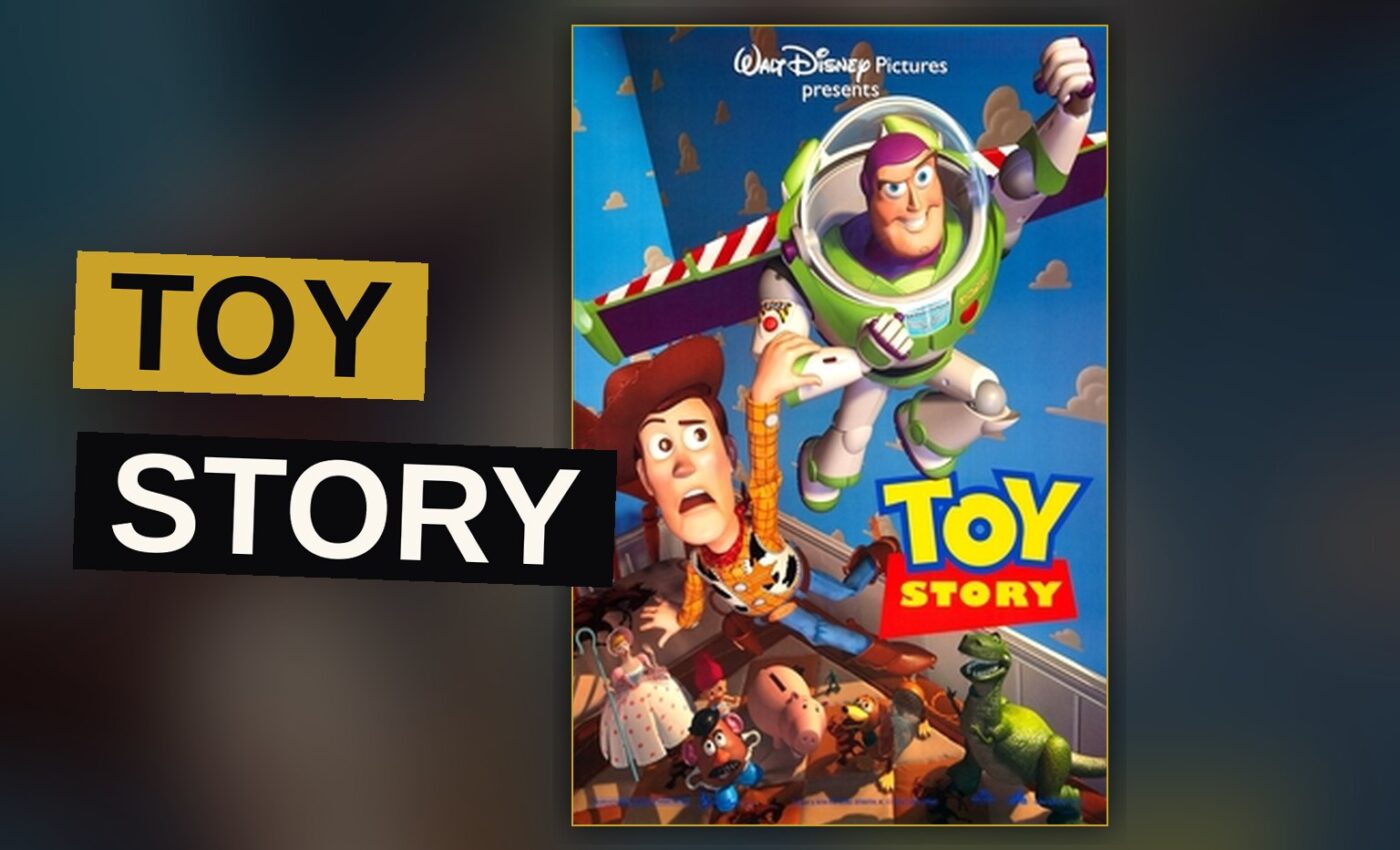
In 1995, a small studio called Pixar released a film that changed the rules of animation. Toy Story was the first feature-length movie made entirely with computer-generated imagery, and it looked like nothing audiences had seen before. But the technology was never the real story. The real story was about a cowboy doll named Woody, a space ranger named Buzz Lightyear, and the quiet terror of being replaced.
The film holds up because it was built on a simple, durable idea. Toys are alive when people are not looking, and their greatest fear is being abandoned. That premise gave the animators a world to play with and the writers a heart to break. Toy Story is a comedy about plastic, but it is also a drama about obsolescence, loyalty, and the fear that you might not be the favorite anymore.
Trailer, via Disney Plus.
Woody Meets Buzz
Woody is the leader of Andy’s toys, a pull-string cowboy who has been the favorite since the beginning. He is confident, a little smug, and used to being in charge. Buzz Lightyear is the new arrival, a space ranger who does not realize he is a toy. He believes he is on a real mission, and he behaves with the solemn dignity of a man who thinks he is flying a spaceship instead of sitting on a shelf.
The conflict writes itself. Woody is threatened by Buzz’s popularity, and Buzz is oblivious to the social order he has disrupted. Their first meeting is a disaster. Woody tries to welcome the newcomer and ends up knocked out of a window, and the two of them are forced to work together to find their way back to Andy’s house before the family moves.
The voice casting is perfect. Tom Hanks gives Woody a warmth that keeps the character from becoming a jealous villain, and Tim Allen makes Buzz’s delusion feel heroic rather than pathetic. The two actors play off each other with a natural rhythm, and their bickering never feels forced. They are not just enemies; they are two versions of the same fear, both terrified of being forgotten.
Rules of the Toy Society
The toys in Andy’s room are a small society with its own rules and rituals. Mr. Potato Head is the cynic. Rex the dinosaur is the anxious one. Hamm the piggy bank is the pragmatist. Slinky Dog is the loyalist. They all report to Woody, and they all follow the same doctrine: a toy must be there for its child, no matter what.
That doctrine is what gives the movie its weight. When Woody pushes Buzz out the window, he breaks the code, and the other toys turn on him. The scene where they chant “You’re a disgrace to all toys” is genuinely uncomfortable, because it is not just a cartoon gag. It is a community enforcing its values, and Woody has failed them.
The film also introduces the neighbor Sid, a boy who mutilates toys for fun. Sid is the dark mirror of Andy. Where Andy plays with his toys with care, Sid takes them apart and rebuilds them into monsters. The scenes in Sid’s room are the closest the movie comes to horror, with mutant baby heads and spider legs lurking in the shadows. It is a smart choice, because it gives the toys an external threat that is more frightening than their internal squabbles.
Animation That Started a Revolution
It is easy to forget how radical the animation looked in 1995. The characters were made of polygons, and their movements had a slight stiffness that modern audiences might notice. But the film’s creators understood that the limitations of the technology could be a strength. The toys are plastic, so their surfaces are shiny and smooth. The humans are less convincing, but they appear only briefly, and the story does not depend on them.
The animators also found ways to make the digital world feel alive. The way dust floats in a beam of light, the way a ball bounces with real physics, the way Buzz’s wings snap open with a satisfying click — these details sold the reality of the world. The movie did not need to look like a painting. It needed to look like a room full of toys, and it did.
The action sequences are still impressive. The car chase at the end, with Buzz and Woody strapped to a rocket, is a masterpiece of staging and timing. The film knows when to be loud and when to be quiet, and it never sacrifices character for spectacle. The chase works because we care about the two toys on the rocket, not because of the explosion.
Jokes for Kids, Satire for Adults
The screenplay was written by Joss Whedon, Andrew Stanton, Joel Cohen, and Alec Sokolow, and it is sharp in a way that most family films are not. The jokes work on two levels. Children laugh at the slapstick, and adults laugh at the satire. When Buzz checks his wrist to read a message from Star Command, the gag is that he is delusional. When Woody says, “You are a toy!” and Buzz replies, “That’s not what I heard,” the line is funny because it is sad.
The film also has a strong sense of structure. The first act sets up the conflict. The second act forces the two rivals to cooperate. The third act brings them home, but only after they have learned to respect each other. The lesson is not stated in a heavy-handed way. It emerges from the action.
One of the best scenes is the moment when Buzz sees a commercial for himself on television. He realizes he is a toy, and he stops moving. His face goes blank. He tries to fly, and he falls. The scene is devastating because it is not played for laughs. Buzz has lost his identity, and the film gives him a moment of genuine despair. It is a brave choice for a children’s movie, and it pays off.
Cast, Music, and the Newman Touch
The supporting cast is loaded with talent. Don Rickles brings his signature insult-comic energy to Mr. Potato Head. Wallace Shawn makes Rex a lovable bundle of nerves. John Ratzenberger gives Hamm a dry, knowing wit. Jim Varney’s Slinky Dog is the heart of the group, always ready to forgive and help.
The music, composed by Randy Newman, is another key element. The opening song, “You’ve Got a Friend in Me,” is simple and warm, and it sets the tone for the whole film. Newman’s score is playful and jazzy, and it never overpowers the scenes. The songs are not just decoration; they comment on the action. When Buzz and Woody are lost and arguing, the music shifts to a lonely, minor-key tune that matches their isolation.
Here is how the film’s key sequences land in order:
- Andy’s birthday party introduces Buzz and triggers Woody’s jealousy.
- The gas station fight ends with Woody accidentally knocking Buzz out the window.
- The trip to Pizza Planet gets the pair captured by Sid.
- Buzz’s commercial revelation breaks his spirit.
- The rocket escape from Sid’s house becomes the climax.
- The final chase back to the moving truck resolves the rivalry.
The Fear of Being Replaced
The central theme of Toy Story is the fear of being replaced. Woody is threatened by Buzz because Buzz is newer and shinier. That fear is universal. It is the fear of the older sibling, the aging employee, the forgotten friend. The film does not pretend that the fear is irrational. Woody has every reason to worry. Andy will grow up, and the toys will be put away.
But the film offers a different answer. Woody learns that being replaced does not mean being worthless. Buzz learns that being a toy is not a humiliation; it is a purpose. The toys find meaning in being there for Andy, even when Andy is not looking. The final scene, with the toys waving from the moving truck, is not sad. It is triumphant. They have survived, and they have each other.
Legacy and Lasting Appeal
Toy Story has aged better than almost any film from its era. The animation looks dated in places, but the story does not. The jokes are still funny. The characters are still alive. The themes are still relevant. A child watching it today will laugh at the same moments their parents laughed at, and they will feel the same emotions.
The film is also a time capsule of a particular moment in pop culture. Buzz Lightyear is a parody of the action-figure craze of the 1990s, and the film’s satire of consumer culture is still sharp. The toys are commodities, but they are also people. The movie asks us to see the humanity in the objects we own, and it makes us feel guilty about the toys we have abandoned.
Toy Story did not just launch a franchise. It launched an entire studio and a new era of animation. Pixar would go on to make A Bug’s Life, Monsters, Inc., and Finding Nemo, but the template was set here. The studio’s signature style — heartfelt stories, clever humor, and a respect for the audience — is fully present in this first film.
A Running Order of Key Moments
For a film that runs just over 80 minutes, Toy Story packs a remarkable amount of story into a tight frame. Here is a rough timeline of the major beats as they unfold on screen:
| Time in Film | Scene |
|---|---|
| 0–5 minutes | Andy plays with his toys; Woody is established as the leader |
| 5–15 minutes | Andy’s birthday party; Buzz arrives and steals the spotlight |
| 15–25 minutes | Woody’s jealousy boils over; he pushes Buzz out the window |
| 25–40 minutes | Woody and Buzz are stranded; they argue and meet Sid |
| 40–55 minutes | Buzz sees the commercial and falls into despair |
| 55–70 minutes | The rocket escape from Sid’s house |
| 70–80 minutes | The chase back to the moving truck; Woody and Buzz reconcile |
The Verdict on Toy Story
Toy Story is not a perfect film. The human characters look rough, and some of the secondary toys are underdeveloped. But the core story is strong, the performances are excellent, and the film has a generosity of spirit that is rare in any medium. It is a movie that rewards rewatches, and it has earned its place in the canon.