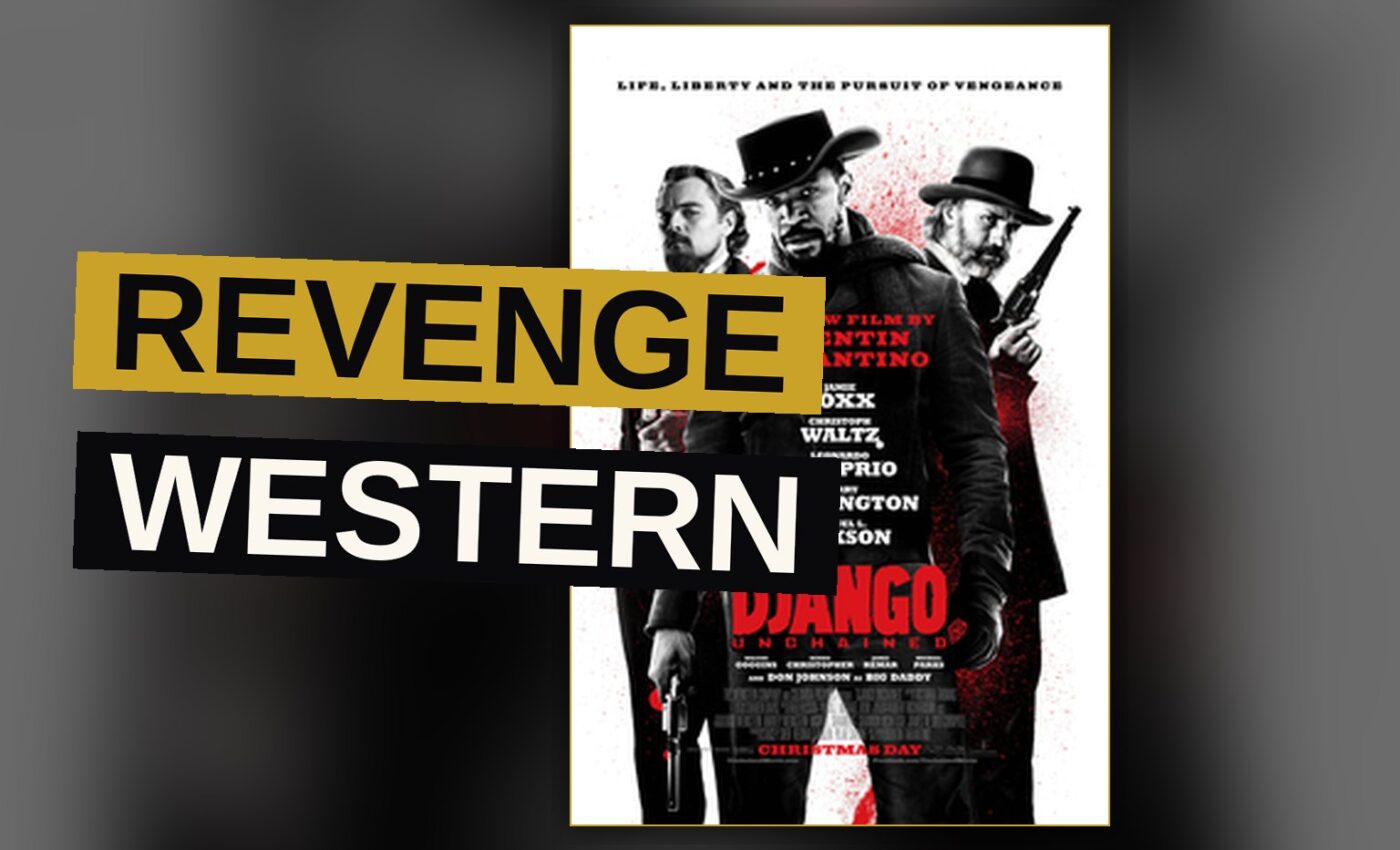
Quentin Tarantino’s Django Unchained is a revenge western with a sharp modern edge. It runs 165 minutes, and nearly every one of them is loaded with purpose. The film follows a freed slave named Django (Jamie Foxx) who teams with a German bounty hunter, Dr. King Schultz (Christoph Waltz), to rescue his wife from a brutal Mississippi plantation owner. It is loud, bloody, and unapologetically theatrical. It also works, because Tarantino never lets the style bury the story.
The film opens in 1858 Texas. Django and Schultz walk in chains, but the dynamic shifts fast. Schultz needs Django to identify a trio of wanted men, and he offers a deal: help me, and I will set you free. Django takes it. The partnership is the engine of the first hour, and Waltz delivers the kind of performance that makes every scene feel like a chess match. He is precise, courteous, and deadly. Foxx matches him with a quiet fury that builds slowly.
Trailer, via Sony Pictures Entertainment.
Waltz and Foxx Carry the First Hour
Christoph Waltz won the Academy Award for Best Supporting Actor for this role. It is easy to see why. Schultz is a man of contradictions: a dentist who kills for money, a European who finds American slavery abhorrent, a gentleman who shoots first. Waltz plays him with a lightness that never tips into parody. His dialogue is the film’s best material, and he delivers it with a rhythm that feels effortless.
Jamie Foxx is the anchor. Django starts as a man who barely speaks, then grows into a figure of almost mythic confidence. Foxx shows the change through posture and glance more than words. By the final act, he is a gunslinger in a blue velvet suit, and he earns the swagger.
Candyland and Calvin Candie
The third act moves to Candyland, the plantation owned by Calvin Candie, played by Leonardo DiCaprio. Candie is a monster with good manners. He smiles, he drinks, he discusses phrenology as if it were science. DiCaprio makes him charming enough that his cruelty lands harder. The famous dinner scene, where he slams his hand on the table and lectures his guests about skull shape, is the film’s tensest stretch.
The plantation sequence runs long. Some viewers will find the pacing slack. But Tarantino uses the time to build dread. You know what Candie is capable of, and the film makes you wait.
Blood, Soundtrack, and Style
Tarantino has never shied from violence, and Django Unchained is among his most graphic films. Blood sprays in fountains. Bodies drop in slow motion. The shootouts are choreographed like musical numbers, and the soundtrack leans on anachronistic choices: a hip-hop track over a horse chase, a spaghetti western theme for a showdown. Some critics called the mix jarring. It is deliberate. Tarantino wants you to feel the distance between the period setting and the modern anger underneath.
The film also has a sense of humor, and it is darker than the jokes suggest. Schultz’s polite refusal to shake Candie’s hand is a small act of defiance that sets the whole climax in motion. The comedy never undercuts the stakes.
A Fantasy With Real Weight
Django Unchained is not a documentary. It is a fantasy of empowerment, and Tarantino has said as much. But the film does not flinch from the reality of slavery. It shows whipping, branding, and the casual brutality of the institution. Some critics argued the film trivialized that history with its cartoonish violence. Others saw the stylization as a way to make the horror watchable without softening it.
The debate is fair. The film sits on the line between exploitation and reckoning. What is not in dispute is the craft. Tarantino wrote the script alone, and it shows in the density of the dialogue. Every character has a voice, and every scene has a point.
Stephen and the Supporting Cast
Samuel L. Jackson plays Stephen, Candie’s house servant, and his performance is a quiet shock. Stephen is complicit in the plantation’s cruelty, and Jackson plays him without sympathy. He is the film’s most uncomfortable figure, a man who has internalized the system that owns him. Kerry Washington appears briefly as Django’s wife, Broomhilda, and she makes the most of limited screen time. Her German-language connection to Schultz is a clever plot device, and it pays off in the finale.
The film’s ending is a bloodbath, and it is earned. Django blows up the plantation house, frees Broomhilda, and rides away. The last shot is simple: the couple on horseback, silhouetted against the sky. It is a western ending, and it feels right.
The Numbers Behind the Film
Django Unchained is not for everyone. It is long, brutal, and unapologetic. But it is also one of Tarantino’s most complete works. The performances are strong, the dialogue is sharp, and the direction is confident. It won two Academy Awards, for Waltz’s performance and for Tarantino’s original screenplay. It grossed over $425 million worldwide. Those numbers do not capture the film’s energy, but they confirm its reach.
The film has aged well. Its anger feels current, and its style has influenced 14 years of imitators. Few films manage to be both a crowd-pleaser and a provocation. This one does.
Hard Numbers at a Glance
- Title: Django Unchained
- Director: Quentin Tarantino
- Release Year: 2012
- Runtime: 165 minutes
- Lead Actors: Jamie Foxx, Christoph Waltz, Leonardo DiCaprio
- Academy Awards: Best Supporting Actor (Waltz), Best Original Screenplay
- Audience Score: 8.2/10 on TMDB (28,565 votes)
Western Conventions, Upended
| Element | Django Unchained | Typical Western |
|---|---|---|
| Protagonist | A freed slave seeking revenge | Often a lone white gunslinger |
| Violence | Stylized, excessive, almost comic | Usually restrained or realistic |
| Soundtrack | Hip-hop and modern music mixed with Spaghetti Western cues | Traditional orchestral or guitar scores |
| Moral Stance | Explicitly anti-slavery, angry | Often neutral or ambiguous |
| Ending | Explosive, cathartic, romantic | Often tragic or open |
It is a film that knows exactly what it wants to do. It does it well.