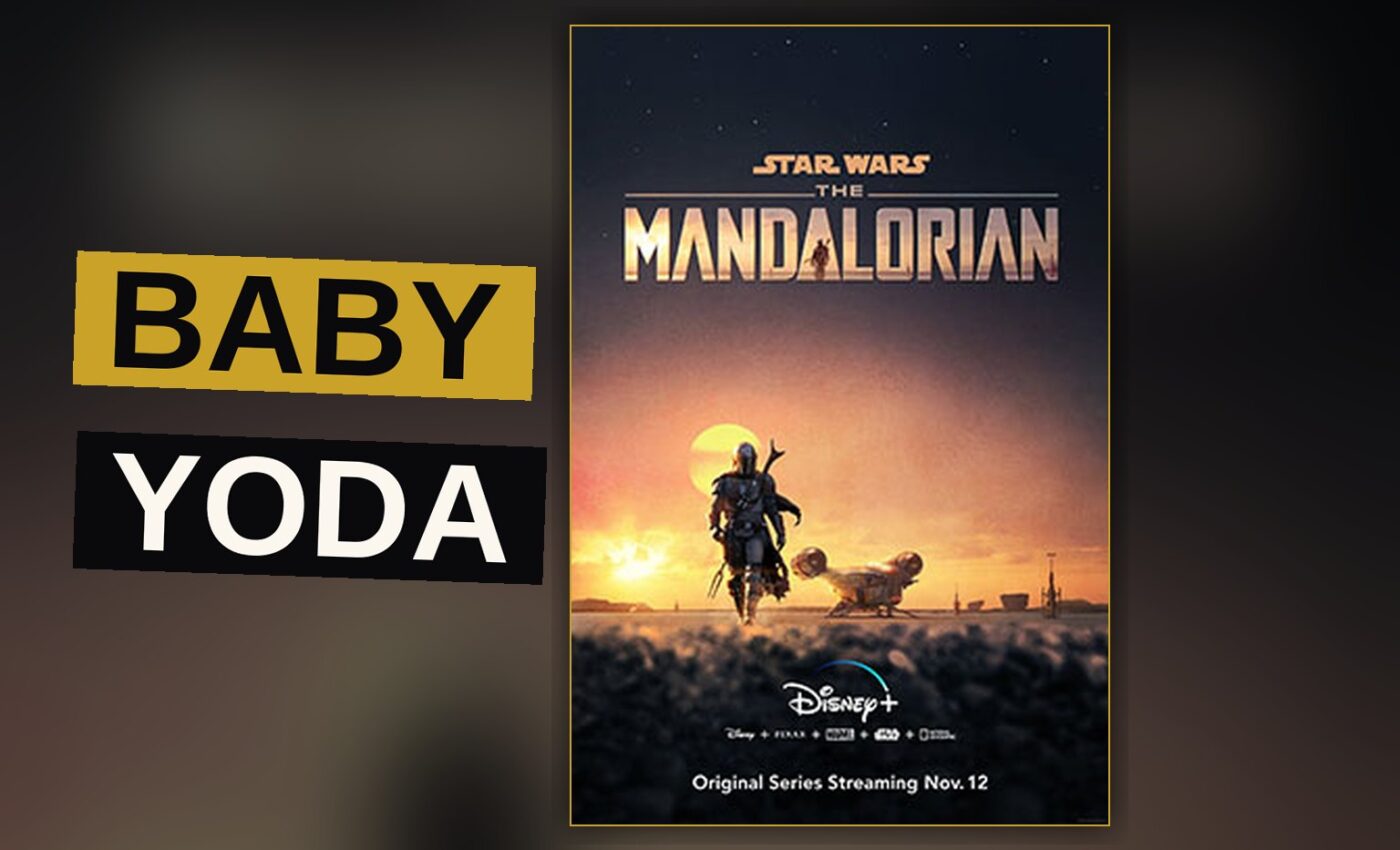
Disney+ launched The Mandalorian in 2019 as a proof-of-concept for live-action Star Wars. It worked. The series took a character from the edge of the galaxy and turned him into the center of a franchise. It also did something rarer: it made the galaxy feel dangerous again.
Trailer, via Star Wars.
The Hook
The premise is simple. A lone bounty hunter wanders the Outer Rim, collecting bounties and avoiding trouble. He wears a helmet, speaks rarely, and carries a weapon called a blaster. That’s it. The show adds one twist: he finds a baby. The baby is not human. It is a small alien with large eyes, and it changes everything.
Baby Yoda
The baby, later known as Baby Yoda, is the engine of the series. He is adorable, but he is also a mystery. The audience learns early that he is valuable to the Empire. The Mandalorian protects him anyway. This dynamic drives the whole plot. Every chase, every fight, every negotiation circles back to keeping Baby Yoda safe.
“This is the child.”
That line, spoken by the villainous Moff Gideon, sums up the tension. The Empire wants the child. The Mandalorian will not let them take him. That simple opposition carries the narrative through two seasons.
The Look
The Mandalorian looks different from other Star Wars films. The setting is dusty, brown, and harsh. There are no grand halls or polished corridors here. The camera stays low, following the dirt and the dust. The sound design is just as deliberate. Gunshots crackle. Lasers hum. The score swells at key moments, but it never overpowers the scene.
The show uses the visual language of Western cinema, with a few key differences. The towns are run-down, not frontier settlements. The law is enforced by bounty hunters, not sheriffs. The space ships land on the ground, not in the sky. This mix of familiar tropes and fresh settings gives the show a distinctive identity within the franchise.
The Cast
Pedro Pascal plays the titular character. He is a quiet actor, and the helmet hides much of his face. Yet his presence carries the weight of the story. The supporting cast is strong. Gina Carano plays Cara Dune, a former soldier who joins the hunt. Carl Weathers plays Greef Karga, a bounty hunter who hires the Mandalorian. Giancarlo Esposito plays Moff Gideon, the main antagonist. Each brings their own energy to the proceedings.
The chemistry between Pascal and Carano is real. Their scenes together feel natural, even when the dialogue is thin. Esposito, in particular, gives Gideon a menace that feels personal. He is not just a villain. He is obsessed with the child, and that obsession drives every action he takes.
The Pace
The Mandalorian moves fast. Each episode runs about half an hour. The show cuts between action, dialogue, and quiet moments without losing momentum. This pace suits the material well. It keeps the focus on the characters and the stakes.
There are slow stretches. Some episodes rely too heavily on exposition, explaining lore that fans already know. These moments can drag. But the show always snaps back. The action sequences are well-choreographed, and the final act of each season delivers a payoff.
The Soundtrack
The music is a highlight. It borrows from John Williams’s Star Wars scores while adding new themes. The main theme for the Mandalorian is a slow, haunting melody. It fits the character perfectly. The score swells during emotional beats, but it never overpowers the scene. The show knows when to let silence do the work.
The Weak Points
Not everything lands. Some episodes feel like filler, padding out the runtime with unnecessary side quests. The middle seasons lose some of the urgency of the first. The pacing slows, and the stakes sometimes feel smaller.
The writing also stumbles at times. The dialogue can be stiff, and some character motivations are explained rather than shown. The show relies heavily on visual storytelling, which works in most cases but occasionally leaves the audience confused about why a character acts a certain way.
The Legacy
The Mandalorian changed how Star Wars is told. It proved that the franchise could thrive outside of feature films. It also introduced new characters and expanded the universe in ways that previous films had not explored. The show’s success spawned spin-offs and sequels, cementing its place in the broader canon.
The show also raised the bar for production values. Its visual effects are top-tier, and its attention to detail sets a standard for the industry.
The Verdict
The Mandalorian is a strong entry in the Star Wars canon. It is not perfect, but it is consistently entertaining. The performances are solid, the direction is confident, and the concept is fresh. The show’s biggest flaw is also its strength: it is a character study wrapped in a space opera.
It earns a 7 of 10. That score reflects a show that delivers on its promise while showing room for improvement. It is a worthy addition to the franchise, and a sign of things to come.
Get the Notebook.
The day's best stories and every fresh verdict, in plain English, in your inbox by seven. One email a day, no more.