
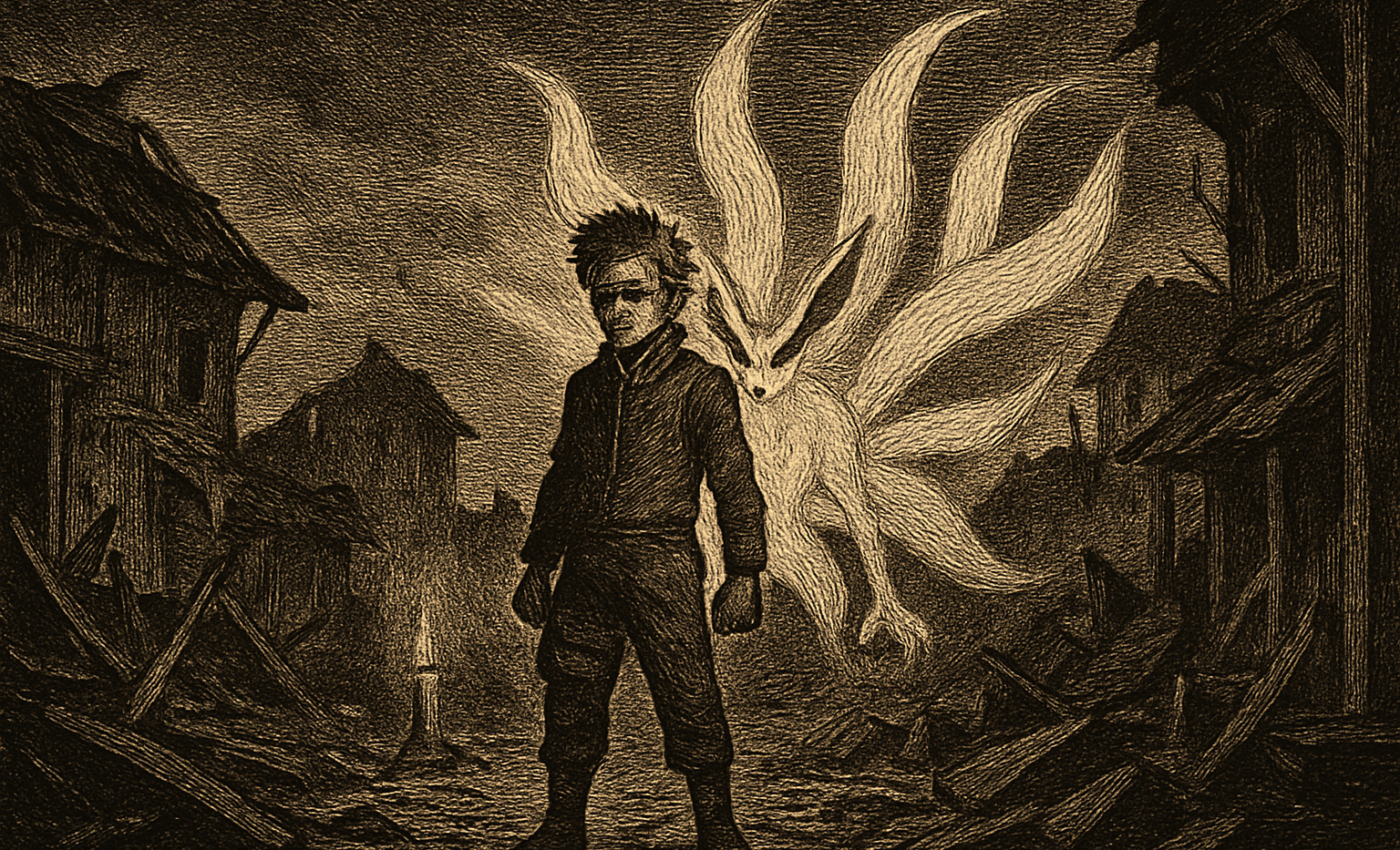
Naruto Uzumaki returns to Konoha after two and a half years, and the village he left is not the one he comes back to. That is the engine of Naruto Shippūden, which ran on TV Tokyo for 500 episodes across 20 seasons, from its first broadcast on February 15, 2007, to its last on March 23, 2017. The show picks up its hero older, stronger and still chasing the same ambitions. What changes is the size of the problem. The Akatsuki are no longer a rumor passed between ninja. They are hunting, and Naruto is on the list.
Trailer, via vizmedia.
A Return to Konoha
The premise is simple and the show knows it. Naruto, voiced by Junko Takeuchi, has spent the gap training, and he comes back to a village that has moved on without him. Sasuke Uchiha, voiced by Noriaki Sugiyama, is gone, off with Orochimaru, voiced by Kujira. Sakura Haruno, voiced by Chie Nakamura, has grown into a medic and a fighter. Kakashi Hatake, voiced by Kazuhiko Inoue, is still the teacher who watches more than he says.
This is a sequel that respects the cost of a time skip. The relationships have weight because the years actually passed. Naruto and Sakura do not reset to their younger bickering. They carry the loss of Sasuke like a debt neither can pay off.
The Akatsuki Problem
The villains are the reason the 500 episodes hold together. Akatsuki is a shinobi organization built from dangerous ninja, and its members get real screen time before they get fights. Itachi Uchiha, voiced by Hideo Ishikawa, is the best of them, a brother whose crimes are the wound Sasuke keeps reopening. The organization stacks its threats and then makes good on them.
Shikamaru Nara, voiced by Showtaro Morikubo, gets one of the series’ sharpest arcs, a revenge story that turns on strategy rather than power. Sai, voiced by Satoshi Hino, arrives as a blank and becomes something like a friend. Gaara, voiced by Akira Ishida, is now a leader, and he is the proof that Naruto’s way of talking people down can actually work.
Fights That Earn Their Length
Naruto Shippūden is a long show, and long shows pad. This one pads less than its reputation suggests. The action escalates in clear steps, and the animation holds up when it matters. Each upgrade Naruto gains has a cost attached, usually to his body.
The supporting cast is unusually deep for a series this size. Tsunade, voiced by Masako Katsuki, runs the village and its politics. Shizune, voiced by Keiko Nemoto, keeps her honest. Neji Hyuga, voiced by Koichi Tochika, carries his clan’s old grudges into a war he did not start. Even Orochimaru, a villain the show could have retired early, stays useful.
Where the 500 Episodes Drag
The show is not clean. Filler arcs interrupt the main story, and some of them run long enough to test patience. The war arc, which closes the series, spreads across a huge stretch of episodes and repeats its own beats. Characters who mattered in early seasons fade for hundreds of episodes at a time.
That is the trade-off of a weekly television production running for a decade. The highs are high, but you pay for them in detours. A viewer coming to Naruto Shippūden now, with the whole run available, can skip the padding. A viewer who watched it live could not.
Voice Cast and Continuity
The cast is the spine of the thing. Takeuchi’s Naruto moves between loud and quiet without breaking character. Sugiyama plays Sasuke cold, and the coldness is the point. Nakamura gives Sakura a spine the earlier series denied her. Inoue’s Kakashi stays dry and unhurried, a teacher who has already seen too much.
The continuity from the 2002 series is real. Naruto Shippūden assumes you know these people, and it rewards you for it. Newcomers can start here, but the emotional payoffs land harder if they do not.
What the Series Is Actually About
Strip the jutsu and the tailed beasts and Naruto Shippūden is about inheritance. Every major character is answering for something a parent, a teacher or a village did before they were born. Naruto inherits the Nine-Tails and the hatred that comes with it. Sasuke inherits a massacre. Gaara inherits a demon and a title he never asked for.
The show’s answer is stubborn and consistent: you do not get to choose what you inherit, only what you do with it. That theme carries 500 episodes because it applies to almost everyone on screen, including the villains. It is also why the ending, whatever you make of its pacing, feels earned.
The Verdict on Naruto Shippūden
Naruto Shippūden is one of the defining action series of its era, and it earns that standing despite its bloat. The Akatsuki give it a villain problem worth solving. The time skip gives it characters worth following. The cast gives it voices that hold for a decade.
The filler is the price of admission, not a reason to skip the show.
KEY FACTS
– Title: Naruto Shippūden
– Network: TV Tokyo
– First aired: February 15, 2007
– Last aired: March 23, 2017
– Seasons: 20
– Episodes: 500
– Genres: Animation, Action & Adventure, Sci-Fi & Fantasy
– TMDB audience score: 8.5/10 (8,767 votes)
The Strongest Arcs, Ranked
- The Akatsuki pursuit — Itachi and the organization give the series its stakes.
- Shikamaru’s revenge arc — proof the show can slow down and still hit.
- Naruto’s return to Konoha — the time skip pays off immediately.
- Gaara’s arc as village leader — the series’ best argument for Naruto’s methods.
- The war arc — huge, uneven, and worth it for the finish.
Score: 8.5 of 10
That matches the published critical score, and it is the right number. Naruto Shippūden is not flawless. It is too long, and it knows it. But the Akatsuki, the time skip and the cast carry it past its own worst habits. The show’s best stretches are as good as action animation gets. Its worst stretches are filler you can skip. Take the 8.5 as a verdict on the whole run, not a single arc. The series earns it.
Get the Notebook.
The day's best stories and every fresh verdict, in plain English, in your inbox by seven. One email a day, no more.