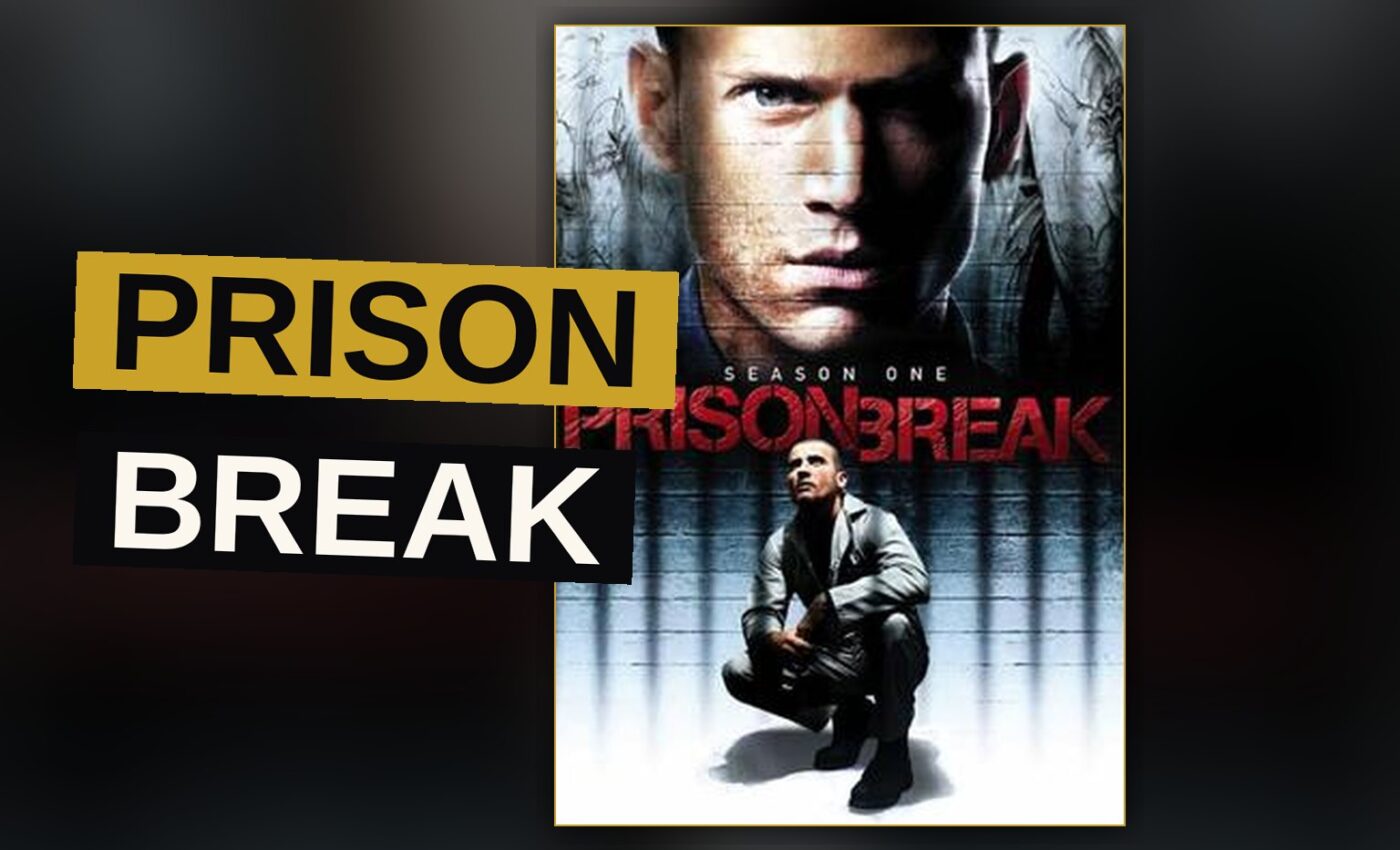
“Prison Break” is a TV show about a man who breaks his brother out of prison to save him from a death sentence he did not deserve. That is the whole premise, and it is also the whole problem. The Fox series ran for two seasons, 24 episodes, and a finale that tried to tie everything together. It is a pulpy, over-the-top adventure that knows exactly how much fun it is having, even when the plot gets absurd.
“It was a simple plan.”
That simplicity is the show’s charm and its curse. Michael Scofield, played by Wentworth Miller, is an engineer who tattoos the blueprints of Fox River State Penitentiary onto his skin. He is trying to free his brother Lincoln Burrows, played by Dominic Purcell, who has been sentenced to death for a crime he did not commit. The rest of the cast includes Robert Knepper as Theodore Bagwell, William Fichtner as Alexander Mahone, and Paul Blackthorne as Brad Bellick. The show follows the inmates, guards, and federal agents caught up in the escape attempt.
Trailer, via Konstantin Pichugin.
The Escape Plan
The first season is the tightest the show ever gets. Michael’s plan unfolds week by week, and each episode reveals another piece of the puzzle. The show earns its momentum by building tension slowly, letting the audience see the layers of the scheme before the characters do. Wentworth Miller carries the weight of the story, playing Michael as a man who is both calm and desperate.
The pacing holds until the middle of the second season, when the show starts adding new characters and new locations. The flash-forwards, which show the aftermath of the escape, become a crutch rather than a hook. They are meant to keep the audience invested, but they often just confuse things. By the back half of the second season, the show is chasing its own tail.
The Cast
Purcell’s Lincoln is the emotional center of the show. He is a former football player who is innocent, angry, and occasionally foolish. His scenes with Scofield are the best of the series, because they are about loyalty and family in a way that the action sequences never quite match. Knepper’s Bagwell is a standout as the show’s villain. He is unhinged, funny, and genuinely scary, a performance that stands out in a cast full of competent actors.
Fichtner’s Mahone is the other major antagonist, and he is less successful. His arc is less interesting than Bagwell’s, and his motives feel thinner. Blackthorne’s Bellick is the show’s comic relief, and he is mostly effective in small doses. The supporting cast, including Sarah Wayne Callies as Schillinger and Jorge Garcia as Dr. T-bag, rounds out the prison world without stealing focus.
The Weak Points
The show’s biggest flaw is its willingness to sacrifice logic for spectacle. Characters make decisions that strain credulity, and the show rarely explains them. The finale, which wraps up the main plot, tries to answer every question the show raised, but it does so in a way that feels rushed. Some viewers found the ending satisfying; others felt cheated. Either way, it closes the book on the central story without fully resolving the larger questions the show had raised.
The show also leans heavily on its flash-forwards. These scenes show the future, but they often give away information the present-day story is trying to build toward. This is a structural issue, not a stylistic one, and it affects the pacing of every episode that uses them.
What Works
- The first season’s slow burn.
- Wentworth Miller’s performance as Michael.
- Dominic Purcell’s performance as Lincoln.
- Robert Knepper’s performance as Bagwell.
- The production design of Fox River State Penitentiary.
These elements are the reasons the show still draws audiences. The prison itself is a character, with corridors and cells that feel lived-in. The show’s attention to detail extends to the props and the sets, giving the escape attempts a sense of weight.
The show’s writing is uneven, but it is rarely boring. The dialogue is sharp when it wants to be, and the show knows how to stage a chase or a fight. The music, composed by Blake Neely, adds to the tension without overwhelming the scenes. The show also handles its villains with care, giving each of them a reason to exist beyond pure antagonism.
Final Word
“Prison Break” is a show that understands its own limits. It is not trying to be subtle, and it does not pretend to be. The show is a guilty pleasure, a piece of escapist entertainment that asks very little of its audience and delivers exactly what it promises. The first season is a masterpiece of slow-building tension, and the second season is a mixed bag that tries to do too much at once.
The finale is a letdown, but the journey there is worth remembering. The show is a product of its time, a relic of the era when serialized TV was still finding its footing. It is not a great show, but it is a good one, and it deserves credit for the moments it gets right.
Get the Notebook.
The day's best stories and every fresh verdict, in plain English, in your inbox by seven. One email a day, no more.