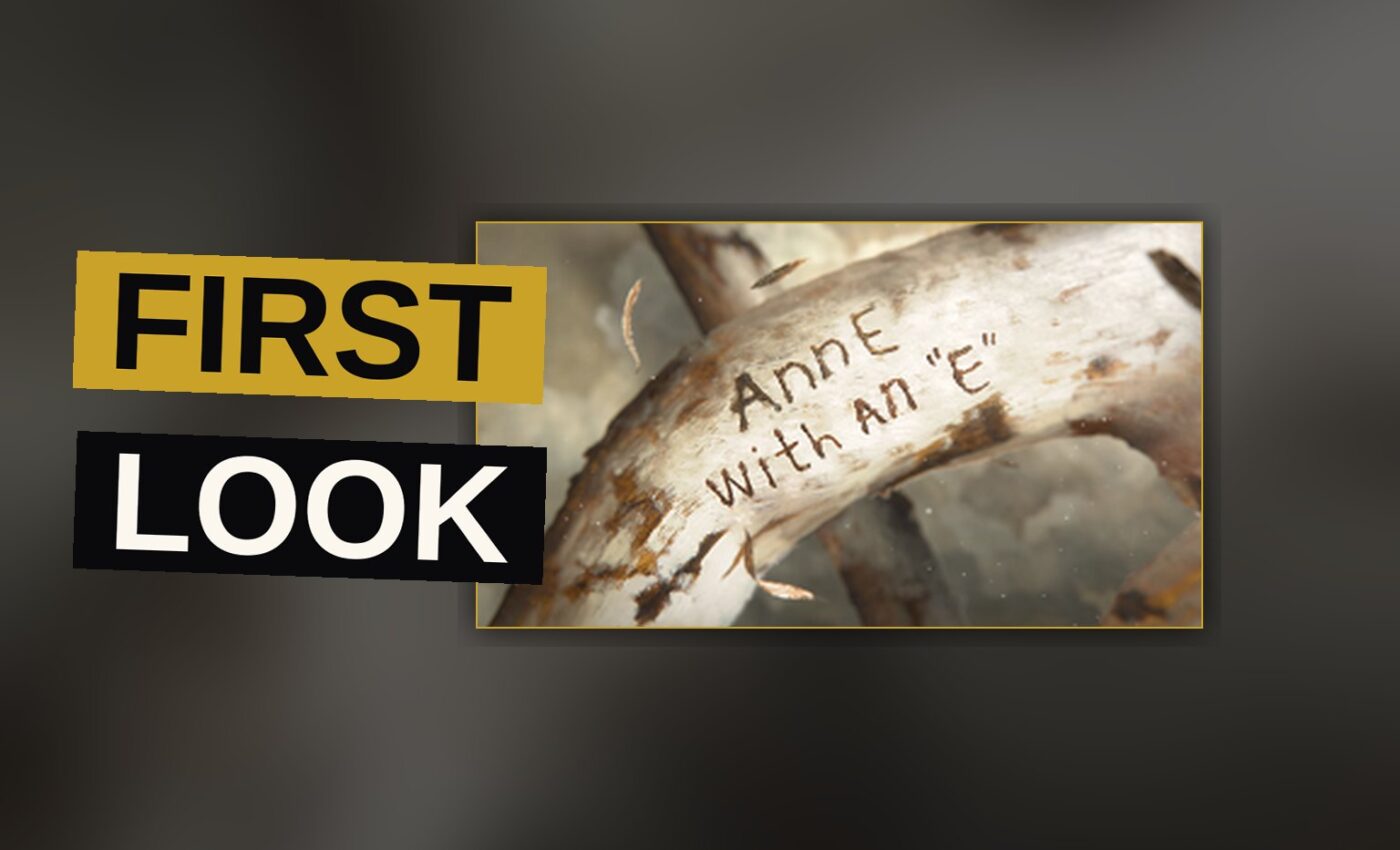
Anne with an E is the story of a girl who arrives at a small Canadian town with nothing but her name and a broken heart. The CBC series, created by Moira Walley-Beckett, takes L.M. Montgomery’s classic Anne of Green Gables and rebuilds it for a modern audience. The result is a show about grief, identity, and the strange, beautiful mess of growing up. It is not always easy to watch, but it is rarely boring.
The series follows Anne Shirley, played by Amybeth McNichol, as she moves from the orphanage to the farm of Marilla Cuthbert (played by Geraldine James) and Matthew Cuthbert (played by Kevin McGarry). She is a girl with red hair, freckles, and a vivid imagination that refuses to stay quiet. The show keeps the core of Montgomery’s novel while stripping away some of its saccharine edges. What remains is a portrait of a girl trying to make sense of a world that often makes no sense at all.
Trailer, via Netflix.
The Orphanage and the Arrival
The first season opens with Anne in the orphanage, a place full of children whose stories are not their own to tell. The show spends time with her there, showing how she learned to navigate a system that did not care about her. Her arrival at Avonlea is a turning point, but it is not a happy ending. The farm offers kindness, but it also brings loneliness and confusion.
Matthew is the soft center of the show. He is a man who loves flowers, books, and a girl he never expected to want. His love for Anne is unconditional, but it is also fragile. He is a man who has lost his wife, and he finds himself in love with a girl who is not his daughter. That tension runs through the first season, and it shapes everything that happens afterward.
Marilla is harder to read. She is strict, practical, and deeply wounded. She wants Anne to fit a mold, but she cannot help seeing the girl for who she is. Their relationship is the engine of the show. It is a clash between order and chaos, and it never resolves neatly.
The Town and Its People
Avonlea is not just a setting. It is a character in itself, full of gossip, prejudice, and kindness. The townspeople are not caricatures. They are flawed humans with their own histories. The show does not shy away from the ugliness of small-town life, but it also finds beauty in the ordinary moments.
The second season introduces new characters who challenge Anne’s understanding of herself. There is the girl who comes from a family of immigrants, the boy who is gay, the friend who is poor. These relationships force Anne to confront her own privilege and her own prejudices. The show is at its best when it lets Anne fail, then shows her picking herself back up.
The Third Season and Its Themes
The third season is where the show becomes darker. Anne faces loss, betrayal, and the harsh realities of adulthood. The show does not soften these blows. It shows Anne crying, angry, and desperate. This is not a happy ending. It is a real one.
The season also explores the idea of home. Is home a place, or a person? Can you have both? The show suggests that the answer is not simple. It is a question that Anne carries with her for the rest of the series.
The Visual Style
The show looks beautiful. The Canadian countryside is shot with a painterly eye, and the costumes are period-appropriate without feeling dated. The production values are high, and the attention to detail pays off. The show is a visual feast, but it never lets the visuals overwhelm the story.
The music is another strong element. The score is gentle when it needs to be, and dramatic when it needs to be. The songs used throughout the series add emotional weight without being intrusive.
The Writing and the Acting
The writing is sharp and honest. The dialogue is natural, and the scenes are full of subtext. The show trusts its audience to follow along, even when things get messy. It is a show that rewards close watching.
The acting is uniformly excellent. Amybeth McNichol gives Anne a performance that is both vulnerable and fierce. Geraldine James and Kevin McGarry play Marilla and Matthew with depth and nuance. The young actors who play Anne’s friends and enemies hold their own, especially in the later seasons when the stakes get higher.
Why It Matters
Anne with an E is not just a reboot. It is a reinvention. The show takes a beloved story and makes it feel fresh. It asks difficult questions about identity, belonging, and the cost of being yourself. It does not offer easy answers, but it offers truth.
The show is also a cultural artifact. It was released in 2017, and it reflects the anxieties of its time. The themes of immigration, prejudice, and mental health are not abstract. They are lived experiences, and the show handles them with care.
A Final Word
Anne with an E is not perfect. Some episodes drag, and some plotlines feel rushed. But the show’s strengths outweigh its weaknesses. It is a show that respects its audience, respects its source material, and respects its own vision.
It is a show that is worth watching, even if it is not always comfortable. It is a show that stays with you after it ends.
The show ran for three seasons, and it ended in 2019. It is available for streaming now, and it holds up well. If you have not watched it, I recommend starting at the beginning. If you have watched it, I hope you agree that it is one of the best shows of its era.
Key Facts Box
– Creator: Moira Walley-Beckett
– Network: CBC
– First season premiere: 2017
– Last season premiere: 2019
– Critical score: 8.3/10
A Ranking of the Show’s Strengths
1. The writing, which is sharp, honest, and full of subtext
2. The acting, led by Amybeth McNichol’s performance as Anne
3. The visual style, with its painterly shots of the Canadian countryside
4. The music, with its gentle score and added songs
5. The themes, which ask difficult questions about identity and belonging
Get the Notebook.
The day's best stories and every fresh verdict, in plain English, in your inbox by seven. One email a day, no more.