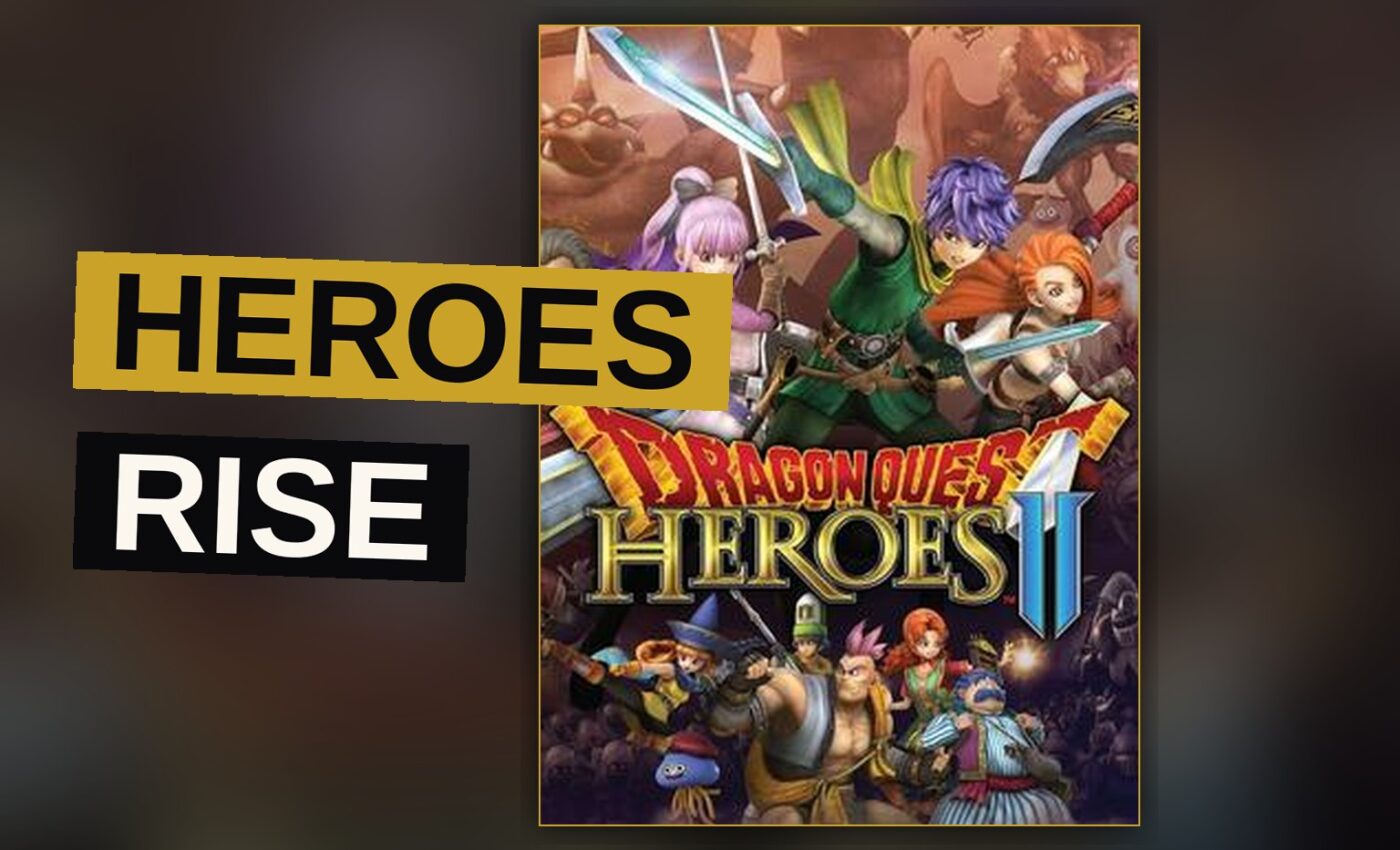
Dragon Quest Heroes II is a hack-and-slash action RPG that wants to be two games at once. Omega Force built the combat. Square Enix supplied the world, the monsters and the lore. The result landed on PlayStation 3, PlayStation 4, PlayStation Vita, Nintendo Switch and PC, and it works far better than a crossover has any right to.
Trailer, via DRAGON QUEST.
Lazarel and Teresa Leave Harba
The setup is a proper Dragon Quest story, not an excuse for enemy waves. Cousins Lazarel and Teresa live in the port kingdom of Harba. Dunisia invades without warning. Their friend Prince Cesar blames Harba’s king for his father’s murder, and the matter goes to the King of Accordia, who sends the four of them into Ingenia to find the real killer.
That thread runs a thousand years deep. Unos, a great king, ended a brutal war across the Seven Realms, and his descendants kept the peace until now. The game takes its time getting to Fractos, Unos’s brother, who started the old war and manipulated everything since — including the murder that opens the story. It is a slow burn that pays off.
The draw for longtime players is the cast from other worlds. Heroes from past Dragon Quest games show up and join the party, with their own moves and abilities. Four new heroes carry the main story. The roster is large, and each fighter plays differently enough to matter.
A World Map, Not a Level Select
This is where Dragon Quest Heroes II separates itself from Omega Force’s other titles. The first game sent you through battle areas. This one lets the party walk the world map, visit towns, and start battle stages when you choose. Random monster encounters can break up the walk between locations. Weather shifts and sometimes changes the party’s status.
Accordia is the main town. Patty runs the bar where you swap party members, same as before. Zoomstones unlock as the story moves and let the party warp to places they have already visited. Ingredients and treasure boxes sit out in the open for anyone willing to wander.
The class system is the real addition. Lazarel and Teresa can switch classes, and doing so changes their equipment types and available skills. Known classes include martial artist, mage, monk, thief and warrior. A Martial Master teaches new weapon skills based on how much you have used a given weapon type. Weapons and outfits are now cosmetic only. Accessories still change stats.
Four Players, Two for the Story
The source draws a line the pitch usually blurs. Cooperative multiplayer supports up to four players against swarms of enemies and boss monsters. The main story is different: two-player co-op only. The pitch is simple and the game delivers it — band together, cut through crowds, take down something large — but the campaign itself is a two-person job.
The RPG weight is heavier here than in most Omega Force work, and that is the point. Exploration resembles a standard Dragon Quest game rather than a stage select. You are meant to poke around, find things, and level your party, not just chain fights.
What Holds It Back
The seams show. Cosmetic-only weapons and outfits strip out a layer of progression that action RPG players expect, and accessories alone do not fill the gap. The story takes a long time to reveal Fractos, and the middle stretch leans on the same loop of travel, encounter, battle stage.
None of that sinks it. The class change gives the two leads real replay value. The world map gives the series room to breathe. The crossover cast is handled with respect rather than nostalgia for its own sake.
Dragon Quest Heroes II is the rare licensed spin-off that understands both halves of its inheritance. It fights like Dynasty Warriors and lives like Dragon Quest, and it commits to the second half instead of treating it as filler between battles.
Fractos and the Long Wait
Here is what matters. Dragon Quest Heroes II is not a Warriors game wearing Dragon Quest skin. The class system, the world map, the towns and the weather all push it toward RPG, and that is the correct call. The cosmetic equipment change is the one misstep worth naming.
The game released in Japan in May 2016 and worldwide in April 2017. It was developed by Omega Force, Armor Project, Bird Studio and Square Enix Business Division 6, and published by Square Enix. It is a sequel to Dragon Quest Heroes: The World Tree’s Woe and the Blight Below.
Key facts
– Title: Dragon Quest Heroes II
– Developer: Omega Force, Armor Project, Bird Studio, Square Enix Business Division 6
– Publisher: Square Enix
– Platforms: PlayStation 3, PlayStation 4, PlayStation Vita, Nintendo Switch, PC
– Japan release: May 2016
– Worldwide release: April 2017
– Genre: Hack and slash, action RPG
– Modes: Single player, multiplayer, co-operative (up to 4 players)
– Score: 8.2/10 (IGDB critic aggregate, 15 outlets)
What to know before you play
1. Class changes for Lazarel and Teresa alter equipment and skills.
2. Known classes: martial artist, mage, monk, thief, warrior.
3. Weapons and outfits are cosmetic only; accessories still affect stats.
4. Zoomstones unlock fast travel to visited locations.
5. Up to four players can team up in co-op against swarms and bosses.
6. Main story co-op is limited to two players.
Get the Notebook.
The day's best stories and every fresh verdict, in plain English, in your inbox by seven. One email a day, no more.