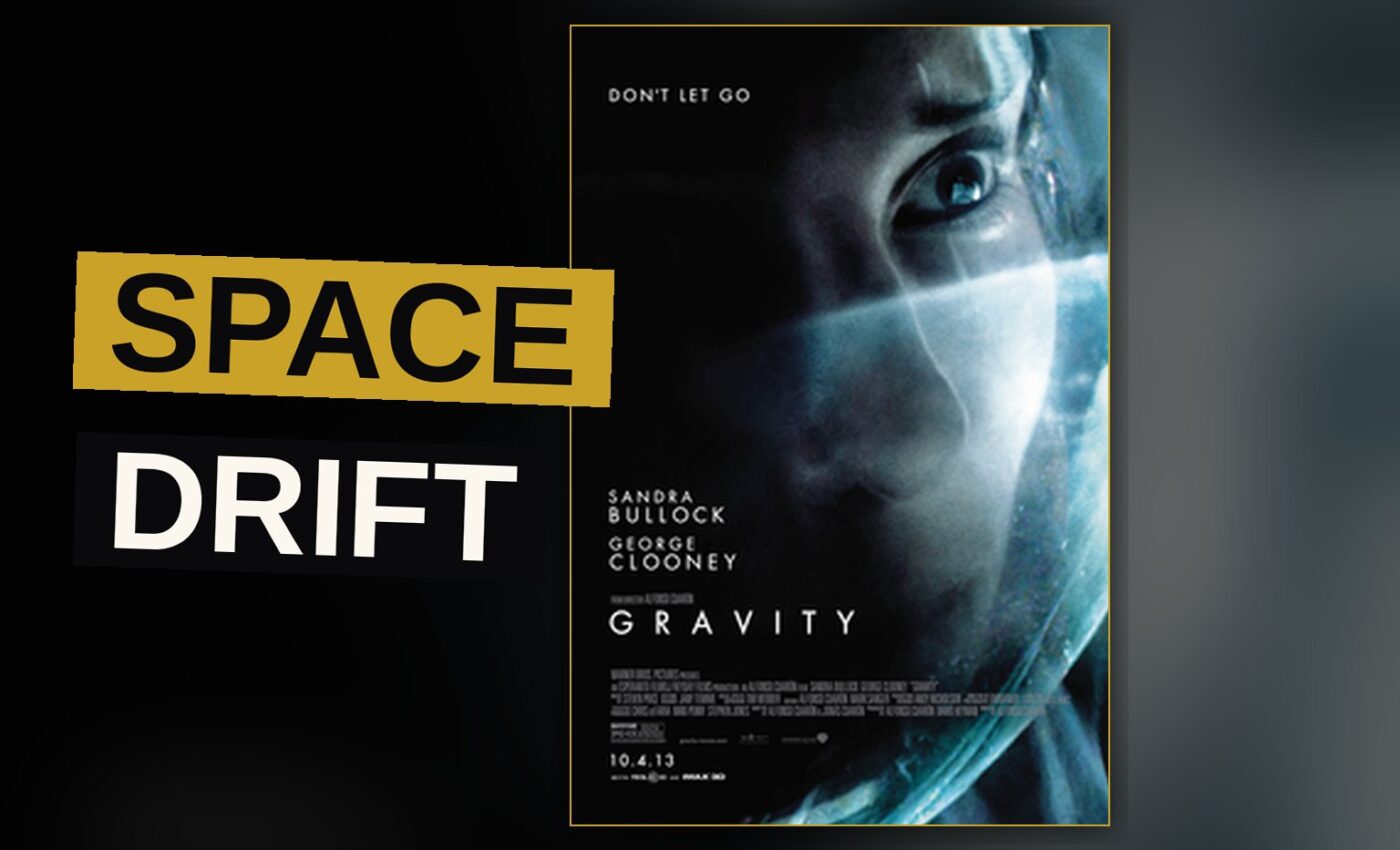
Alfonso Cuarón’s Gravity puts two astronauts in orbit and then takes away everything they could hold on to. The Space Shuttle Explorer is servicing the Hubble Space Telescope when Houston warns of a debris cloud, caused by the Russians shooting down a defunct spy satellite. The cloud arrives. It destroys the shuttle, kills the rest of the crew, and leaves Dr. Ryan Stone and Commander Matt Kowalski alone above Earth.
- Runtime: 91 minutes
- Release: Opened the 70th Venice International Film Festival, August 28, 2013
- North American premiere: Telluride Film Festival, three days later
- Budget: Around $100 million
- Worldwide gross: Over $723 million
- Academy Awards: A leading 10 nominations
- Score: 9.6 of 10
Trailer, via Warner Bros..
Sandra Bullock Alone in a Space Suit
Sandra Bullock plays Stone, a medical engineer on her first space mission, doing hardware upgrades on the telescope. Cuarón has described her as a character who lives in her own bubble, trapped in her space suit. That is the film’s whole method: Bullock alone onscreen for most of the running time, breathing hard inside a helmet. It works because she plays fear as work rather than panic.
George Clooney’s Kowalski is the opposite, a veteran on his final expedition.
The Tether That Gets Cut
Kowalski tells stories and jokes with his team, and he is determined to protect the people around him. When the two reach the ISS and find the crew gone and the remaining Soyuz unable to return to Earth, he suggests using it to reach the Chinese Tiangong station and its Shenzhou craft. Then he lets go of the tether so Stone will not drift with him.
Framestore Builds the Orbit
The visuals are the reason to see Gravity on the largest screen available. British effects company Framestore spent more than three years on the film, and its work covers over 80 of the 91 minutes. Weightlessness here is not a stunt. It is the movie’s grammar, and it never slips.
Jonás Cuarón and Alfonso Cuarón wrote the screenplay. Alfonso Cuarón directed, co-edited and produced, and David Heyman produced with him, after the two worked together on Harry Potter and the Prisoner of Azkaban. The film was produced entirely in the United Kingdom.
Aningaaq and the 90-Minute Clock
Kowalski estimates 90 minutes before the debris field completes an orbit and threatens them again. That clock is the film’s real engine. It turns a survival story into a countdown and keeps Gravity from drifting into the slow, solemn space movie it could have been.
The supporting cast is almost entirely voices: Ed Harris as Mission Control, Phaldut Sharma as flight engineer Shariff Dasari, and Orto Ignatiussen as Aningaaq, a Greenlandic Inuk fisherman who intercepts one of Stone’s transmissions. Jonás Cuarón wrote and directed a short film about that conversation from Aningaaq’s side. It is a good idea, and it is not needed. Gravity already lands.
Why 91 Minutes Is Enough
Gravity earned a leading 10 nominations at the 86th Academy Awards and grossed over $723 million worldwide against a budget of around $100 million. The awards matter less than the thing itself: 91 minutes, two actors, no wasted scene. Bullock carries it, Framestore makes it believable, and Cuarón never lets the camera show off longer than the story can bear. The score is 9.6 of 10.
Get the Notebook.
The day's best stories and every fresh verdict, in plain English, in your inbox by seven. One email a day, no more.