Ridge Racer for the PlayStation Vita is a 2011 launch title from Cellius and Xeen, published by Bandai Namco Games and Namco Bandai Games. It is a racing game with single player and multiplayer modes, played in first person or third person.
Single Race, World Tour, Multiplayer, Options
That is the mode list. The Vita installment offers single race, world tour, multiplayer and options. The source lists those four and says nothing about what sits outside them.
| Mode | What the source says |
|---|---|
| Single race | One race |
| World tour | A tour of races |
| Multiplayer | Multiplayer |
| Options | Options |
The game is a racing title, played in first person or third person. The source lists both perspectives and does not rank them.
The Vita game is not the 1993 original and not the 1994 PlayStation port. It is its own entry, released in 2011 for Sony’s handheld.
What the Series Did Before This
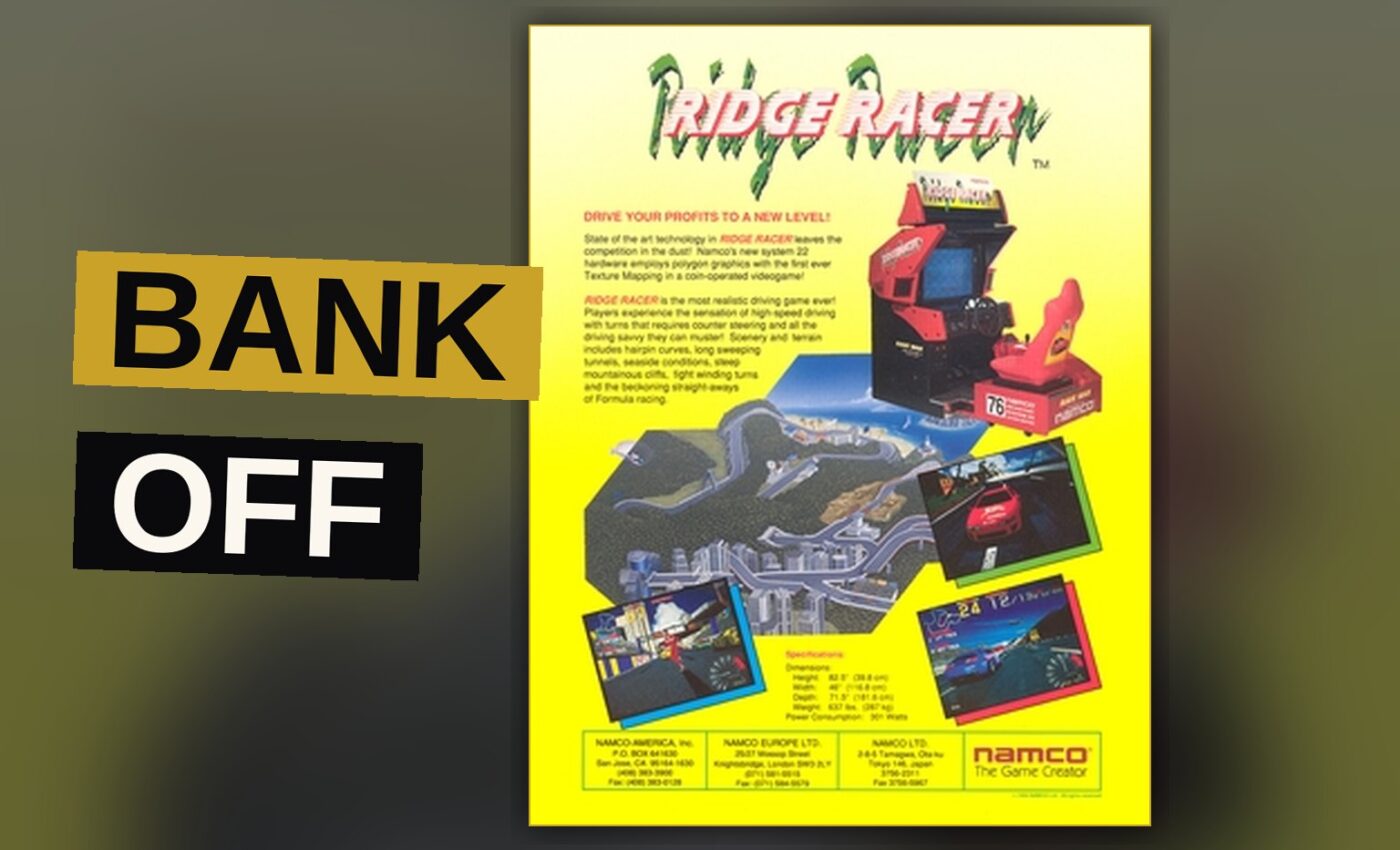
The drift mechanic is the series’ inheritance. The first Ridge Racer, released in arcades in 1993 on Namco System 22 hardware, pioneered the real-life drifting technique in video games. Drifting is a core aspect of the series: the player slides a car through a corner to keep speed. The series is considered influential to the racing genre.
| Entry | Year | Note |
|---|---|---|
| Ridge Racer (arcade) | 1993 | Namco System 22 |
| Ridge Racer (PlayStation) | 1994 | Port of the arcade game, released as a launch title |
| Ridge Racer 7 | 2006 | Latest mainline game developed in-house |
| Ridge Racer (Vita) | 2011 | Developed by Cellius and Xeen |
| Ridge Racer Draw & Drift | 2016 | Mobile game |
| Arcade Archives release | June 5, 2025 | Arcade version of the first game |
The PlayStation port of the first game arrived one year after the arcade release, as a launch title for that console. It was met with sequels and spin-off games across multiple platforms. The latest release of any kind is the mobile game Ridge Racer Draw & Drift, from 2016. The latest mainline game developed in-house is Ridge Racer 7, from 2006.
On June 5, 2025, the arcade version of the first game was added to Arcade Archives and Arcade Archives 2.
The Vita Game’s Problem
The Vita installment carries a series name and a handling model. Beyond that, the source gives four modes and no roster, no tour length and no track count. That thinness is this paper’s read, not a finding in the source, which lists the modes without claiming the list is complete.
It matters more here than it would for a sequel with a deep roster or a long tour. The 2011 game carries the series’ reputation onto a new platform, and that reputation was built elsewhere — on a 1993 arcade cabinet and a 1994 console port that put drifting in front of players for the first time. The Vita title sits in a line that runs from System 22 hardware to a 2016 mobile game to a 2025 Arcade Archives reissue.
The critical aggregate is 7.6/10, drawn from 10 outlets by IGDB. That is the published number. It measures how ten critics received the game and nothing more.
The part worth watching is whether four modes hold up over time. The drift is the series’ achievement. This installment’s job was to carry it.
Get the Notebook.
The day's best stories and every fresh verdict, in plain English, in your inbox by seven. One email a day, no more.