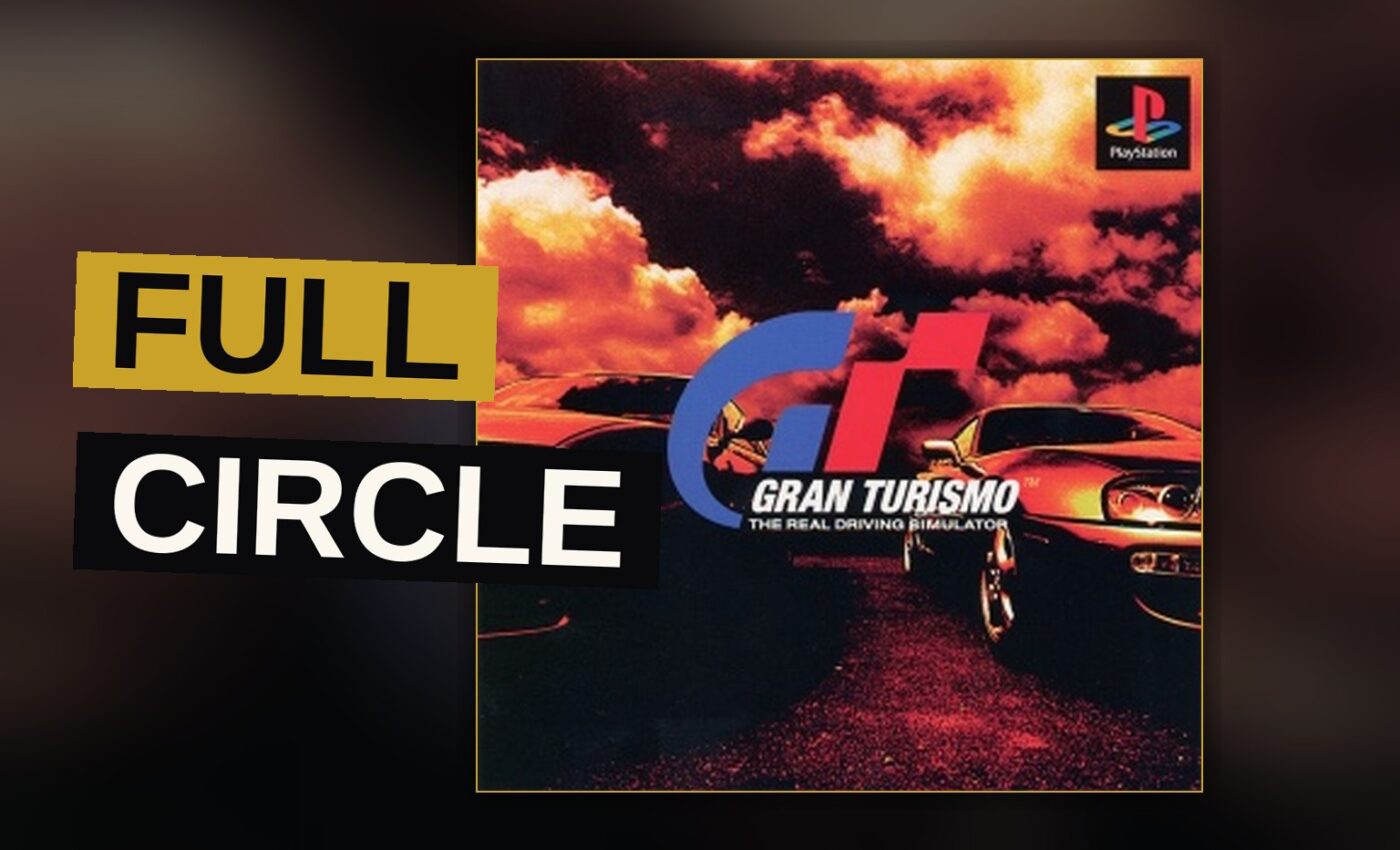
Gran Turismo arrived on the original PlayStation in 1998 as a racing game built around the idea that cars could be driven with care, not just pushed through turns. The game asked players to treat each car as a machine with weight, handling and grip, and rewarded patience over pace. It was a strange request for a console racer, and it worked.
The game is a driving simulation dressed as a racing game. There is no story mode, no branching paths, no missions beyond the track itself. Instead, players pick a car, set a time, and drive. The goal is simple: beat your own best lap, or beat the ghost of another driver. The game keeps score, and that score is the whole point.
Cars and Tracks
Gran Turismo ships with a large selection of cars, drawn from manufacturers across Europe and Japan. Each car handles differently, and the game asks players to learn those differences rather than ignore them. A small car can be quick through tight corners, while a heavy car needs long straights to build speed. The game does not smooth over these differences. It presents them, and it expects players to adapt.
The tracks are mostly fictional, though some are clearly modeled after real locations. The handling model is the star of the show, and it remains one of the most detailed in any racing game made for a console at the time. The game simulates weight transfer, tire grip, and engine power in a way that feels mechanical rather than cartoonish. Players who have spent time with the game can feel when a car is sliding, even on screen.
The sound design supports this. Engines growl under acceleration, tires scream through corners, and the sound of a car hitting its limits changes depending on how fast it is moving. These details add up to a sense of presence that few other games managed at the time.
Difficulty Curve
Gran Turismo is not an easy game to play well. The difficulty curve is steep, and the game punishes players who rush corners or lose control. A single mistake can cost seconds, and seconds add up over a long race. This is where the game earns its reputation for frustration.
The game does not hold a player’s hand. It does not offer hints about where to brake or when to turn. It simply presents a track and a car, and lets the player figure out the rest. That approach rewards players who want to learn, and punishes those who want to win quickly. It is a demanding game, and it knows it.
There is no penalty for failure beyond wasted time. Players can try again immediately, and the game never offers a lecture or a warning. This openness is part of what makes the game compelling, even when it feels unfair.
Look of the Game
The presentation is functional rather than flashy. Tracks are rendered in a style that is detailed but not realistic, with a focus on clarity over visual spectacle. The cars themselves are highly detailed, with accurate body shapes and working suspension. The game does not try to trick the eye with special effects. It tries to convince the player that the car is real.
The graphics are a step up from earlier racing titles on the platform, but they are not the reason to play. The detail in the handling model carries the experience. The look of the game is solid, not striking, and it does not demand attention away from the driving itself.
Career Mode
There is no career mode in the traditional sense. Players do not move through a series of events with a story arc. Instead, the game offers a collection of races and tests, grouped by difficulty and type. Players can choose which cars to buy, which tracks to master, and which events to enter. The structure is open, and it rewards exploration.
The game tracks performance across every session, recording fastest laps and personal bests. This tracking is the core of the game’s appeal. Players return to familiar tracks to shave fractions of a second off their times, and the game respects that effort by showing the improvement. The sense of progress is real, even if the path to it is not guided.
Sound and Feel
The audio is a strong part of the package. Engine sounds change with throttle position, tires make noise under load, and the game uses stereo sound to place these noises in the world. The sound design is precise, and it adds to the sense of immersion. Players who listen closely can tell what a car is doing before they see it.
The controller support is limited, but effective. Players can set up buttons to control braking, acceleration, and gear changes, and the game responds to these inputs with a high degree of precision. The lack of a wheel is noticeable, but the game does not require one to play well. It is a game built for the controller, and it succeeds there.
Legacy
Gran Turismo changed what racing games could do on a console. Its handling model became the standard for the genre, and its influence can be seen in almost every driving simulation that followed. The game also helped establish the idea of a career mode, even though it did not include one itself. Its approach to difficulty and its focus on skill over spectacle were unusual for the time.
The game’s success came from its willingness to be difficult. It demanded patience and attention, and it rewarded both in equal measure. That balance is rare in games, and it is the reason the game remains remembered today.
Numbers
- Platform: Original PlayStation
- Release: 1998
- Score: 8.3/10
- Type: Driving simulation
- Mode: Open career, no story
| Session | Event Type | Focus |
|---|---|---|
| 1 | Time Trial | Personal best |
| 2 | Race | Against the clock |
| 3 | Test | Handling and braking |
| 4 | Free Drive | Exploration |
Final Word
Gran Turismo is a demanding game, and it does not apologize for that. It is a game about learning, and it rewards players who are willing to put in the hours. The handling model is unmatched, the presentation is solid, and the sense of progress is real. It is not an easy game, but it is a rewarding one.
The game’s influence is visible in almost every driving simulation since, and its legacy is secure. It remains a game worth playing, even now, for anyone who wants to understand what a console racing game can do.