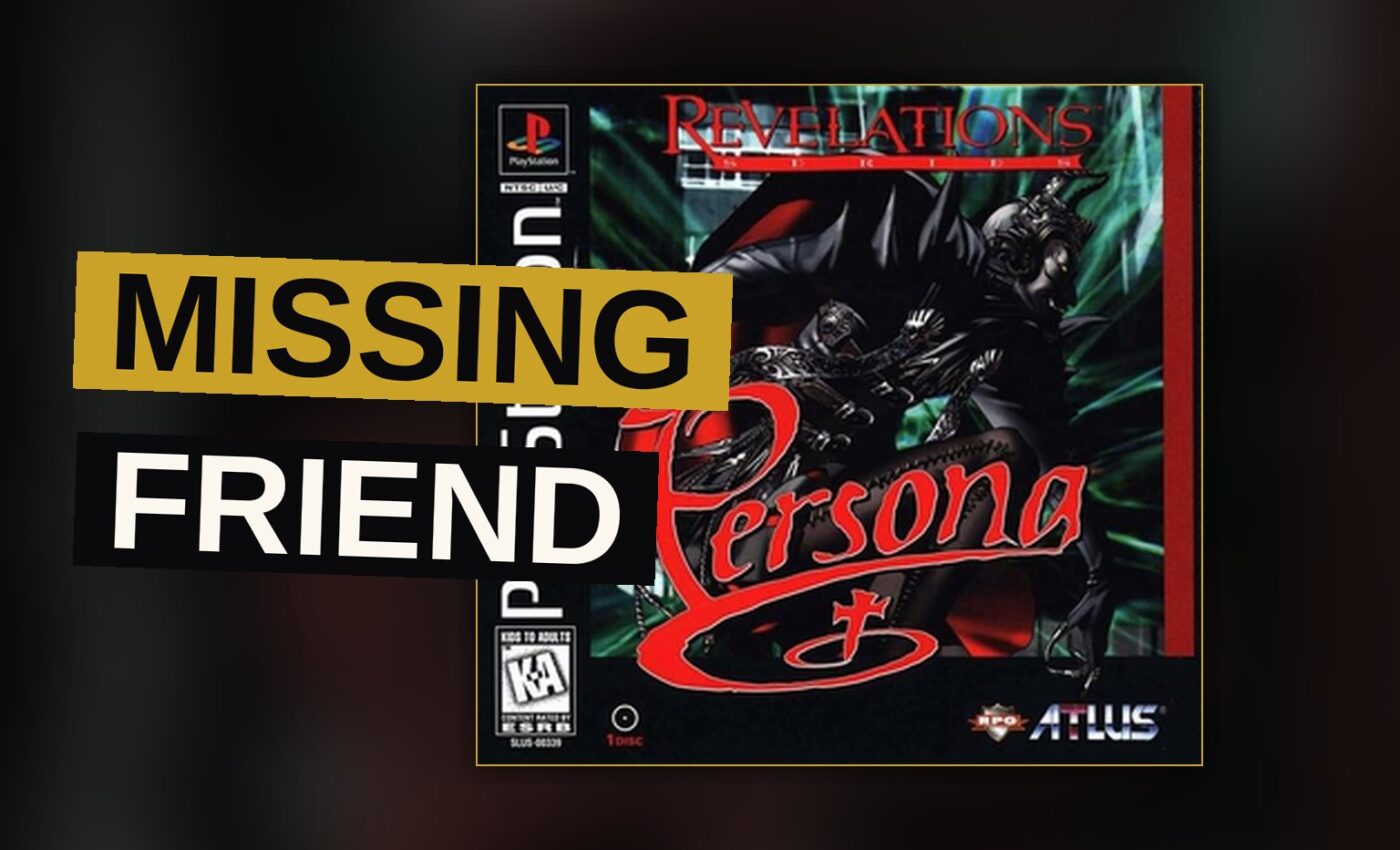
Revelations: Persona arrives on the original PlayStation with a mission that sounds simple and turns out to be anything but: find a missing friend named Makoto. The game, made by Atlus and published by Sega, asks players to search for him across Tokyo while solving cases, fighting monsters, and learning about the strange power of Persona that gives characters their abilities. The result is a game that rewards patience and punishes haste in equal measure, and one that remains a key piece of the Persona series even now.
Finding Makoto
The story opens with the player character searching for Makoto, who has disappeared after a strange incident involving a monster attack. Along the way, the search leads to a case involving a school festival, a murder mystery, and a hidden world beneath the city streets. The investigation moves through several chapters, each tied to a specific location and a new piece of the mystery.
The mystery structure gives the game a reason to explore. Players move between locations, talk to witnesses, and piece together clues, all while managing a schedule that limits how much they can do in a day. It is a slow-burn approach, and some players will find the early hours frustrating, but the payoff comes in the middle stretch, where the threads finally start to connect. That moment arrives when the separate cases begin to overlap, revealing connections between the school festival, the murder mystery, and the hidden world beneath the streets.
Combat and the Persona System
Fights in Revelations: Persona use a turn-based system built around the Persona system itself. Characters summon creatures called Personas during battles, and those Personas add attacks, resistances, and other benefits. The system is simple at first but grows complex once players start stacking Personas with multiple abilities and elemental weaknesses.
Combat is where the game shows its age most clearly. The interface is dated by today’s standards, with menus that feel clunky and animations that are short. But the core loop — building a team of Personas, leveling them up, and experimenting with combinations — still holds up. Players who enjoy planning and experimentation will find plenty to enjoy here.
Social Links and the Calendar
The calendar system is one of the game’s most distinctive features. Each day brings new events, phone calls, and opportunities to bond with other characters, and the choices players make affect how the story unfolds. This is the ancestor of the Social Link system found in later Persona games, and it sets a tone of everyday life mixed with supernatural danger that few games attempt.
Not every calendar entry pays off immediately. Some lead nowhere, and the game’s pacing suffers for it. Players may spend days chasing a lead only to find it ends in a brief conversation or a small reward. But the best entries offer real insight into the characters and their relationships, and those moments make the grind worthwhile. When the calendar does deliver, it provides genuine emotional payoff, especially in conversations that reveal the characters’ feelings toward the player.
The Music and Its Soundtrack
The soundtrack is a strong point of the game. Composed for the PlayStation hardware, it mixes electronic and orchestral elements into a score that shifts between tense battle tracks and gentle character themes. The music is often praised as one of the best parts of the game, and it helps sell the game’s mix of urban realism and fantasy.
Here is a rough breakdown of the soundtrack’s standout pieces:
| Track | Type | Mood |
|---|---|---|
| “Persona” | Main theme | Atmospheric |
| “Makoto’s Theme” | Character theme | Sad |
| “School Festival” | Event track | Upbeat |
| “Battle Theme” | Combat track | Intense |
The Cast and Their Relationships
The cast is small by modern standards, but each character carries weight. Makoto is the missing link whose fate drives the plot forward. Other characters include a detective, a classmate, and a mysterious girl who knows more than she lets on. Their conversations reveal their personalities slowly, through repeated interactions rather than long monologues.
The writing leans heavily on dialogue and player choice. How players respond to questions shapes what each character thinks of them, and those feelings carry over into later scenes. It is a system that rewards attention, though it can also feel opaque to players who skip conversations or fail to keep track of who they have talked to. The detective, in particular, offers sharp commentary on the cases players are working on, while the classmate and the mysterious girl provide more personal, emotional insights.
What Works and What Doesn’t
The strengths of Revelations: Persona are its mystery structure and its calendar system. The mystery gives the game a clear goal, and the calendar adds depth to the daily routine. Together, they create a sense of urgency that keeps players moving forward even when the combat feels repetitive.
The weaknesses are also clear. The combat is dated, the menus are clunky, and the pacing drags in the middle of the game. Some players will find themselves skipping entire days of the calendar just to get to the next case. These flaws are not fatal, but they do make the game harder to recommend to newcomers.
A Game Worth Playing
Revelations: Persona is not a perfect game, but it is a significant one. It introduced ideas — the calendar system, the Social Link concept, the Persona fusion mechanic — that would shape the series for years to come. For players who want a deep, character-focused mystery with a twist of supernatural horror, it offers a rewarding experience.
It is not the easiest game to pick up, and it shows its age in ways that modern players will notice. But its ambition and its willingness to let the story unfold slowly set it apart from most of its contemporaries.
Ranking the Best Moments
For players curious about which parts of the game stand out, here is a ranking of the strongest elements:
- The mystery structure, which ties cases together across Tokyo.
- The calendar system, which adds depth to everyday interactions.
- The Persona fusion system, which rewards experimentation.
- The soundtrack, which supports the game’s tone.
- The cast, whose relationships develop slowly over time.
Final Score
Revelations: Persona earns a score of 7 of 10. It is a flawed but important game that pushed the Persona series forward, and its influence can still be felt in the games that followed. Players who want to see where the series began will find plenty to appreciate, even if the execution falls short of the ideas behind it.