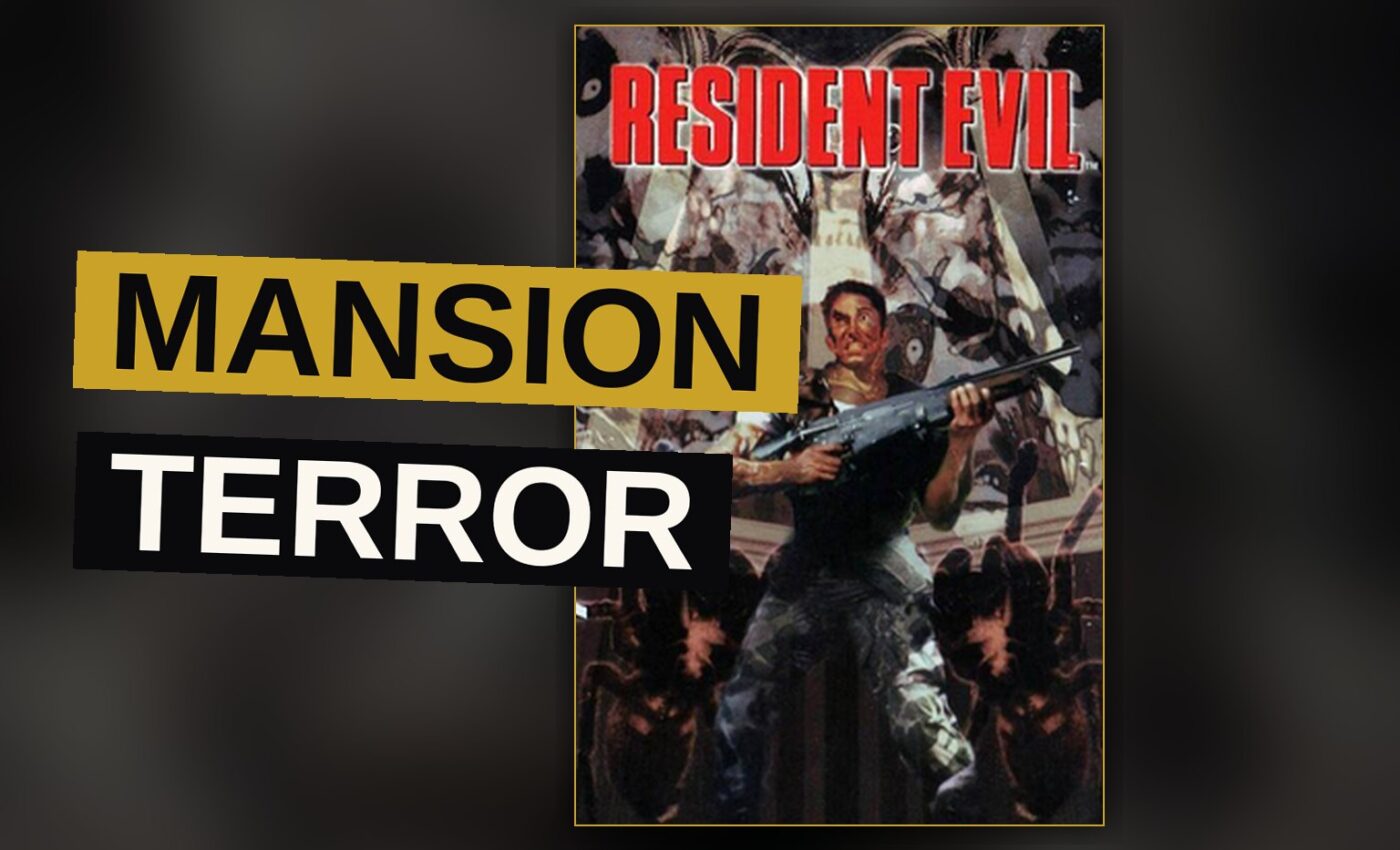
Resident Evil arrived on the original PlayStation in 1996 and changed what a horror game could look like. Capcom’s survival-horror series debuted with a game built around fear, resource management, and a mansion that held more secrets than anyone expected. Twenty years later, the game still holds up as one of the best horror titles ever made, and its influence can be seen across nearly every survival-horror game since.
The premise is simple. A group of survivors arrive at a mansion after a helicopter crash, only to find the building overrun by zombies, monsters, and a virus that turns people into grotesque creatures. Players control either Barry Burton or Jill Valentine, depending on which character the game was designed around, and the goal is to survive the night while finding a way out of the mansion. That simplicity is deceptive. What follows is a game built entirely around tension, inventory management, and the constant threat of death.
The Mansion
The mansion itself is the star of Resident Evil. It is a sprawling, interconnected structure full of secret rooms, locked doors, and dead ends. Players spend much of their time backtracking, searching for keys, and piecing together clues from scattered documents and recordings. The layout is non-linear, and there is more than one path through the game, though some routes require specific items found earlier in the story.
The mansion’s design encourages exploration. Hidden rooms often contain health items, ammunition, or new weapons, and finding them requires careful observation. A player who rushes through a room might miss a key that opens a door needed later. The game rewards patience and attention to detail, and the sense of discovery remains strong even today.
The Enemies
The enemies in Resident Evil are memorable for their variety and their ability to terrify. Zombies roam the halls, moaning and shambling forward. Hunters stalk the upper floors, moving silently until they strike. The game’s signature creature, the Tyrant, is a towering armored brute that chases players through narrow corridors, forcing them to flee and fight for survival. Each encounter is tense, and the game’s sound design plays a large role in building dread.
The enemies are not just obstacles. They also serve as a way to manage resources. Ammunition is scarce, and players must conserve bullets while dealing with multiple threats at once. This creates a constant pressure that defines the genre. Players learn early on that running away is often the smartest option, and the game respects that choice.
The Inventory System
The inventory system is one of the most distinctive features of Resident Evil. Players carry a limited number of slots, and each item takes up space. Keys, herbs, ammunition, and weapons all compete for room, and players must constantly decide what to keep and what to discard. This creates a layer of strategic thinking that goes beyond simply fighting enemies.
Herbs are particularly important. Green herbs heal minor injuries, and red herbs heal major ones, but both can be combined with other items to create more powerful effects. Players must balance their need for healing against their need for ammunition, and the game frequently forces difficult decisions. The system adds depth to the gameplay, turning survival into a puzzle that requires careful planning.
The Sound Design
The sound design in Resident Evil is exceptional. Creaking floorboards, distant moans, and the sound of a monster approaching all contribute to the atmosphere. The music, composed by Masami Ueda, shifts between eerie ambient tracks and tense action pieces, setting the tone for every scene. The game uses sound to communicate danger before the player sees anything on screen, and this creates a sense of dread that few other games have matched.
The voice acting is minimal but effective. Characters deliver brief lines of dialogue, and their reactions add to the tension. The game’s pacing is slow, which allows the atmosphere to build, but it also means that the game can feel tedious at times. Players who rush through rooms miss out on the subtle details that make the world feel alive.
The Story
The story of Resident Evil follows a group of survivors trying to escape the mansion while uncovering the truth behind the outbreak. The plot involves a government agency, a virus, and a conspiracy that stretches beyond the mansion’s walls. The narrative is straightforward, but it sets up a larger mystery that players piece together through documents and recordings found throughout the game.
The story is told through a combination of scripted sequences and exploration. Cutscenes break up the gameplay, and they provide context for the events unfolding in the mansion. The game also includes a second playable character, depending on which version of the game is being played, allowing players to experience the story from a different perspective. This dual approach gives the game a replay value that was unusual for the time.
The Difficulty
Resident Evil is not an easy game. The difficulty comes from several factors:
- Limited ammunition forces players to conserve shots
- Enemies can take multiple hits to defeat
- Save points are scarce, and dying means losing progress
- Puzzles require careful observation and memory
These elements combine to create a challenge that tests both skill and patience. Players who rush in without a plan often die quickly, and the game does not hold the player’s hand. The difficulty is part of the appeal, but it can frustrate those looking for a casual experience.
The Legacy
Resident Evil launched a franchise that continues to thrive. The game’s influence can be seen in countless other survival-horror titles, from games that borrow its inventory system to those that replicate its tense atmosphere. The series has evolved over the years, but the core formula established in this original game remains central to its identity.
The game has also received numerous ports and remasters, making it accessible to players who never owned a PlayStation. These versions have allowed a new generation to experience the game, and the core mechanics remain intact. The mansion, the enemies, and the inventory system all carry over, preserving the essence of the original release.
Final Word
Resident Evil is a masterpiece of survival-horror gaming. Its combination of atmosphere, enemy design, and inventory management created a formula that defined the genre for years to come. The game is not perfect. Its pacing can drag, and the difficulty can be punishing, but these flaws are outweighed by its strengths.
The mansion, the enemies, and the inventory system all work together to create a tense and memorable experience. The game’s legacy is secure, and its influence continues to shape horror games today. For anyone interested in the history of survival-horror gaming, Resident Evil is essential.