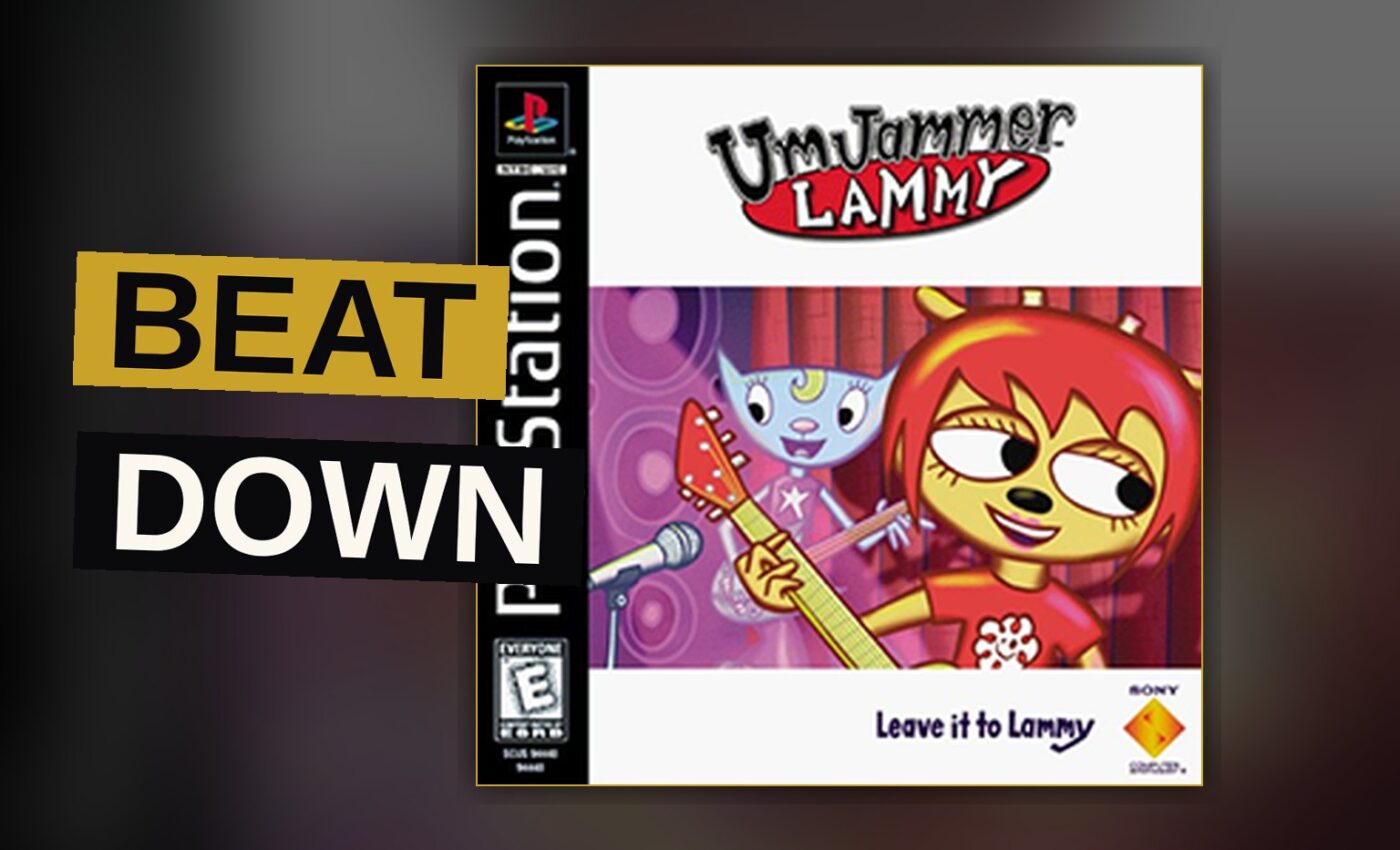
Um Jammer Lammy arrived on the original PlayStation in 1999 as a platformer built around music, rhythm and a talking cat named Lammy. The game asks players to clear stages while moving to the beat, and it leans heavily on visual style and sound design to sell its premise.
Lammy and the Beat
Lammy is the main character, a small cat who moves through levels set to music tracks. Players control her movements, and timing matters. Miss a beat and she stumbles. Land a hit on cue and she moves faster.
The setup sounds simple. In practice, it takes real effort to master, especially in later stages where the tempo changes fast.
Music as Design
Each level is built around a track, and the arrangement of obstacles follows the music’s shape. Enemies appear during instrumental passages. Bosses arrive at climactic points. The result is a game where the soundtrack isn’t background noise but the core of how each stage is made.
This approach rewards players who listen closely. It punishes those who don’t.
Look and Sound
Um Jammer Lammy is bright and busy in its presentation. Characters are large, expressive and full of motion, even on hardware that couldn’t handle much detail. The color palette stays lively throughout, and the animation carries much of the game’s personality.
The music itself is varied, moving between pop, rock and electronic styles across the game’s tracks. It holds up well against other platform games from the same period.
Difficulty Curve
The difficulty rises fast as new stages open. Early levels ease players into the beat-driven controls. Later ones demand precise timing and quick reactions, which some players find frustrating.
This rise in challenge isn’t always smooth. Some stages feel harder than they need to be, while others let players coast through without much trouble.
Length and Replay Value
Um Jammer Lammy offers a decent amount of content, though it doesn’t stretch far once a player finishes the main story. Extra modes and a level editor add replay value for those who want to return.
The level editor lets players build and share their own stages, giving the game a longer life beyond the main campaign.
Critical Reception
Critics at the time praised the game’s visual style and its use of music as design. Some reviews noted that the difficulty curve could frustrate players who weren’t ready for the late-game challenges.
The game sold well enough to support a sequel, showing that audiences responded to its mix of platforming and rhythm elements.
Where It Sits Now
Um Jammer Lammy holds up as an interesting experiment in platform design. Its blend of music and movement remains distinctive, even if its difficulty can be rough in places.
Judged on its own terms, it succeeds at what it sets out to do: make platforming about rhythm and timing.
- Visual style — bright, expressive, memorable
- Music design — varied, engaging, central to gameplay
- Difficulty curve — uneven, sometimes punishing
- Replay value — modest, improved by extra modes
- Lasting impression — distinct, well remembered
Um Jammer Lammy earns a score of 7 of 10.