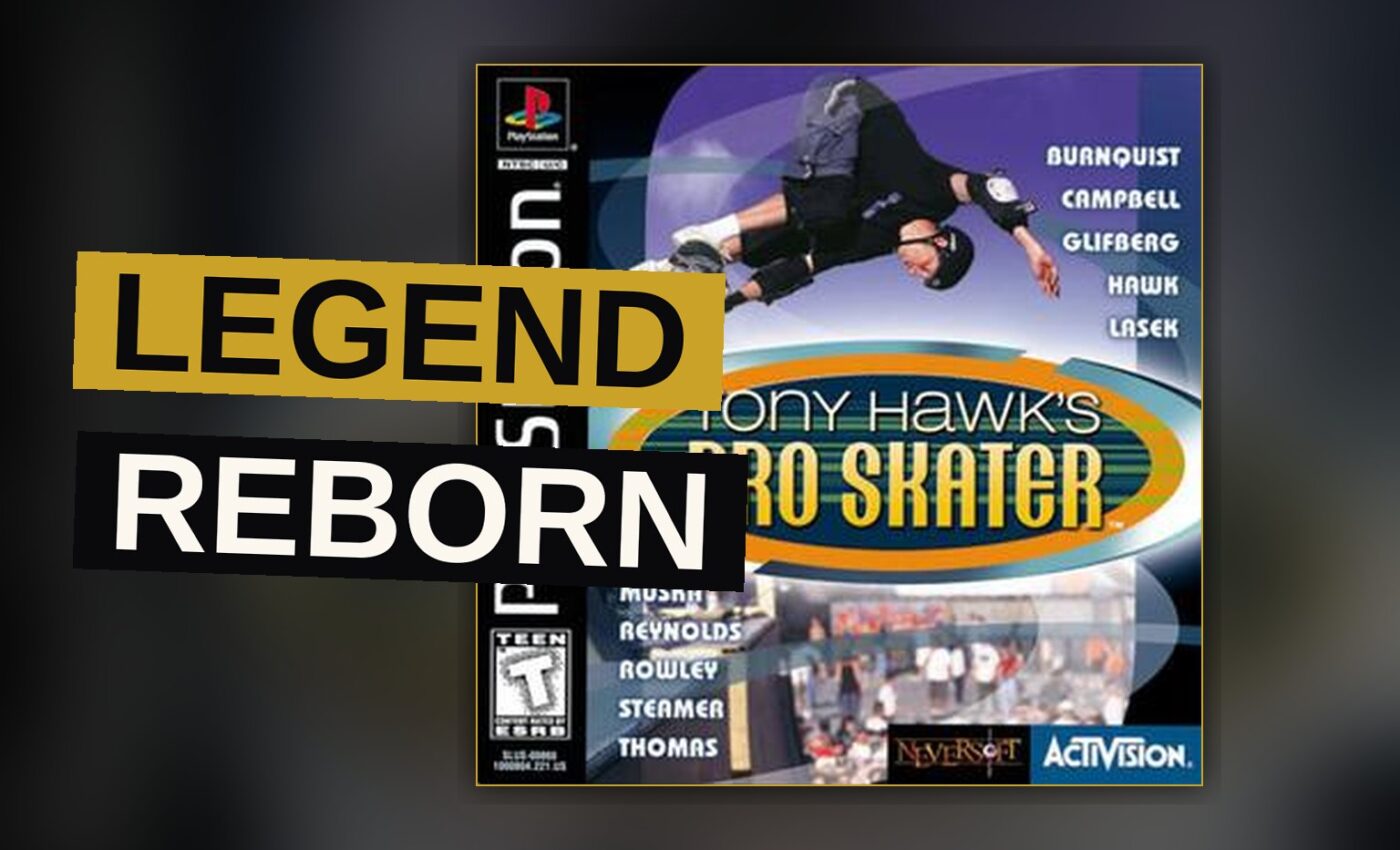
Tony Hawk’s Pro Skater arrived on the original PlayStation in 1999 and changed what a skateboarding game could look like. Developed by Neversoft, it put players on a skateboard, gave them a full set of tricks, and let them grind rails, flip off stairs, and destroy benches with a single button press. The game’s simple control scheme made it easy to pick up, but its level design and trick system kept players coming back for years.
The Control Scheme
The controls are the reason the game still holds up today. Players move with the analog stick, push buttons for tricks, and hold a shoulder button to string together a combo. That single button for grinding and pushing off rails was revolutionary at the time. It turned a simple action into a chain of moves that felt natural once learned.
The trick system rewards patience. Each trick earns points, and chaining tricks together multiplies the score. Grinding a rail while doing a kickflip into a heelflip into a shove-it builds momentum fast. Losing balance during a combo ends it, which adds a layer of risk to every run. The game punishes hesitation while rewarding confidence.
The Levels
Neversoft built five levels, each packed with ledges, stairs, rails, and obstacles. Players could walk around freely between runs, and the city streets were filled with hidden spots, secret tapes, and bonus objectives. Finding every tape required careful searching, and completing them opened new characters and boards. The search for tapes gave the game a sense of discovery that kept players exploring long after they had mastered the main goals.
Each level offered a distinct feel. The parking garage was tight and enclosed, forcing players to navigate narrow spaces. The schoolyard was open, letting players build long combos across a sprawling field. The pier level used height and ramps to reward vertical tricks. The shopping mall level introduced moving elevators and ramps, adding a layer of timing to the mix. The final level brought all of them together in a mixed bag of obstacles.
The Look of the Game
The graphics pushed the PlayStation hardware further than most games of the time. Character models were detailed for the era, and the animation of tricks was smooth. The game’s frame rate stayed steady even during complex combos, which mattered since the game asked players to perform several tricks in quick succession.
The music matched the energy of the gameplay. The soundtrack drew from skate culture, mixing punk, rock, and electronic tracks that fit the action on screen. Songs like “Bulls on Parade” by Rage Against the Machine and “Panic Switch” by Weezer set the tone for each level. The sound effects were minimal but effective, with a distinct noise for every trick and a satisfying crash for every fall.
The Replay Value
Tony Hawk’s Pro Skater was built for repeat play. Finishing a level on the main goal left plenty of room for improvement. Players could chase higher scores, find secret tapes, and learn new routes through each map. The game also included a mode that let players create their own levels, giving the game a near-infinite shelf life.
The multiplayer mode added a social element. Players could compete against friends in races, freestyle sessions, and other modes. The online play available later pushed the game’s reach even further, letting players connect with skaters around the world. For many players, the game became a shared experience, with friends comparing scores and tricks over a shared television.
The Legacy
Tony Hawk’s Pro Skater launched a franchise that spanned decades. Its successors continued to refine the formula, but none matched the pure simplicity of the original. The game’s influence can be seen in nearly every skateboarding game released since, from the way tricks are performed to the way levels are designed. Its success proved that a game about skateboarding could sell millions of copies, and it opened the door for the genre to become a major force in gaming.
The game’s influence extended beyond the controller. It helped bring skateboarding into popular culture, making it a subject for mainstream media. The game’s popularity also led to a wave of imitators, some successful, some forgettable. But none of them captured the same combination of accessibility and depth that made Tony Hawk’s Pro Skater special.
The Numbers
| Element | Detail |
|---|---|
| Developer | Neversoft |
| Platform | PlayStation |
| Year | 1999 |
| Levels | 5 |
| Secret Tapes | Many |
| Main Goal | Beat the level |
| Secondary Goal | Find all tapes |
Tony Hawk’s Pro Skater remains a landmark in gaming history. It took a niche sport and turned it into a universal language, one that anyone could understand through motion alone. The game’s lasting appeal comes from its balance of freedom and structure, its generous level design, and its refusal to treat skateboarding as anything less than a genuine skill.