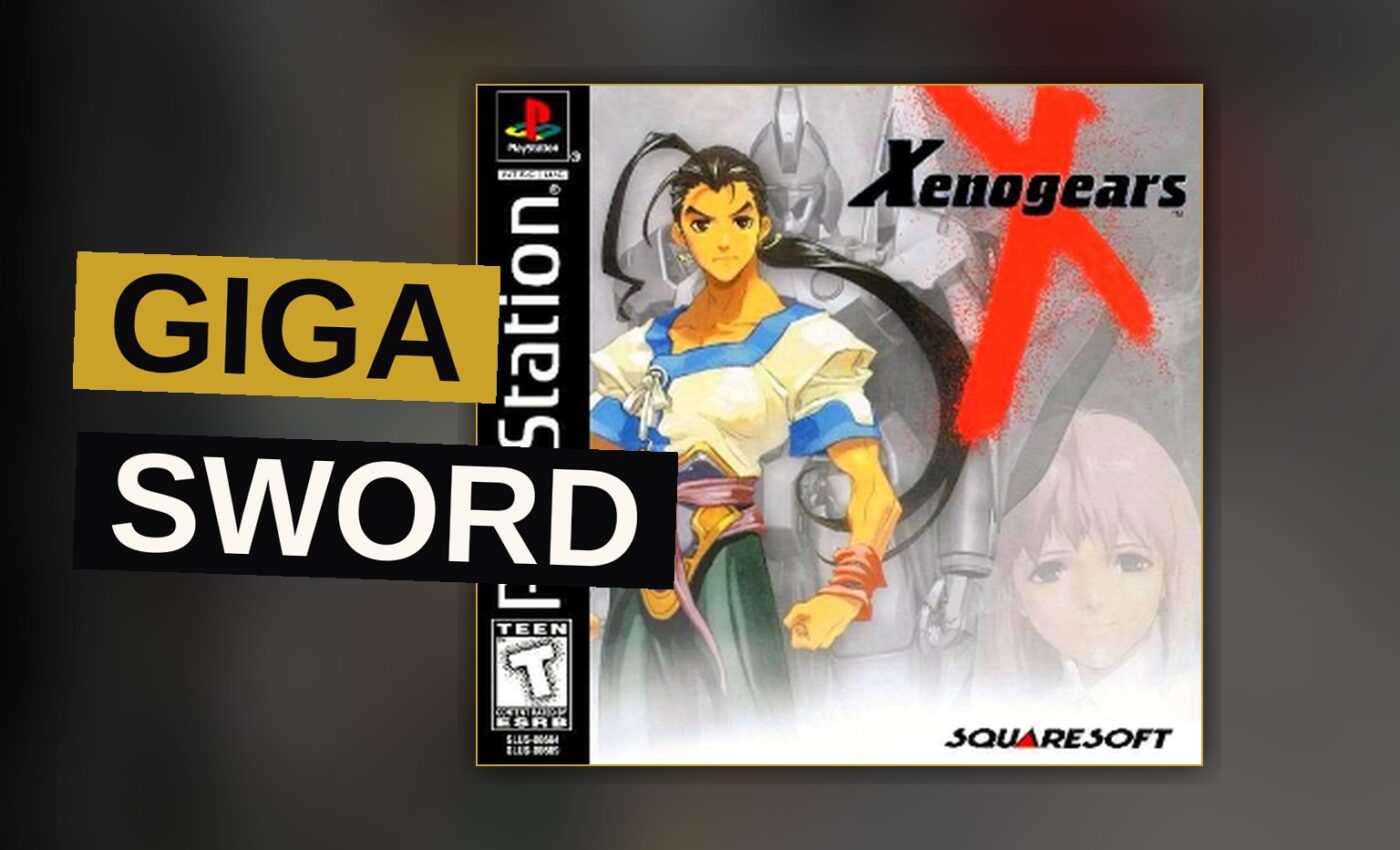
Xenogears is a game that asks players to sit through a story so dense and so strange that it feels less like a video game and more like a philosophy lecture wrapped in anime. Released for the original PlayStation in 1998, it was developed by tri-Ace and published by Squaresoft, and it remains one of the strangest, most ambitious games of its era. The game follows a young man named Fei Fong Wong who lives on a floating island and carries a mysterious weapon called a giga-crystal sword. What follows is a story about gods, machines, and the people caught between them.
A World Built From Scratch
The setting is the planet of Zeboim, a world that looks nothing like Earth. Cities float in the sky, oceans rise and fall, and ancient ruins dot the landscape. The game opens with a prologue that sets up a complex mythology involving a war between the gods Bahabah and Bahrab, and the creation of humanity as a tool of divine will. That setup is massive, and it pays off slowly. The early hours are slow-moving, filled with dialogue and exposition, and players who want action will find themselves waiting.
But the world itself is worth the wait. The music, composed by Motoi Sakuraba, is lush and orchestral, full of sweeping strings and choral passages that make even the simplest walk feel grand. The visuals are dated by modern standards, but the character designs are expressive, and the animation holds up surprisingly well. The game uses pre-rendered backgrounds and sprite-based characters, a common technique for the time, but the attention to detail in the environments is clear. Each location, from the dusty deserts of the desert region to the rainy streets of the city, has a distinct identity.
The Giga-crystal Sword
Fei’s weapon is the key to the entire plot. It is a sword that can transform into a giant robot called a Gear, and it is capable of destroying anything it touches. The transformation scenes are animated in 3D, which was rare for the time, and they are genuinely impressive. Watching Fei’s sword unfold into a towering machine is a moment of pure spectacle, and it sets the stage for the game’s central mechanic.
The battles in Xenogears are turn-based, and they are where the game shines brightest. Players command a party of characters, each with their own skills and equipment, and fight enemies on a grid. The system is deep, allowing for combinations of attacks, special moves, and item usage. The difficulty curve is steep, and some battles require careful planning to win. But the payoff is immense. Winning a tough fight feels earned, and the sense of accomplishment is real.
The game also includes a side system that allows players to customize their party’s stats and abilities. This is a small touch, but it adds a layer of depth that many games of the time lacked. Players can balance their team’s strengths and weaknesses, creating a party that suits their playstyle. It is a simple feature, but it shows the care put into the design.
The Story’s Long Shadow
The story of Xenogears is the game’s biggest strength and its biggest weakness. It is a sprawling narrative about faith, power, and the nature of existence. The game spends a great deal of time exploring themes of determinism versus free will, and it draws heavily on religious and philosophical ideas. The result is a story that rewards patience and thoughtfulness.
But the story is also confusing. The plot is packed with twists, and the pacing is uneven. Some chapters move at a crawl, while others rush past major events. The game also features a large cast of characters, and keeping track of everyone’s motivations and relationships is difficult. The game assumes players will follow along, and it does not always explain itself clearly.
“The world of Zeboim is a place where the gods themselves have forgotten what it means to be human.”
That line captures the essence of Xenogears. The game is about people who are used as tools, pawns in a conflict they do not understand. Fei, the protagonist, is a blank slate at the beginning, and he grows over the course of the game. His journey is one of self-discovery, and it is handled with genuine emotion. The supporting cast is also strong, particularly the character of Elan, who becomes a central figure in the later chapters. Her arc is one of the best things about the game.
The Sound of Zeboim
The music in Xenogears is a standout element. Motoi Sakuraba’s score is dramatic and emotional, and it fits the tone of the game perfectly. The main theme, “Xenogears,” is a powerful piece that sets the tone for the entire game. The tracks that accompany the boss fights are intense and memorable, and they elevate the tension during those moments. The sound effects are also well done, with clear footsteps, battle cries, and mechanical noises that add to the immersion.
The voice acting is limited by the technology of the time, but the Japanese performances are solid. The English dub, released later, is adequate but lacks the nuance of the original. The game’s presentation is also worth noting. The cutscenes are pre-rendered, and they are detailed and cinematic. They tell the story visually, and they often carry more weight than the text on screen.
A Slow Start
The early hours of Xenogears are rough. The game spends a lot of time establishing its world and its mythology, and it can feel like a chore to get through. The pacing is slow, and the first few chapters drag. But the game improves dramatically once the story picks up steam. The middle chapters are where the plot starts to gel, and the final stretch is a thrilling ride.
The game also includes a second disc that contains a sequel of sorts, called Xenogears: The Second Disc. This disc expands on the story of the original game, and it adds new content. It is a worthy addition, though it is not essential. The second disc is shorter than the first, and it focuses on the aftermath of the events of the main game. It is a good way to extend the experience, but it is not required to understand the story.
The Legacy of Xenogears
Xenogears is a game that influenced many others in its wake. Its ideas about gods, machines, and humanity have been echoed in countless other stories. The game’s themes of determinism versus free will were explored further in other works, and its use of a transforming weapon became a template for future games. The game’s influence is clear, and it is a testament to its ambition.
The game’s flaws are also part of its legacy. Its confusing plot and uneven pacing have been criticized by many players, and the game’s reputation has suffered as a result. But the game’s strengths are undeniable. Its world is rich, its music is excellent, and its battles are engaging. The game is a product of its time, and it shows the limits of the hardware of the day. But it also shows the creativity of its creators.
The Final Stretch
The ending of Xenogears is a mixed bag. It is a conclusion that tries to tie together all the threads of the story, and it mostly succeeds. The final chapter is a tense and emotional climax, and it leaves players with a sense of resolution. But the ending also leaves some questions unanswered, and it is open-ended in a way that some players will find frustrating. The game ends with a cliffhanger, and it sets up a sequel that was never made.
The game’s legacy is complicated. It is a flawed masterpiece, a game that tried to do too much and succeeded in some ways while failing in others. The game’s ambition is admirable, and its execution is often brilliant. But the game’s problems are real, and they cannot be ignored. Xenogears is a game that rewards patience and thoughtfulness, but it demands both.
The Verdict
Xenogears is a game that is worth playing, but it is not for everyone. It is a slow-burning story that requires commitment, and it is not for players who want quick action. The game is best enjoyed by those who are willing to invest time in its world and its characters. The game’s strengths are numerous, and they outweigh its flaws. The game is a product of its time, and it shows the creativity of its creators.
The game’s score reflects this. Xenogears earns an 8.4 out of 10. The score is fair, and it acknowledges both the game’s highs and its lows. The game is a classic, and it deserves recognition for its ambition and its craft. It is a game that rewards players who are willing to engage with it on its own terms.
Xenogears is a game that is best played with an open mind and a willingness to be patient. It is a game that is worth playing, and it is a game that deserves to be remembered. The game’s legacy is secure, and it will continue to influence games for years to come. The game is a product of its time, and it shows the creativity of its creators. The game is a classic, and it deserves recognition for its ambition and its craft.
The game’s score is 8.4 out of 10.