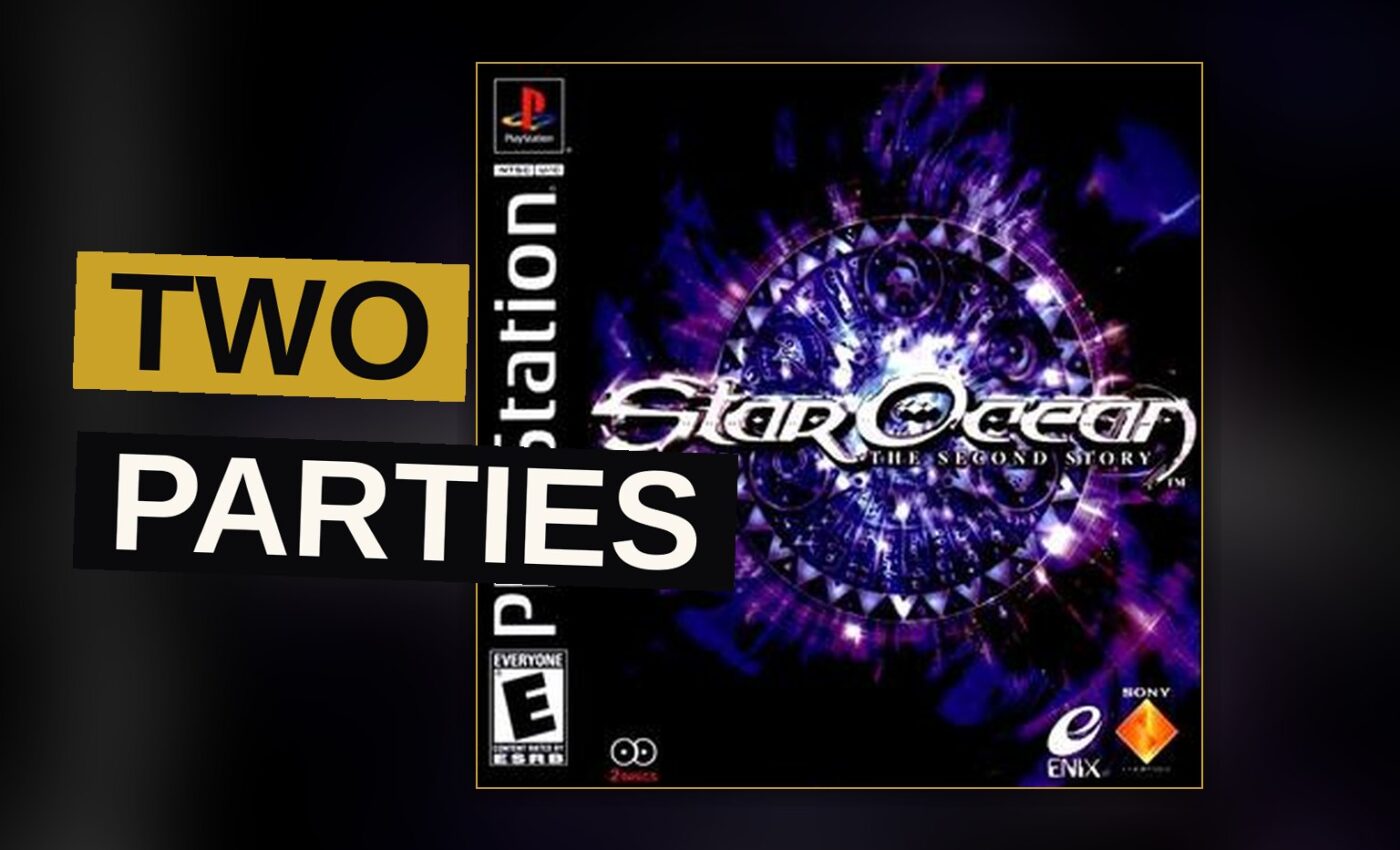
Star Ocean: The Second Story asks players to love two parties at once. That split is the whole design, and it mostly works.
Two Parties, One World
The game splits its cast between two main groups, each following its own plot thread. Players switch between them freely, skipping ahead and jumping back across story beats that otherwise would run in a straight line. It is a bold way to tell a story, and it mostly pays off. The freedom to jump between threads gives the game a shape that few other RPGs attempt, and the structure rewards players who want to explore both sides of the story.
Combat mixes real-time action with menu commands. Enemies fill the screen fast, and the pace keeps players moving between menus and fighting without losing momentum. The mix keeps battles from feeling repetitive, since players spend time planning commands between bouts of real-time action.
Combat and Customization
Characters grow through stat gains and skill trees, letting players build fighters around strength, magic or balanced play. The system rewards patience, since late-game builds depend on choices made early. Boss fights test both combat systems at once. They ask for timing and strategy together, and the best ones land as some of the game’s tightest set pieces.
What Holds It Back
Not everything lands. Some side quests repeat ideas the main plot already covered, and a few late-game areas feel like filler rather than new ground. The pacing drags in stretches where the player moves between threads without much gain. Those moments stand out against the game’s otherwise strong sense of forward motion.
The story itself is large, and it asks players to keep track of two casts at once. Some players find the split confusing rather than clever, especially when the threads cross without warning. The sheer scale of the cast can make it hard to remember which characters belong to which party, and the game does not always make the connections clear.
Comparing the Two Casts
| Feature | Party One | Party Two |
|---|---|---|
| Focus | Combat focus | Character focus |
| Tone | Straightforward | More comedic |
| Pace | Fast | Slower, more dialogue |
| Best For | Action fans | Players who want lore |
The table shows how the game splits its attention. Party One moves fast and plays like a traditional action RPG. Party Two slows down and leans on character development, dialogue and world-building. Both threads share the same world and the same story arc, but they deliver it in very different ways.
Final Word
Star Ocean: The Second Story is a game about choices, and it lets players make them in ways few other titles of its era attempted. The combat is sharp, the customization system is deep, and the split-party structure remains a bold experiment. It is not perfect. The pacing drags in places, and the sheer scale of its cast can be hard to follow. But the ambition shows through every flaw.