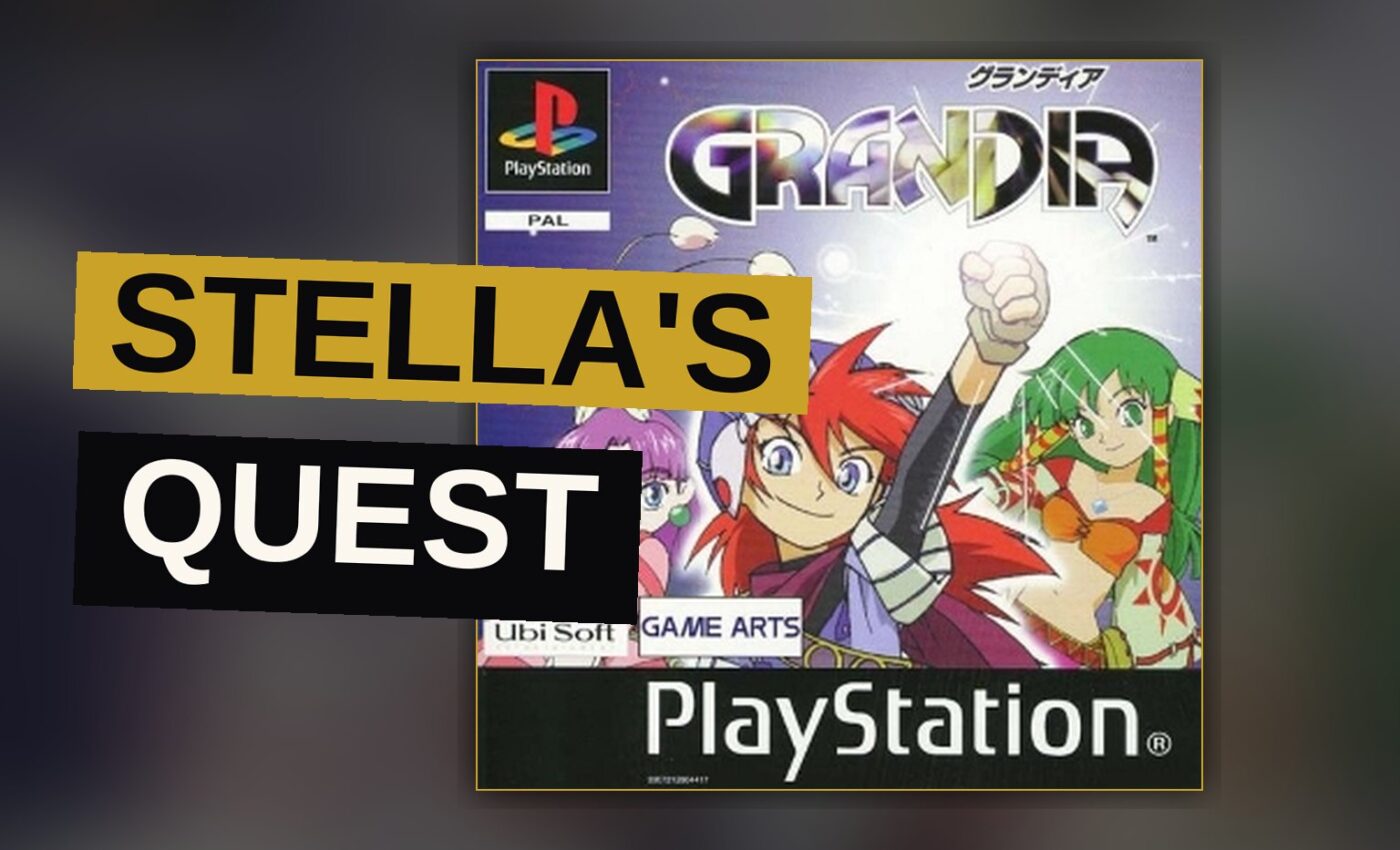
Grandia arrives on the PlayStation with a simple pitch: a fantasy adventure built around exploration, dialogue, and a battle system that rewards patience over speed. The result is a game that feels both ahead of its time and stuck in its ways, a mix that still holds up better than most of its peers from the late 1990s.
Story and Setting
The plot follows Est, a young man who can summon monsters from statues, and his companion, a princess named Stella. Together they travel across a world full of kingdoms, islands, and floating fortresses, searching for a way to stop a dark force threatening their homeland. The story moves at a steady pace, leaning on quiet character moments rather than spectacle.
Stella is the heart of the game. Her relationship with Est drives most of the drama, and the writing gives her lines that land with genuine warmth. Side characters fill out the world without overshadowing the main duo, though few get much depth beyond their immediate role.
Combat System
Grandia’s battle system is where the game shows its ambition. Fights are turn-based, but the team behind the game added a timing element: pressing buttons at the right moment during enemy attacks adds extra damage, while waiting too long cuts the effect. This small addition makes fights feel more engaged than most other games of the era.
The system also allows for combo chains, where linked attacks build up a meter that can be spent for a final strike. It rewards attention and repetition, turning battles into a rhythm problem rather than a button press. Enemies scale well, and later fights demand careful timing rather than brute force.
World Design
The world map is dense with paths, hidden treasures, and side quests. Players can fly over open water, climb mountains, and visit small villages that each have their own flavor. The presentation is bright and varied, with distinct settings that make each region feel separate rather than a copy of the last one.
The game also includes a fast-travel system that lets players return to familiar spots quickly, which helps keep the pace from dragging during long stretches of wandering. This is a small touch, but it shows attention to player convenience.
Music and Sound
The soundtrack is a highlight. Composed for the PlayStation hardware, it leans on orchestral arrangements and memorable themes that stick with players long after the console is turned off. The main theme, in particular, has become one of the most recognized pieces of music from this period.
Sound effects are serviceable but not outstanding. Character voices are sparse, and most of the game relies on text boxes for dialogue. That is a common trade-off for the era, but it does mean some emotional beats lose impact without spoken delivery.
Graphics
Grandia pushes the PlayStation hardware further than most titles from the period. Character sprites are detailed, environments are painted with care, and the use of layered backgrounds gives scenes a sense of depth that rivals early CD-ROM adventures on other systems. Animation is smooth, and the game rarely suffers from slowdown even during busy encounters.
The FMV sequences, used for key story moments, are a mixed bag. Some look dated now, but they were ambitious for their time and set a standard for cinematic presentation in future RPGs.
Length and Pace
A typical playthrough takes about thirty hours, though completionists can easily double that with side content. The pacing holds up through the middle portion of the game, but the final stretch drags somewhat, with a few filler dungeons before the climax. The game also includes a second difficulty setting for players looking for a harder challenge, which changes enemy stats and boss patterns without altering the core design.
Replay Value
Grandia offers a modest amount of replay value for players who want to see everything. A second difficulty setting extends the game’s lifespan for those who want a tougher test, but there is little reason to return otherwise. Save files carry over from a first playthrough, allowing players to jump back in without starting over.
| Element | Strength | Weakness |
|---|---|---|
| Story | Character-driven, engaging romance | Some filler content |
| Combat | Timed attacks, combo system | Simple interface |
| World | Diverse regions, dense exploration | Long stretches between goals |
| Music | Memorable soundtrack | Sparse voice acting |
| Graphics | Detailed sprites, layered backgrounds | Some dated FMVs |
Grandia succeeds because it commits fully to its central idea: a fantasy adventure built around timing, exploration, and character. The combat system is the game’s clearest strength, and the world design gives players plenty of reasons to wander. The story, carried by Stella and Est’s bond, gives the game an emotional center that few RPGs of its era matched.
Where it falls short is in pacing and variety. The final act drags, and the lack of spoken dialogue keeps some emotional scenes from landing. These flaws are not fatal, but they keep the game from greatness.
Grandia remains a solid, enjoyable entry in the genre, best remembered for its combat and its lead characters. Its influence can be seen in later games that followed its lead in cinematic presentation and combat timing. For players willing to put in the hours, it delivers a rewarding experience.
Grandia earns a score of 7.5 out of 10.