
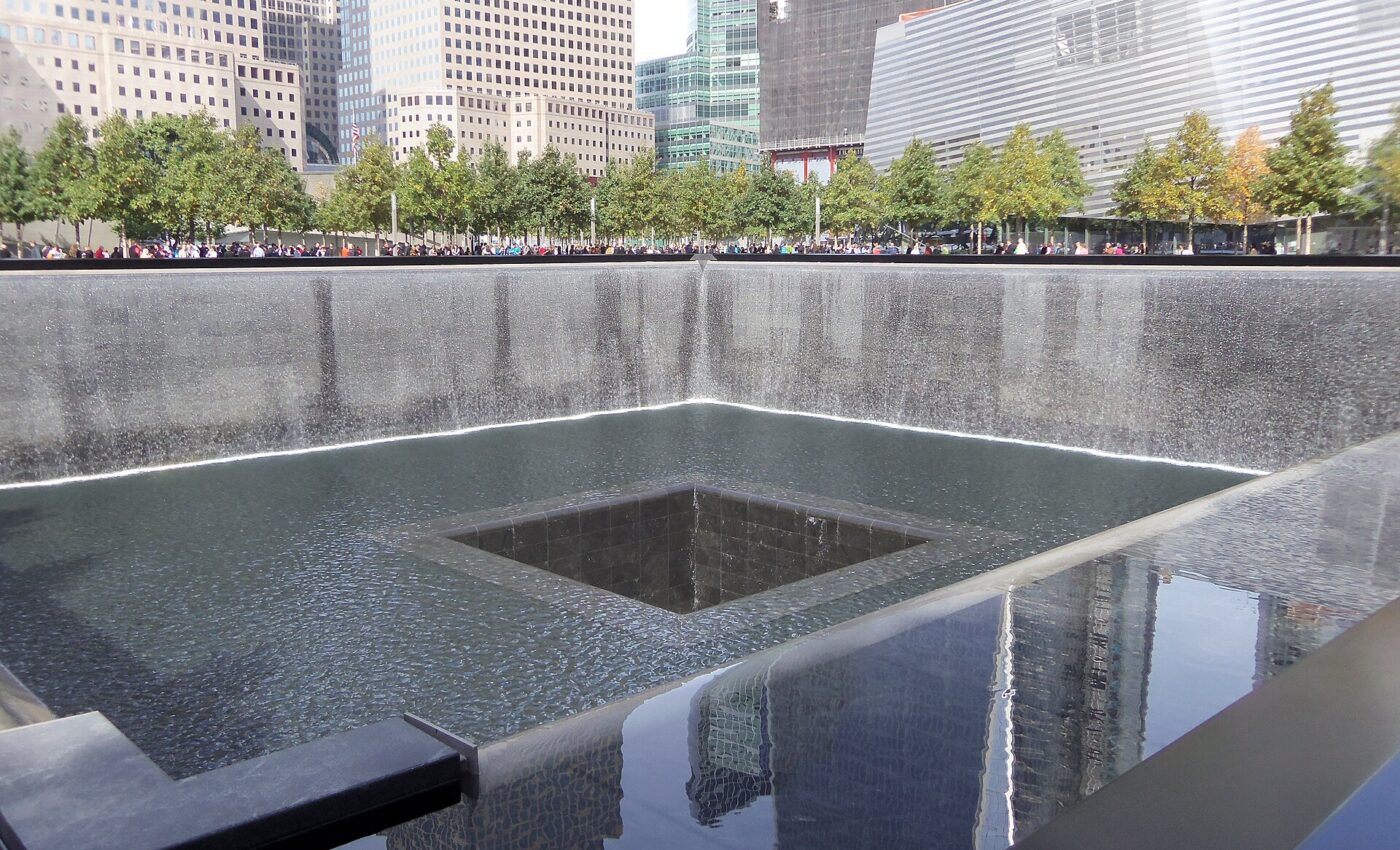
The names were read again on Friday morning, as they have been every year for a quarter of a century.
Families of the dead gathered on the plaza at the National September 11 Memorial & Museum and read aloud the 2,983 names of those killed in the attacks of September 11, 2001 and in the bombing of the World Trade Center on February 26, 1993. They read in pairs, as they always do. The reading began at 8:40 a.m. and was carried live on the museum’s website; the ceremony itself was closed to the public.
Seven silences
Six moments of silence have marked the ceremony for years, each fixed to a minute that is now part of the record:
- 8:46 a.m. — Flight 11 struck the North Tower
- 9:03 a.m. — Flight 175 struck the South Tower
- 9:37 a.m. — Flight 77 struck the Pentagon
- 9:59 a.m. — the South Tower fell
- 10:03 a.m. — Flight 93 came down near Shanksville, Pennsylvania
- 10:28 a.m. — the North Tower fell
This year there was a seventh, at 12:30 p.m., for the thousands who have died since of illnesses traced to the attacks and their aftermath. It will be held every year from now on.
That addition is the clearest measure of what twenty-five years has done. The first six silences mark a single morning. The seventh marks everything that came afterwards, and it is still being added to.
All of the living former presidents were in Manhattan for the ceremony, along with Vice President JD Vance and New York City Mayor Zohran Mamdani, who went on to other memorial events across the city. President Trump spoke at the Pentagon.
Shanksville
Members of the administration travelled to Shanksville, where the National Park Service held its ceremony at 1 p.m. Flight 93 came down in a field there at 10:03 a.m. on September 11, 2001, killing all 33 passengers and seven crew. The people on board had forced their way into the cockpit to stop the hijackers reaching their target in Washington.
Pennsylvania Governor Josh Shapiro and Interior Secretary Doug Burgum were among the speakers, and a wreath was laid at the Wall of Names, where forty marble panels carry the name of every passenger and every member of the crew.
David Martin, who covered the Pentagon for CBS News, was driving towards the building when it was hit. “I heard a boom and saw a pillar of smoke going up on the other side of the building,” he said. “I ditched my car and ran against the tide of people evacuating the building.” He knew by then that planes had struck the towers in New York. He still could not believe one had gone into the Pentagon.
The colour of the sky
The museum asked people to photograph the sky on Friday from wherever they were, whatever the weather, and to post it with a memory, tagging the museum under the hashtags neverforget911 and rememberthesky. The request borrows from Spencer Finch’s work in the museum, “Trying to Remember the Color of the Sky on That September Morning”. Families left messages on the museum’s digital Blue Sky Remembrance Wall.
After dark the Tribute in Light returned over lower Manhattan, the two columns standing where the towers stood. They were first switched on six months after the attacks and have come back every year since. Buildings across the city and the country were asked to light their facades blue from dusk until dawn.
There is no lesson to draw from a day like this, and the ceremonies did not try to find one. The names were read, the silences were kept, and a new one was added for the people still dying of it.
Get the Notebook.
The day's best stories and every fresh verdict, in plain English, in your inbox by seven. One email a day, no more.