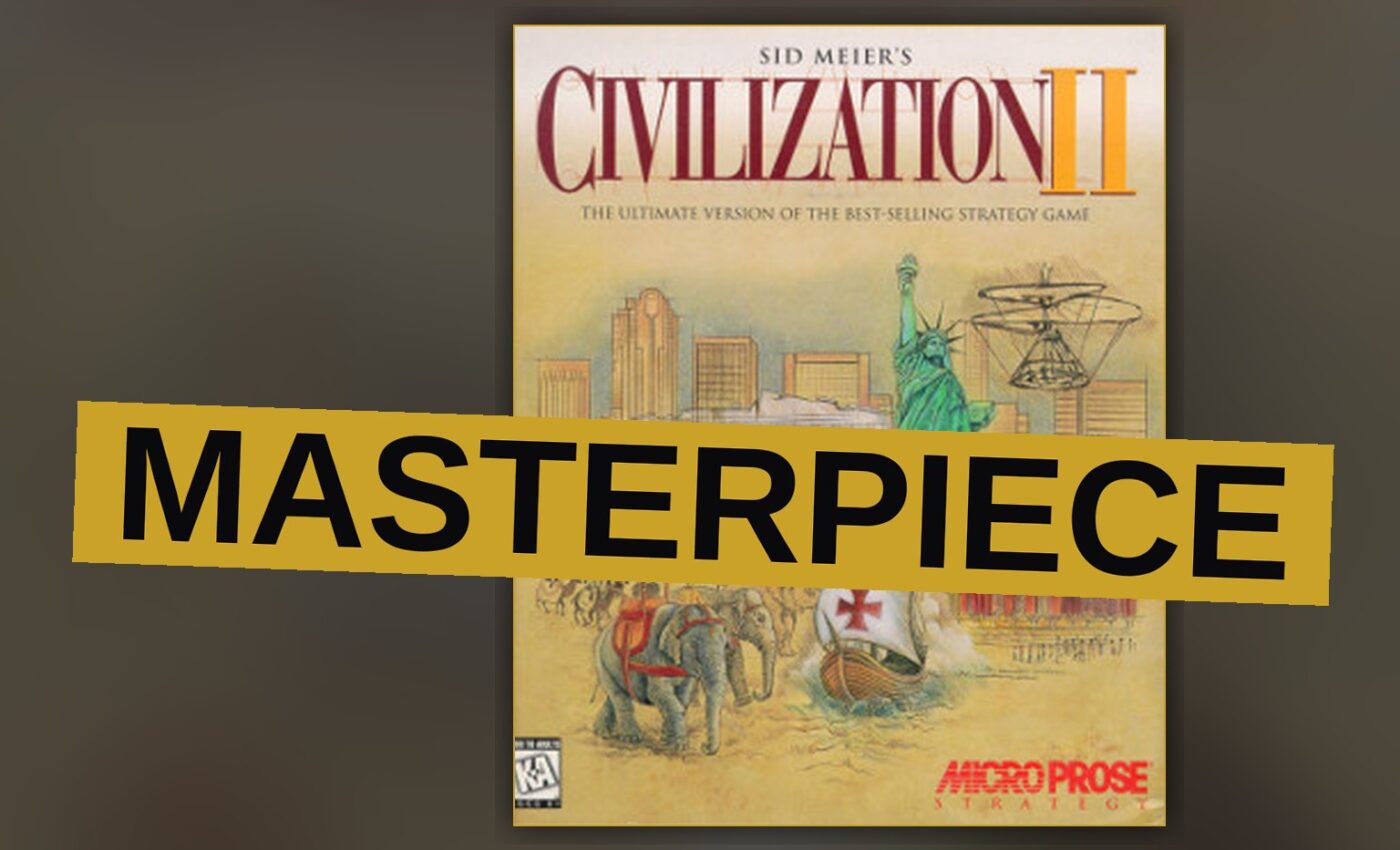
Civilization II is a strange kind of masterpiece. It asks you to manage dozens of cities, guide a civilization through thousands of years, and make decisions about war, trade, and culture that ripple outward for centuries. It does this with a small window, a grid of hexes, and a handful of colors. And it somehow makes it feel urgent.
The game was released for the original PlayStation in 1999, and it remains one of the most influential strategy titles ever made. It takes Sid Meier’s original idea — build a city, conquer the world — and expands it into a machine of staggering ambition. You start with a settler unit wandering across a map, and you end with a global empire that spans continents and technologies. The journey is long, and it rarely gets dull.
Map and Cities
The core of Civilization II is the map. Each tile represents a square of land, and each square holds a resource — food, production, trade, or a wonder of the world. You place a settler, found a city, and watch it grow. The city produces settlers, workers, and military units, and each one costs the resources you have collected.
The interface is simple. A bar at the bottom shows your current units, a sidebar shows your cities, and a menu lets you issue orders. You can move a unit, build a road, or train a soldier in seconds. The game runs at a brisk pace, and it never slows down even when you are managing ten cities at once.
What makes the map compelling is the way it changes over time. Early in the game, you are concerned with food and production. Later, you are worried about iron and coal. Eventually, you are planning railways and electricity. The game tracks your progress through a technology tree, and each advance opens new possibilities.
Technology Tree
The technology tree is the engine of Civilization II. It is a branching path of discoveries, from the wheel to the internet, and each one changes the game in a meaningful way. You gain knowledge through research, which is produced by your cities, and you spend it to unlock new units, buildings, and abilities.
The tree is also where the game’s depth becomes visible. Some technologies are best researched early, because they improve your economy. Others are better saved for later, because they give you a military advantage. The game rewards players who plan ahead, but it punishes those who rush.
There is a moment in every game where you realize that the path you chose has locked you into a particular strategy.
That tension is the heart of Civilization II.
War and Diplomacy
War is the other half of the game. You can declare war on another civilization, capture its cities, and destroy its armies. Or you can make peace, form alliances, and trade technology. The game simulates diplomacy through a series of negotiations, and it tracks your reputation with each civilization.
The combat system is abstract, but it works. You move units into adjacent tiles, and the game resolves the battle automatically. The outcome depends on the type of unit, the terrain, and the experience of the soldiers. A veteran army can rout a fresh one, and a fortified position can hold off a larger force.
The game also includes a feature called Espionage, which lets you send spies into enemy cities to steal technology or sabotage their infrastructure. It adds a layer of subterfuge that is both fun and frustrating. A successful spy operation can change the course of a game, and a failed one can cost you dearly.
Cities Themselves
Each city is a small simulation in itself. It has a population, a happiness level, and a production queue. You can build wonders of the world, such as the Pyramids or the Colosseum, which grant special bonuses. You can also construct defensive structures, such as walls and fortresses, which protect your cities from invasion.
The cities are also where you manage your economy. You collect taxes, maintain infrastructure, and balance your spending. A happy city produces more goods, while an unhappy city produces fewer. The game forces you to make difficult choices about where to invest your resources, and it rewards players who think strategically.
The city interface is dense, but it is easy to learn. You can see the status of every city at a glance, and you can switch between them quickly. The game also includes a feature called the Advisor, which offers suggestions based on your current situation. It is a useful tool, but it is not necessary.
Long Game
The game is long. A typical game can last several hours, and a full campaign can take days. The length is part of the appeal. Civilization II is a game about patience, and it rewards players who are willing to wait.
The game also includes a scenario mode, which lets you play historical conflicts or fictional wars. These scenarios add variety to the main game, and they offer different starting conditions and objectives. The game also includes a multiplayer mode, which allows you to play against other players online.
The game’s longevity comes from its replayability. Every game is different, because the map, the civilizations, and the technologies are generated randomly. This means that you can play the game many times and never have the same experience twice.
Sound and Look
The PlayStation version of Civilization II is a remarkable achievement. It runs at a smooth frame rate, and it looks sharp on screen. The graphics are simple, but they are effective. The game uses a grid of hexes, which makes it easy to see the terrain and the units.
The sound design is minimal, but it is appropriate. The game plays a chime when you discover a new technology, and it plays a drumroll when you win a battle. The music is a mix of orchestral pieces and electronic tracks, and it sets a tense mood. The game also includes a feature called the Music Box, which lets you play custom soundtracks.
The presentation is professional, and it feels polished. The game was developed by MicroProse, and it shows in the attention to detail. The menus are clean, the text is readable, and the controls are responsive. The game is a technical marvel for its time, and it holds up well against modern standards.
Legacy
Civilization II is a landmark in the history of strategy games. It popularized the concept of a grand strategy game, and it influenced countless titles that followed. It also introduced features that became standard, such as the technology tree and the city simulation.
The game was a commercial success, and it received a sequel, Civilization III, which expanded on its ideas. The franchise has continued to evolve, but the core of Civilization II remains intact.
The game is a remarkable achievement of design. It takes a simple idea and builds a universe around it. It is a game that rewards curiosity, and it is a game that demands attention. It is a game that you will return to, even after you have finished it.
| Feature | Civilization II |
|---|---|
| Genre | Turn-based strategy |
| Developer | MicroProse |
| Platforms | Original PlayStation |
| Core loop | Build cities, research technologies, conquer civilizations |
| Length | Several hours to days |
Replay Value
The replay value of Civilization II is enormous. Because the game generates its maps and civilizations randomly, no two games are alike. A game where you start with a coastal settler and build a naval empire is very different from a game where you start inland and build a land empire.
The game also offers a wide range of challenges. You can play as a peaceful civilization that focuses on culture and science, or you can play as a warlike civilization that conquers everything in sight. The game respects both approaches, and it rewards players who adapt to changing circumstances.
The game’s difficulty is also adjustable. You can play on a casual setting, where the computer opponents are weak, or you can play on a brutal setting, where the computer opponents are nearly impossible. The game is fair, but it is unforgiving.
Bottom Line
Civilization II is a game that deserves its reputation. It is a challenging, rewarding, and often frustrating experience. It is a game that requires patience, strategy, and creativity. It is a game that you will play for hours, and you will still be learning new strategies.
The game is not perfect. The interface can be overwhelming, and the difficulty curve is steep. The game also lacks a tutorial, which can make it hard for new players to understand. But these flaws are minor compared to the strengths.
The game is a remarkable achievement of design. It takes a simple idea and builds a universe around it. It is a game that you will play for days, and you will still find new things to discover. It is a game that you will remember, and you will want to play again.