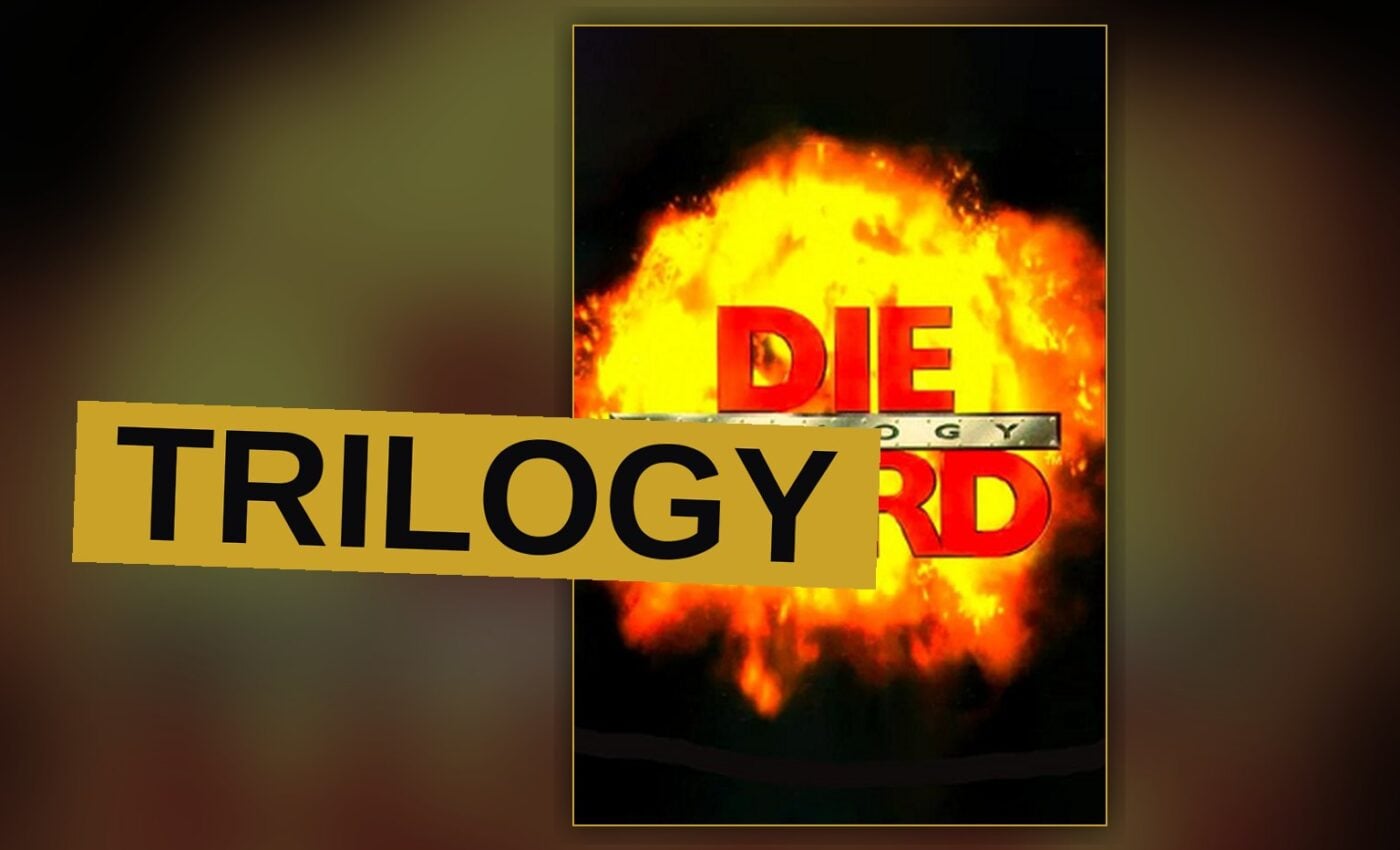
Die Hard Trilogy is three games wearing one trench coat, and that is the point. Probe Entertainment built one PlayStation disc that splits the first three Die Hard films into three separate genres, and Fox Interactive shipped it in 1996. A stunt like that should not work. It mostly does.
Nakatomi Plaza, Third Person
The first game is a third-person shooter. You battle terrorists and rescue hostages inside Nakatomi Plaza, the setting of the original film. This is the most conventional of the three, and the most familiar. You move through a tower, you clear rooms, you free people. Nothing here rewrites the genre. What it does is give the disc its spine: a recognizable action game that grounds the two experiments beside it.
Dulles Airport on Rails
Die Hard 2: Die Harder becomes an on-rails shooter. The player stops terrorists who have taken over Dulles Airport.
Taking the camera away from the player is a gamble, and it is the smartest decision on the disc. On rails, the tension comes from timing rather than navigation. You are not exploring Dulles. You are surviving it.
A Taxicab Through New York City
Die Hard with a Vengeance throws the player behind the wheel. You drive a taxicab, a sports car and a dump truck across all of New York City, hunting and defusing explosives before they go off. It is a racing game bolted onto an action franchise, and it is the loosest, strangest piece of the three. It is also the one that best understands what a movie tie-in can get away with.
Three Genres, One Disc
The structure is the whole idea. Each film entry gets its own gameplay genre, so the disc never repeats itself across its runtime. A shooter, a rail shooter and a racer share a menu. That variety is the reason to own it and the reason it wears thin in long sittings, because each mode is a sketch of its genre rather than a full argument with it. The themes are action and comedy, and the comedy is mostly in the premise.
Greatest Hits, Platinum, and a Sequel
Die Hard Trilogy was well received. It became a PlayStation Greatest Hits and PlayStation Platinum game. It also inspired a sequel, Die Hard Trilogy 2: Viva Las Vegas, which kept the three playing styles but moved to a spin-off storyline unconnected to the films.
That reception is the honest measure of the thing. It sold on novelty and earned its place in the budget lines, not because any one mode outclasses its genre’s best, but because no one else was selling three genres on one disc.
What the Disc Gets Right
The on-rails section is the best of the three, because constraint forces the design to commit. The driving game is the most fun and the least controlled. The Nakatomi shooter is the most solid and the least surprising. Ranked against the films they adapt, the games are thinner, but the packaging is the trick: three movies, three mechanics, one purchase.
KEY FACTS BOX
- Developer: Probe Entertainment
- Publisher: Fox Interactive
- Distributed by: 20th Century Fox Home Entertainment (North America), Electronic Arts (Europe)
- Platforms: PlayStation, Sega Saturn, Microsoft Windows
- Release year: 1996
- Genres: Shooter, Racing, Arcade
- Modes: Single player
- Score: 7 of 10
Die Hard Trilogy is a 7 of 10. The rail shooter at Dulles is the piece worth defending, and the three-genre gimmick holds up better than a movie tie-in has any right to. It is not a great game in any single mode. It is a great package, and on the original PlayStation that was enough.
Get the Notebook.
The day's best stories and every fresh verdict, in plain English, in your inbox by seven. One email a day, no more.