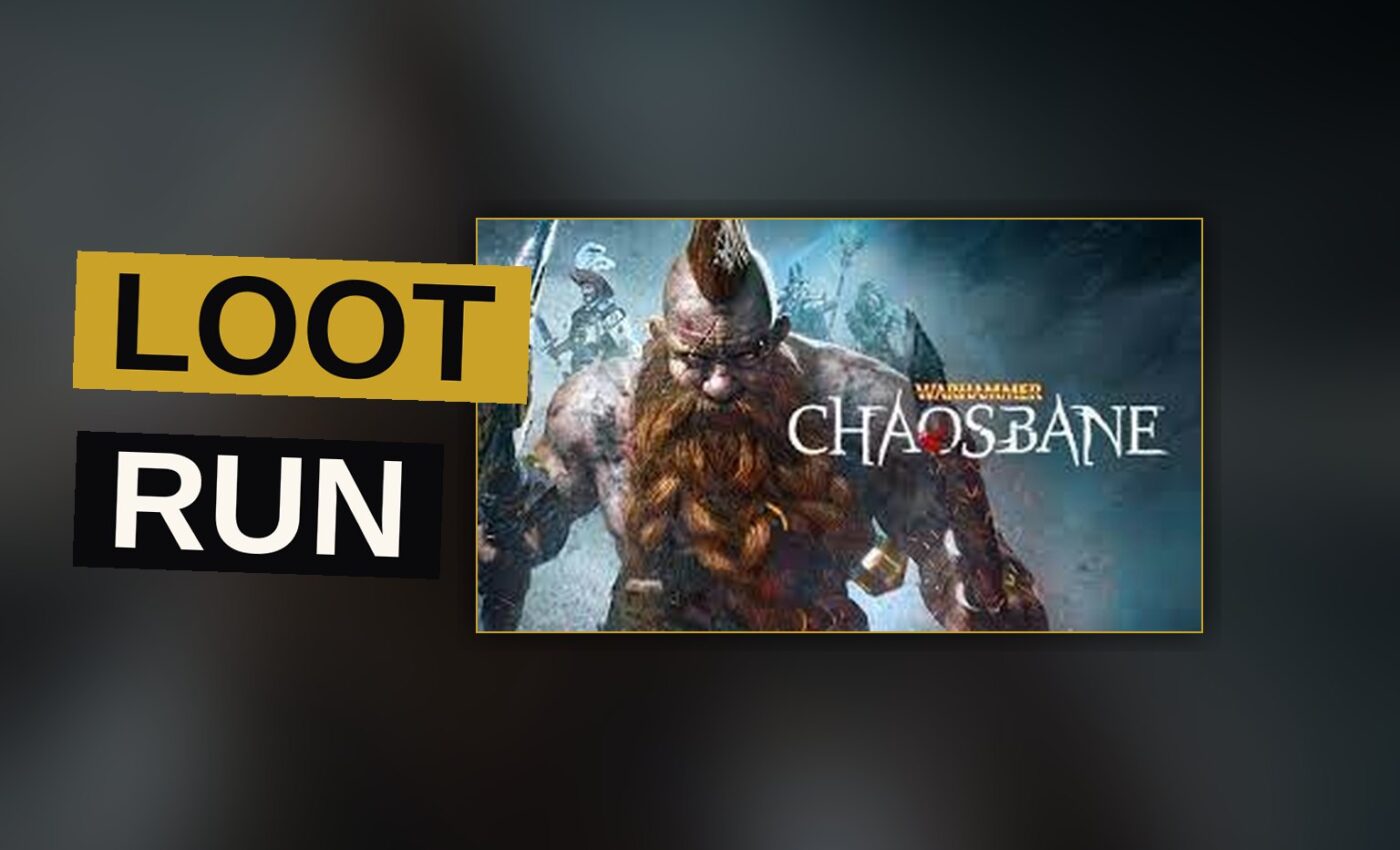
Warhammer: Chaosbane arrived in June 2019 with a licence that should have done more of the work for it. The Old World, the Empire, the hordes of Chaos — this is a setting with two hundred years of history behind it and a tabletop army’s worth of ready-made enemies. Eko Software built an action RPG on top of that, and the result is a game that gets the shape right and the feel wrong.
Trailer, via Warhammer: Chaosbane.
Konrad Vollen and the swords-and-shield problem
You pick from six characters. Four ship with the base game: Konrad Vollen, an Empire Soldier who works sword and shield; Prince Elontir of Ulthuan, an exiled High Elf Archmage who leans on magic; Bragi Axebiter, a Dwarf Slayer built for twin-weapon melee; and Elessa, a Wood Elf Waywatcher who shoots from range. Two more — Keela Gunnarsdottir, a Dwarf Engineer with firearms and technology, and Jurgen Heider, an Imperial Witch Hunter with pistols and blades — came later as downloadable content.
That is a decent spread on paper. The trouble is that Chaosbane is a hack-and-slash game, and hack-and-slash lives or dies on the moment-to-moment feel of hitting things. The four base classes cover the standard archetypes without pushing any of them somewhere strange. Konrad blocks and swings. Bragi spins into a crowd. Elontir casts. Elessa retreats and fires. Each has a skill set of its own, and the game is competent at delivering those skills.
Competent is the word that keeps coming back. There is nothing here that a player of Diablo or its many relatives has not seen done with more bite.
The cursed city of Praag and the rest of the map
The setting is the real asset. Chaosbane sits just after the Great War Against Chaos, two hundred years before the era most Warhammer Fantasy players know. Your character is a personal champion of Magnus the Pious, the man who killed the Chaos Everchosen Asavar Kul and is about to be crowned Emperor of a fractured Empire.
That is a smart window. The Empire is not yet whole, Chaos is not yet beaten, and the game can send you to places that carry weight in the fiction. Praag, the cursed city, is one. Nuln, the old capital of the Empire, is another. The game presents these as iconic locations, and for a Warhammer player they are.
The perspective is isometric, bird’s-eye, which suits the genre and suits the setting’s tabletop roots. You look down on the battlefield the way you would look down on a table. It is the correct camera for this game and it never gets in the way.
What the game does not do is make those locations feel like anything more than backdrops for the next pack of enemies. Praag is a name with a history. In Chaosbane it is a place where you fight.
Four players, one screen, and the co-op promise
Chaosbane supports single player, multiplayer, co-operative play and split screen. Up to four players can run together locally or online. That is a genuine feature, and split screen in particular is rarer than it should be in this genre.
Co-op is where the game makes its best case for itself. The classes are built to complement each other, and four players working a crowd of Chaos daemons is the version of this game that holds attention. The artefacts of the Old World give you something to chase between runs, and chasing loot with friends is a durable loop.
Solo play is thinner. Without other people to cover the gaps in a build, the repetition sets in faster. The game does not have enough variety in its encounters to carry a long single-player session on its own, and the story is not strong enough to pull you forward.
The Tomb Kings and the enhanced version
The undead Tomb Kings arrived as downloadable content on 16 December 2019, with a storyline built around them. That is the most substantial addition the game got, and it gives Chaosbane a second faction to fight that is not Chaos.
An enhanced version followed for the newer consoles: Xbox Series X/S on 10 November 2020, and PlayStation 5 on 12 November 2020. The game also runs on PlayStation 4, Xbox One and PC. If you are coming to Chaosbane now, the enhanced version is the one to play, and the Tomb Kings content is worth having.
None of it changes the foundation. A new faction and a new console port do not fix a combat system that never quite lands.
What Chaosbane gets right about the Old World
The Warhammer Fantasy setting is not decoration here. Chaosbane uses the period after the Great War Against Chaos properly, and it treats Magnus the Pious as a real figure rather than a name in a manual. The six classes are drawn from the factions of the setting and they read as such. A Dwarf Slayer fights like a Dwarf Slayer. A Witch Hunter uses pistols and blades because that is what a Witch Hunter uses.
For a licensed game, that fidelity matters. Too many adaptations of tabletop settings treat the lore as flavour text. Chaosbane treats it as the reason the game exists, and the people who made it clearly know the material.
The problem is that knowing the material and building a great action RPG are different skills. Chaosbane is faithful. It is not exciting.
Where the combat falls short
Hack-and-slash games need a reason to keep pressing the button. The best ones give you a rhythm — a flow between attacks and movement and skills that becomes satisfying in itself. Chaosbane has the parts of that rhythm without the payoff.
Enemies come in packs. You cut them down. More arrive. The skills are on cooldowns and you manage them. It works. It is not broken. But there is a flatness to the whole thing, a sense that the game is going through the motions of its genre rather than finding its own way through them.
The four-player co-op is the exception. With other people in the fight, the flatness becomes less noticeable, and the class differences start to matter. A Dwarf Engineer laying down fire while a High Elf Archmage works magic and a Wood Elf Waywatcher picks off stragglers — that is the game working as intended.
Play it alone and you will feel the seams.
The score, and what it is worth
Warhammer: Chaosbane sits at 6.5 out of 10 on the critic aggregate across eight outlets, and that number is honest. This is a game that does several things correctly and nothing exceptionally. The setting is used well. The classes are distinct. Co-op is real and split screen is a genuine gift. The Tomb Kings content adds something worth playing.
Against that: the combat never finds a rhythm worth chasing, the solo experience runs out of steam, and the locations are names rather than places. For a licence with this much behind it, that is a disappointment.
The 6.5 is not a bad score. It is the score of a game that is fine. Chaosbane is fine. If you have three friends and a taste for the Old World, it is better than fine for a while. If you are playing alone, waiting for the game to become something more than competent, you will wait a long time.
The hard numbers
- Title: Warhammer: Chaosbane
- Developer: Eko Software
- Publishers: Games Workshop, Nacon (Bigben Interactive)
- Release date: 4 June 2019 (PC, PlayStation 4, Xbox One)
- Tomb Kings downloadable content: 16 December 2019
- Enhanced version: Xbox Series X/S, 10 November 2020; PlayStation 5, 12 November 2020
- Platforms: PC (Microsoft Windows), PlayStation 4, PlayStation 5, Xbox One, Xbox Series X/S
- Genres: Role-playing (RPG), Hack and slash/Beat ’em up, Adventure
- Modes: Single player, Multiplayer, Co-operative, Split screen
- Perspective: Bird view / Isometric
- Classes: Konrad Vollen (Empire Soldier), Prince Elontir of Ulthuan (High Elf Archmage), Bragi Axebiter (Dwarf Slayer), Elessa (Wood Elf Waywatcher), Keela Gunnarsdottir (Dwarf Engineer), Jurgen Heider (Imperial Witch Hunter)
- Critic aggregate: 6.5/10 (eight outlets)
- Score: 6.5 of 10
Get the Notebook.
The day's best stories and every fresh verdict, in plain English, in your inbox by seven. One email a day, no more.