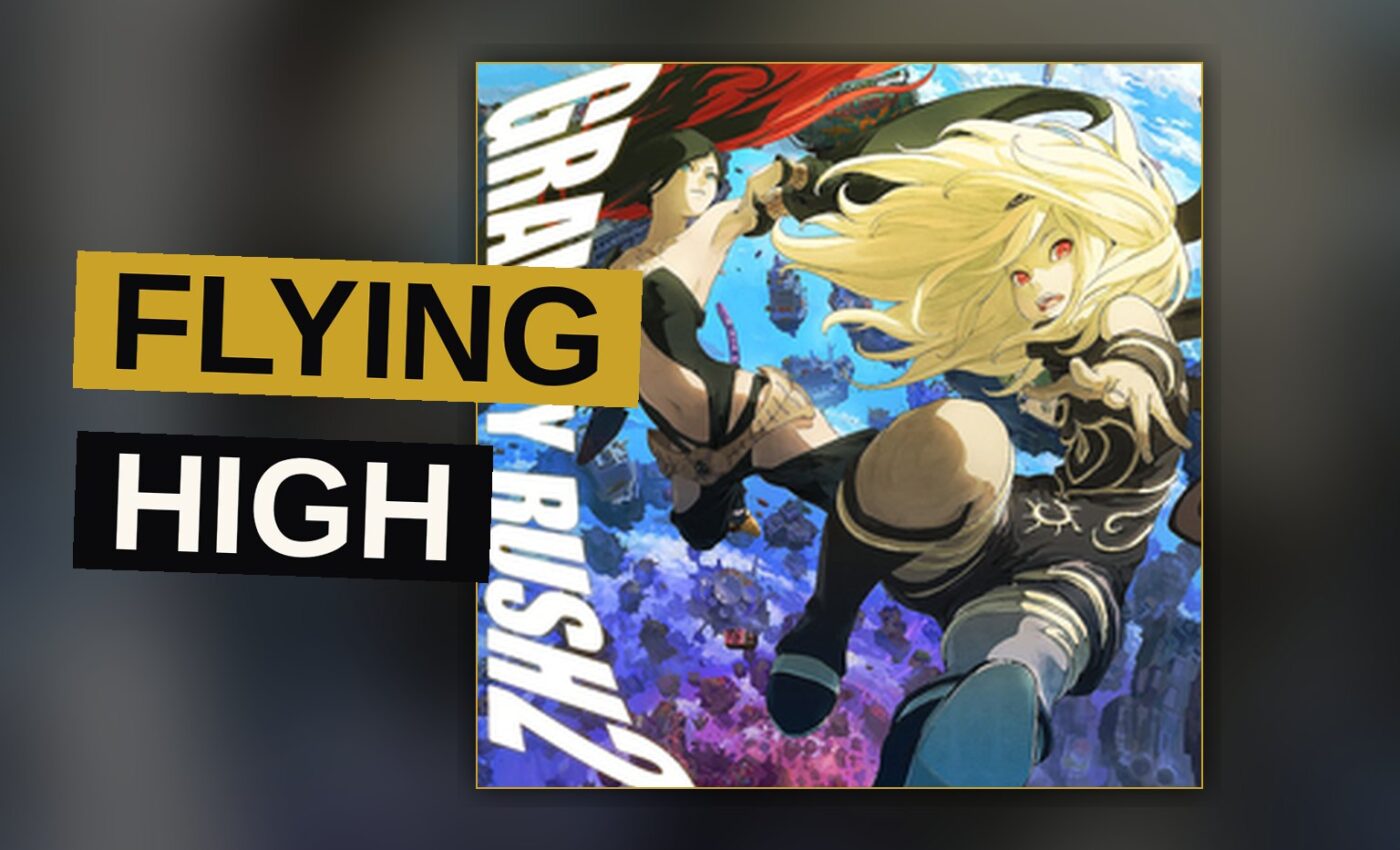
Gravity Rush 2 asks players to do something simple and strange: throw themselves off buildings, let themselves fall, and then catch their momentum back with a twist of the wrist. That twist is the whole game. It turns falling into flight, and it turns the city below into a puzzle box waiting to be opened.
The game follows Kat, a girl who can control gravity, as she tries to stop a second moon from destroying her home planet. The premise is thin, but the execution is generous. Players spend hours climbing, sliding, and soaring through a city built out of neon and steel, and the act of moving feels more alive than almost anything else on PS4.
Trailer, via PlayStation Europe.
Falling Is the Whole Point
Gravity Rush 2’s central mechanic is easy to explain and hard to master. Kat can summon small spheres of light, each tied to a different direction, and she can switch between them mid-air. A push forward sends her flying, a pull backward sends her falling, and a turn left or right changes her course entirely. The controls are sensitive enough that a single twitch of the thumb can send her spinning off in a new direction.
That freedom is the game’s greatest strength. Missions often ask players to reach a high point, or to land on a distant platform, or to chase a moving target. None of them require a straight line. Kat can climb walls, slide down them, bounce off the ground, and soar over obstacles in a single motion. The result is a movement system that rewards curiosity. Players are constantly testing the limits of what the game allows, and the game rarely tells them to stop.
The sensation of weightlessness is rare in games. Most titles settle for acceleration or speed. Gravity Rush 2 settles for something closer to flight. Kat feels light, almost weightless, and the world around her bends to accommodate her. It is a small trick, but it makes every moment in the game feel special.
A City Built From Scratch
The setting is Higgs Tower, a vertical metropolis that stretches from the ground to the clouds. Its lower districts are dense and industrial, packed with towers and neon signs. Its upper districts are open and airy, with wide streets and sweeping views. The game does not simply place Kat in a city. It builds the city around her, layer by layer, and lets her move through it at her own pace.
The visual style is clean and bright. Characters are drawn in a soft, cartoonish way, with exaggerated features and expressive faces. The environment is rendered in bold colors, with a distinct gradient that shifts from dark blue at the base to bright white at the top. The effect is both playful and atmospheric, and it gives the game a strong sense of identity.
The presentation is consistent across the whole package. Menus, loading screens, and transitions all share the same aesthetic, which makes the game feel cohesive from start to finish. There is no jarring shift between the main game and its support systems. Everything looks and feels like it belongs together.
Story That Drags
The narrative is where Gravity Rush 2 stumbles. The plot revolves around Kat’s efforts to save Higgs Tower from destruction, but the writing leans heavily on exposition and melodrama. Characters speak in long, flat monologues, and the emotional beats are delivered with a heavy hand. The game wants players to feel invested in its world, but the dialogue often gets in the way of that investment.
Kat herself is a blank slate. She speaks in vague, poetic terms about destiny and purpose, but she never becomes a fully realized character. Her motivations are never explained clearly, and her growth arc feels forced. The supporting cast fares better, particularly a rival named Ryan, whose rivalry with Kat carries some genuine tension. But even he is not given much room to breathe.
The pacing suffers as a result. The game runs long, and the middle stretch drags considerably. Missions repeat similar patterns, and the story fails to find new angles to explore. By the final act, the payoff feels hollow, as if the game rushed to wrap things up without giving the audience a proper resolution.
Combat That Never Clicks
Combat in Gravity Rush 2 is a separate mode, distinct from the exploration sections. Players fight waves of enemies using a set of weapons and abilities, and the goal is to survive while clearing rooms. The combat is competent, but it never reaches the heights of the movement system. Enemies are simple, and the encounters are repetitive. Players will spend far more time enjoying the freedom of movement than they will engaging with the fights.
The combat also breaks the flow of the game. After a long session of soaring through the sky, the sudden shift to a standard shooter can feel jarring. The two modes feel like different games sharing the same world, rather than complementary parts of a larger experience. That split is a missed opportunity, and it leaves the game feeling less cohesive than it could have been.
Music That Stays With You
The soundtrack is a highlight. Composed by Masashi Hamauzu, it draws on electronic and orchestral elements to create a sound that is both futuristic and nostalgic. The main theme, “Higgs Tower,” is a driving track that captures the energy of the game’s movement. Other tracks, like “Falling Into the Abyss” and “The Weight of the World,” add depth to the emotional beats of the story.
The music is used sparingly in the game, which means it lands with greater impact when it does appear. Boss themes are especially effective, building tension before the final confrontation. The score is one of the few elements of the game that consistently delivers, and it helps elevate the overall experience.
Performance That Holds Up
Gravity Rush 2 runs smoothly on PS4. Load times are short, and the frame rate remains steady during movement. The game supports touch controls on PS4, allowing players to use a finger to summon and direct the gravity spheres. That option is a nice touch, though it is not essential.
The game also includes a New Game Plus mode, which offers additional challenges for players who want to revisit the content. It adds new enemies and increased difficulty, but it does not fundamentally change the core experience. For completionists, it is a worthwhile addition. For everyone else, it is a bonus feature rather than a reason to return.
A Solid, Uneven Experience
Gravity Rush 2 is a game of highs and lows. Its movement system is a technical marvel, and its visuals are stunning. Its story and combat are weaker, and its pacing suffers in the middle. Taken as a whole, it is a solid entry in the genre, but it falls short of greatness.
The game is available on PS4, and it holds up well against other action games of its era. It is a game best played for its movement, not its story. Those who approach it with that expectation are likely to find a rewarding experience. Those who want a deep narrative will be disappointed.
| Element | Strength | Weakness |
|---|---|---|
| Movement System | Fluid, imaginative | None |
| Story | Thematic ambition | Poor writing, flat characters |
| Combat | Competent | Repetitive, disconnected |
| Visual Style | Bold, consistent | None |
| Soundtrack | Strong, memorable | Limited use in-game |
| Presentation | Cohesive | Some jarring shifts |
Key Facts
– Title: Gravity Rush 2
– Platform: PS4
– Developer: Sony Computer Entertainment Japan Studio
– Publisher: Sony Interactive Entertainment
– Release Date: 2017
– Score: 8.1/10
Gravity Rush 2 is a game worth playing for its movement alone. The rest of it is uneven, but the highs are high enough to justify the trip. It is a game that understands what makes it special, even when it cannot quite live up to its own promise. The score reflects that balance: 8.1 out of 10.