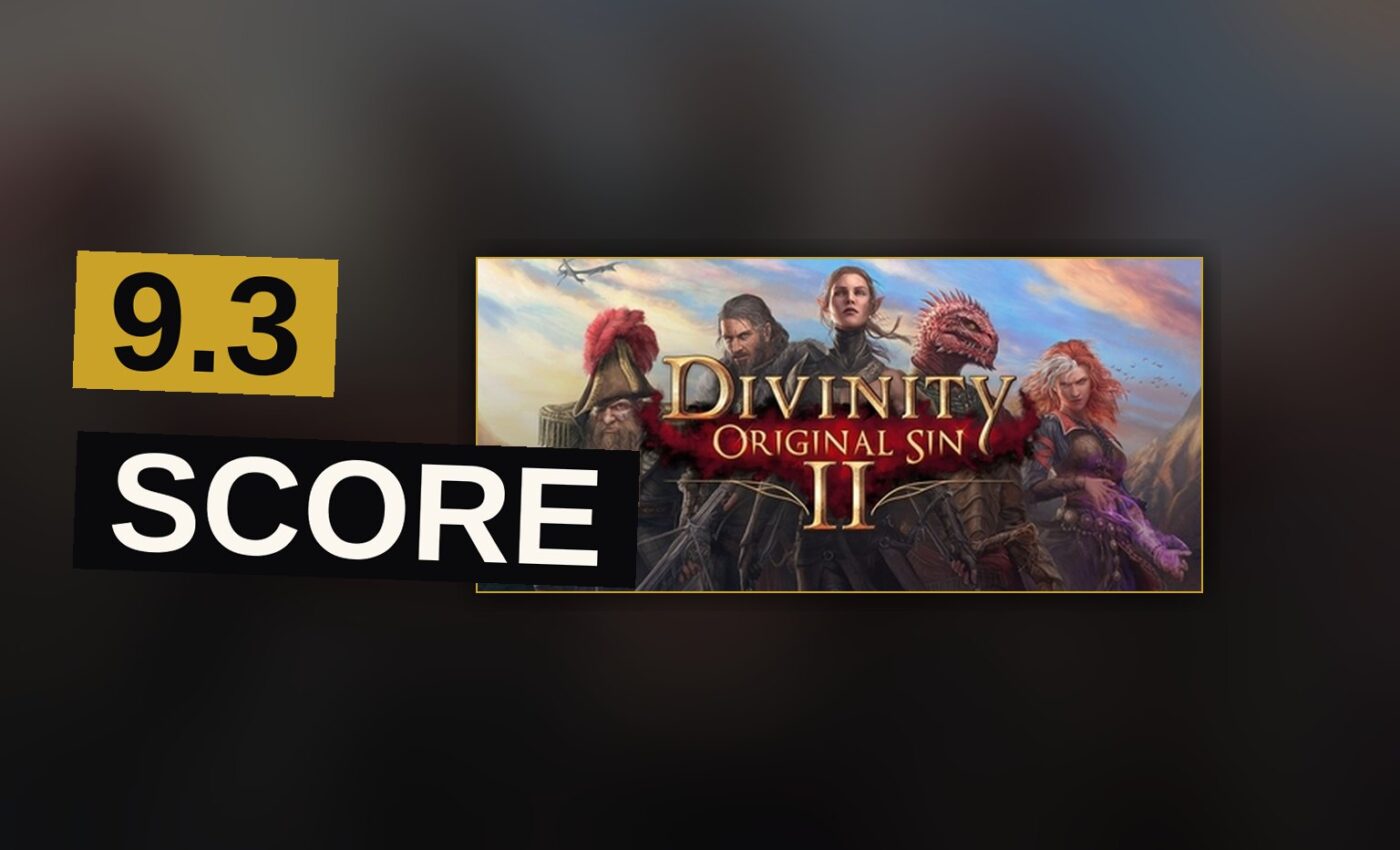
Four players sit around one table, and none of them agree on what to do next. That tension is the whole point of Divinity: Original Sin II, a role-playing game built for arguing with your friends as much as fighting monsters.
Larian Studios released the game on PC in September 2017, with PS4 and Xbox One versions following, and a Nintendo Switch port arriving later. It is a sequel, but it does not ask for homework. New players can walk in cold and still find a deep, systems-driven world waiting for them.
Trailer, via GOG.
Fort Joy
The story opens on Fort Joy, a prison colony for people who can use Source magic. From there the game fans out into a large, layered world full of factions, secrets and dead ends. Six playable Origin characters carry their own backstories into the plot, and a custom character option lets players build from scratch instead.
Combat is turn-based and built around elemental interaction. Fire spreads to oil. Water conducts electricity. Blood pools freeze into ice you can walk across. None of this is locked away in a tutorial box; it is simply how the world behaves, and the game trusts players to notice and exploit it.
Four-Player Chaos
Co-op is where Divinity: Original Sin II sets itself apart. Up to four players can join a single game, and they do not have to share goals. One player can lie to a quest-giver while another tells the truth in the same conversation, and the game resolves the disagreement through a dialogue-style contest between the two players rather than picking a default winner.
That structure turns ordinary party decisions into small dramas. Do you free the prisoner or hand them over? Do you split the loot evenly or grab it first? The game does not smooth these moments over. It lets them stay messy, which is exactly what makes them memorable.
Below is a rough sense of how the two main ways of playing compare.
| Mode | Strength | Trade-off |
|---|---|---|
| Solo play | Full control over story choices and party build | Misses the friction of competing player agendas |
| Four-player co-op | Unpredictable, personal dialogue conflicts | Coordination and turn order take longer |
Origin Characters
Each Origin character — including figures like the skeleton necromancer Fane and the lizard prince The Red Prince, alongside others in the roster — comes with a personal questline tied into the main plot. Choosing one changes small conversations throughout the game, not just a single opening scene.
The writing carries a dry, sometimes bleak wit, and the world’s politics — a Divine Order hunting Source users — give the plot a spine that gets more complicated the further you go. Side content is not filler here; entire islands and towns exist that a player can miss completely depending on which path they take.
Character building is generous almost to a fault. Skills are built from combinable memories rather than a fixed class list, so a rogue can dabble in fire magic and a mage can carry a shield without the game punishing the choice. That freedom occasionally makes the early hours dense with menus and options, but it pays off once builds start clicking into place.
Key facts:
- Developer: Larian Studios
- Platforms: PC, PS4, Xbox One, Switch
- Release: September 2017 (PC), with console versions following
- Players: 1–4, local or online co-op
- Score: 9.3 of 10
Combat pacing can slow in the late game, when enemy health pools swell and encounters run long. That is a real friction point. It does not undo the strength of everything built around it, but it is the clearest place where the design shows its seams.
Verdict on Rivellon
Few games let four friends genuinely disagree and make the story bend around it. Divinity: Original Sin II does, consistently, for dozens of hours. The elemental combat system, the Origin character writing and the sheer size of the world all support each other rather than competing for attention. Some late fights drag, and the interface asks a lot of new players up front, but neither issue undercuts the scale of what Larian built. This is one of the most ambitious role-playing games of its year, and it mostly lives up to that ambition.