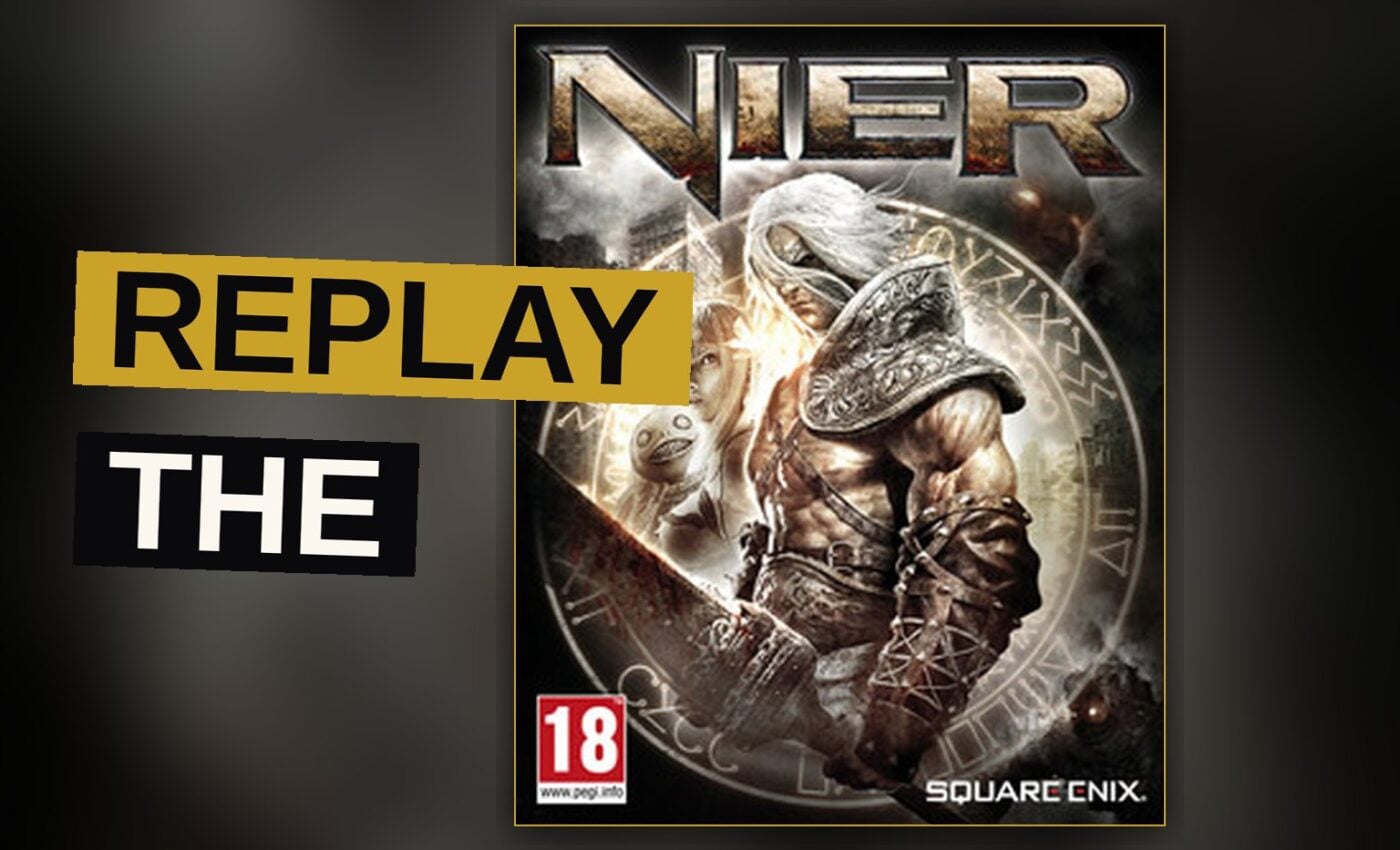
NieR: Automata puts three androids on a ruined Earth and asks players to fight through the same war three times over. Developed by PlatinumGames and directed by Yoko Taro, the 2017 release for PS4, PC and Xbox One turns a simple hack-and-slash frame into something stranger the longer you stay with it.
Trailer, via IGDBcom.
2B, 9S, and the Resistance Camp
The story follows 2B and 9S, android combat units sent by the human resistance to retake the planet from machine lifeforms. Their base of operations is a small camp run by the Resistance, a ragged outpost that gives the early hours their sense of scale. The androids answer to YoRHa command, and the machines they fight are not simple enemies; some talk, some build shelters, some fall in love.
Combat mixes melee slashes with gunfire from a floating pod companion. It’s fast, readable, and rarely dull, whether you’re carving through a swarm of small machines or dodging bullet patterns from a towering boss.
The Copied City and the Amusement Park
Two locations stand out. The Copied City is a crumbling urban sprawl overrun by faction warfare, tense and vertical, full of ambushes. The Amusement Park is a broken, cheerful nightmare, machines pretending at joy in rusted rides. Both are memorable, but they do different work.
| Location | Tone | Function |
|---|---|---|
| Copied City | Grim, urban | Mid-game conflict and faction politics |
| Amusement Park | Surreal, tragic | Emotional turn, machine culture on display |
| Resistance Camp | Domestic, quiet | Hub, story checkpoints |
A Second Playthrough as 9S
Route A follows 2B. Route B retells much of the same ground from 9S’s perspective, a hacker whose skills open new systems and new context for scenes players already sat through. It sounds like padding on paper. It isn’t.
Seeing the same fight from a different android’s eyes recasts characters players thought they understood, particularly the machines guarding the Amusement Park and a pair of enemy commanders named Adam and Eve.
Adam, Eve, and the Machines
Adam and Eve are machine lifeforms built in humanoid form, curious about the meaning of the war they’re fighting. Their scenes carry more weight than most boss fights in games this size. The machines around them aren’t background noise:
- A pair of machines building a home together, quietly domestic
- A settlement of machines performing a philosopher’s teachings, badly and sincerely
- A child-like machine asking why the fighting continues
These small stories accumulate. By the midpoint, the game has made an argument that the war has no side worth full trust.
The Music of Keiichi Okabe
Composer Keiichi Okabe’s score threads through every zone, shifting language and instrumentation depending on where players stand and what’s happening on screen. It’s one of the strongest reasons to keep playing even when the plot slows.
The soundtrack rewards a second and third pass, since routes change how certain tracks are heard.
Route C, Route D, and the Real Ending
After Route B, NieR: Automata splits further into Route C and Route D, introducing new playable characters and pushing the story toward its actual stakes. This is where Yoko Taro’s design instincts show most clearly: multiple endings, one of which is reached only after players sit through a brutal difficulty spike disguised as a credits sequence.
That sequence asks something rare of players. It will not be spoiled here, but it is the single strangest thing the game does, and it justifies the earlier repetition in a way few sequels of the same trick manage.
Frame Rate and Rough Edges
The PC version at launch had stability issues, and even on console the frame rate can dip during the busiest fights, particularly against multiple large enemies at once. None of this breaks the game, but it’s worth knowing going in.
Menus, too, feel unfinished in places, more function than design.
Where It Lands
NieR: Automata is uneven by design and rough at the edges, but the emotional and mechanical highs are higher than almost anything else released that year. The combat is sharp, the world is stranger than it first looks, and the structure — repetitive on its surface — turns into the point.
Few games ask players to replay their own story twice and come out the other side glad they did. NieR: Automata does, and mostly earns it.