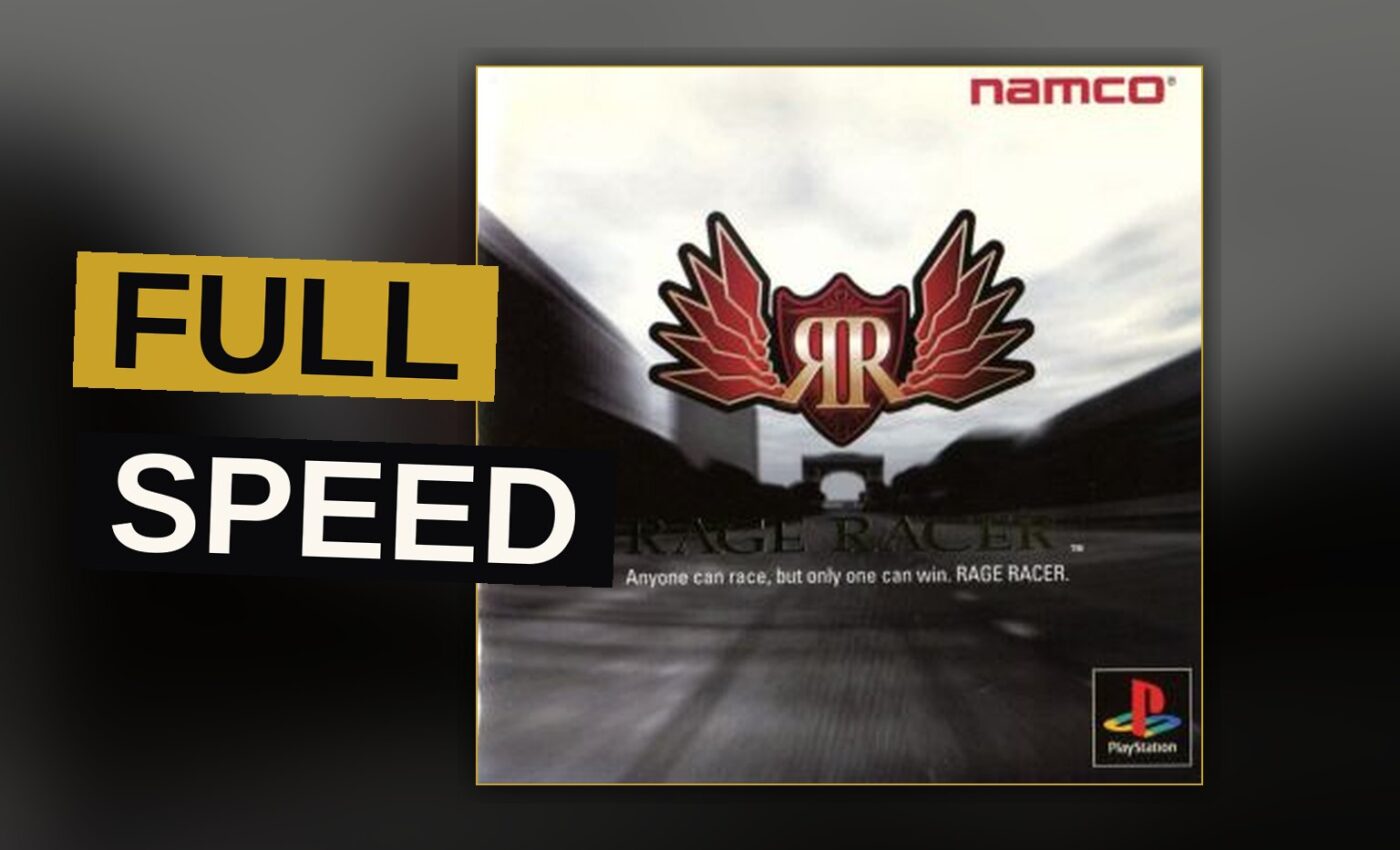
Rage Racer arrives on the original PlayStation as a racing game built around pure pace, not strict realism. It asks players to drive fast and often lose control on purpose, and it delivers that promise in nearly every race on the track.
The Setup
Rage Racer puts players behind the wheel of a series of cars, each with its own weight and handling, and sets them loose on courses built for chaos. The goal is simple: finish first, and do it while pushing the car past its natural limits.
The controls respond quickly enough that losing control feels like a choice rather than a mistake. That difference matters, since the game rewards players who push hard rather than those who play it safe.
Handling And Control
The driving model is where Rage Racer earns its reputation. Cars drift easily, spin wildly, and slide through turns, and the game never punishes players for letting a car slip sideways. Instead, it rewards players who learn to use the slide as a tool rather than a problem.
The handling stays consistent across the full set of courses, so players who master one course can carry that skill into the next without needing to start over.
Courses
The courses themselves are narrow, winding, and packed with hazards placed at the edges of turns. They force players to keep the car pointed straight even when the road curves away beneath it, and they reward players who look ahead and plan their lines rather than reacting at the last second.
“Finish first, and do it while pushing the car past its natural limits.”
Look And Sound
The presentation is solid rather than striking. Cars look distinct, tracks are easy to read at a glance, and the scenery holds up across repeated runs. The sound design does its job without drawing attention away from the driving itself.
Multiplayer
Multiplayer support adds a layer beyond the single player mode. Players can race against each other directly, and the game handles online play well, keeping matches smooth even when players connect across long distances.
Where It Falls Short
Rage Racer is not without its rough edges. Some courses repeat the same tricks across multiple laps, and a few of the cars feel less interesting to drive than others, which can make late-game races feel familiar rather than fresh.
None of these issues sink the game, but they keep it from being perfect.
How It Compares
Compared to other racing games of its time, Rage Racer stands apart by refusing to punish players for losing control. Most racing games reward steady hands and careful braking; this one rewards confidence and timing. That distinction shows up in nearly every aspect of the game, from the controls to the courses to the multiplayer modes.
- The drifting physics reward players who push the car past its limits
- Courses are narrow and packed with hazards
- Multiplayer support keeps the game alive beyond single player runs
- Presentation is solid but not striking
Final Word
Rage Racer succeeds because it commits fully to its own identity. It does not try to be a realistic driving simulator, and it does not apologize for that choice. The result is a racing game that feels distinct, exciting, and consistently entertaining, even after dozens of hours spent chasing the same finish line again and again.
The rough spots — the repeating courses, the weaker cars — are real, but they do not undo what the game gets right. Rage Racer remains a strong entry in the genre, one that rewards players who want to push the car to its limits rather than hold back.