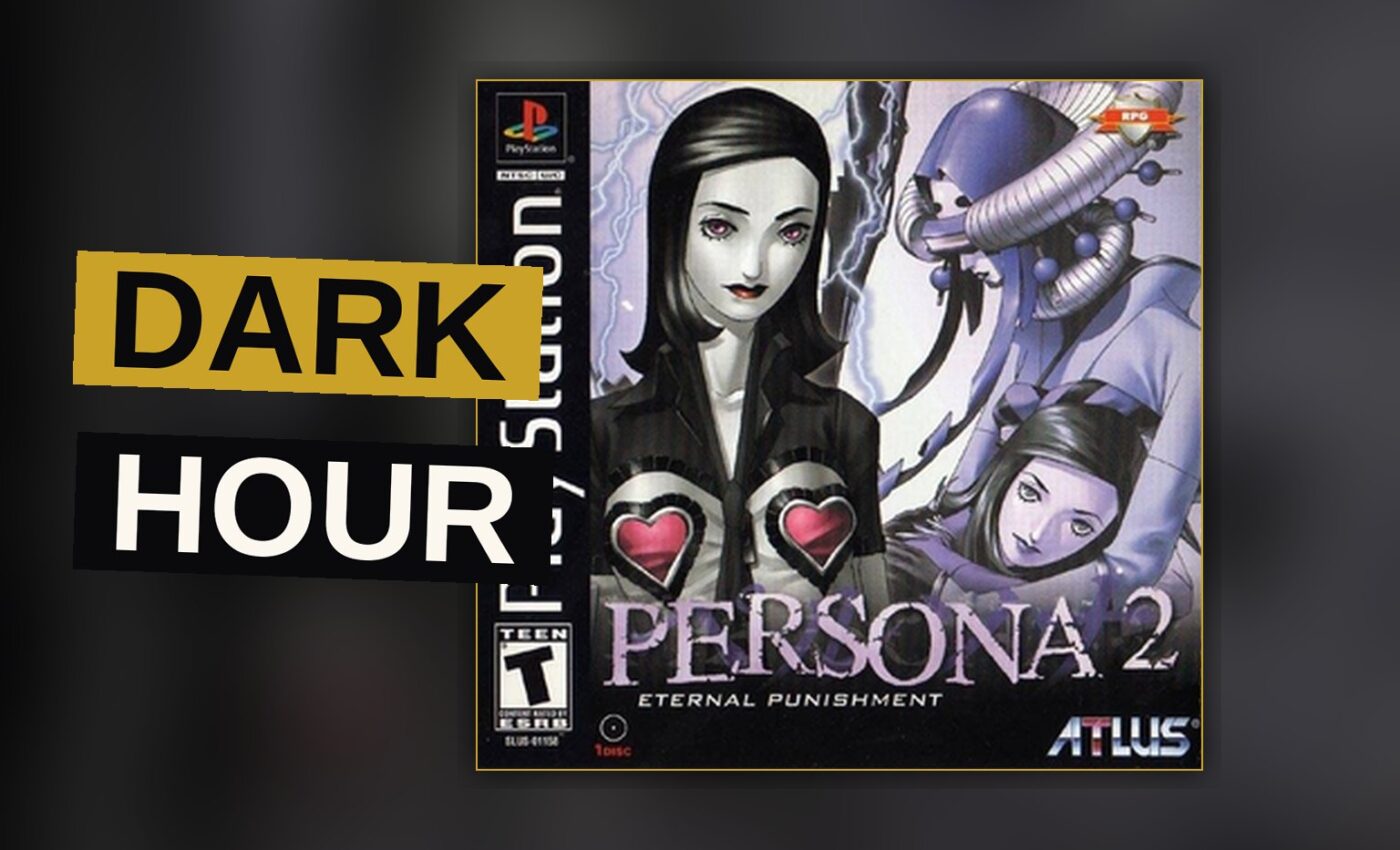
Persona 2: Eternal Punishment came out for the original PlayStation in 2000, developed and published by Atlus. It is a direct sequel to Persona 2: Innocent Sin and the third game in the Persona line. A PlayStation Portable remake followed in Japan in 2012, and the original landed on PlayStation Network in 2013.
Maya Amano and the Joker Curse
The game is set in 1999 in Sumaru, a fictional seaside city in Japan with a population of 1.28 million, its own television stations, and a structure left over from its foundations during the Warring States period. It picks up a few months after Innocent Sin ends. Maya Amano, a magazine reporter, gets assigned a story about the Joker phenomenon.
The rumor goes like this: call your own number, and the Joker will kill whoever you ask for. Maya heads to Seven Sisters, the prestigious high school where Innocent Sin took place, with Ulala and Katsuya. They find the principal murdered by the Joker.
The Joker attacks the three of them, and each is forced to summon a Persona. After the Joker knocks them out, Philemon reaches them and warns that the city is in growing danger.
The Rumor System Is the Whole Idea
The Rumor system is the mechanic that ties the plot to the play. Characters hear a rumor, then spread it around Sumaru through certain contacts. A rumor that takes hold can hand the party special items or other effects, and those effects can cut either way.
This is the part of Eternal Punishment that still holds up. Most role-playing games of its era pushed you toward one fixed outcome. This one lets you talk the city into a different version of itself. The story and the mechanic are doing the same job, which is rare and worth saying plainly.
Persona Ranks and Fusion Spells
Fights come in two kinds: boss battles tied to the story and random encounters with standard enemies. Combat is turn-based, and characters and enemies move around a small arena to act. You set a strategy in the battle menu, the characters carry it out until one side wins or you pause to change plans.
The grid system from the original Persona is gone. Party members and enemies now act in the same phase of a turn rather than being locked to their spot on the field. Casting a spell costs Spell Points, and each Persona carries its own elemental strengths and weaknesses, so some are built for healing, some for defense, some for hitting an element.
A Persona starts weak. Use it enough and it climbs in rank, up to Rank 8, and higher ranks unlock stronger spells. Two or more characters can also line up a set sequence of spells to fire a Fusion Spell.
The camera follows the party from an adjustable angled overhead view. The city is crossed on an overworld map. None of that is remarkable on its own. The rank system is what keeps a wide roster in play instead of collapsing to one optimized pick.
Tatsuya Suou and the Other Side
The cast splits across two Sumaru high schools: Seven Sisters, the prestigious one, and the less-prestigious Kasugayama. Every protagonist wields a Persona, a manifestation of their personality, granted by Philemon, a benevolent personification of humanity’s Collective Unconscious.
Innocent Sin grew out of a contest between Philemon and his opposite, Nyarlathotep, over whether humans could find a higher purpose despite holding contradictory emotions. Nyarlathotep tilted events his way, and everything except Sumaru City was destroyed. To undo it, the party used the Collective Unconscious to will the key event out of existence, trading their memories of it for a new timeline. The old one still exists as a separate “Other Side.”
Tatsuya Suou, a Seven Sisters student and the protagonist of Innocent Sin, returns among the people who join Maya. Kegare, a negative energy that possesses people and drives up crime, which in turn breeds more Kegare, runs through the story.
The Remake That Never Left Japan
Atlus later remade Eternal Punishment for the PlayStation Portable. That version came out in Japan in 2012 and never got an overseas release. The original PlayStation version landed on PlayStation Network in 2013 instead.
Halfway through making Innocent Sin, writer Tadashi Satomi decided a fresh point of view was needed alongside Tatsuya, which set up Eternal Punishment. Producer Kouji Okada, artist Kazuma Kaneko, and composers Toshiko Tasaki, Kenichi Tsuchiya, and Masaki Kurokawa all came back.
| Version | Platform | Territory | Year |
|---|---|---|---|
| Original | PlayStation | Japan | 2000 |
| Remake | PlayStation Portable | Japan only | 2012 |
| Re-release | PlayStation Network | Japan | 2013 |
The remake staying in Japan is the most frustrating fact in this game’s history. The cleanest version is the one most of the audience could never legally buy. The 2013 PlayStation Network release was a consolation, not a fix.
What Holds and What Doesn’t
The Rumor system is the reason to play Eternal Punishment over Innocent Sin. Spreading a rumor to change what the city does next beats any single battle, and later Persona games never quite replaced it.
The combat is competent and ordinary. Assigned actions play out until one side wins or you pause, which keeps fights moving but flattens them. Fusion Spells reward planning, but the required spell sequences are the kind of thing you look up rather than find.
Maya is the other strength. She has a magazine job and an investigation to run, and the game treats that as the spine of the plot. Putting her next to Tatsuya, who remembers a timeline nobody else keeps, gives the sequel a weight Innocent Sin could only set up.
The cost is access. A direct sequel that opens with a murder at Seven Sisters and builds on a world that was destroyed and reset assumes homework most players have not done. A remake that never left Japan makes that worse.
Judged against its own era, Eternal Punishment is the most ambitious game in the early Persona line, and its central idea aged best of anything in it. Judged as a product, it is a strong sequel stuck behind a sequel’s door, with its best-looking version locked to one country. The Rumor system is worth the trip. The homework is the toll.
Get the Notebook.
The day's best stories and every fresh verdict, in plain English, in your inbox by seven. One email a day, no more.