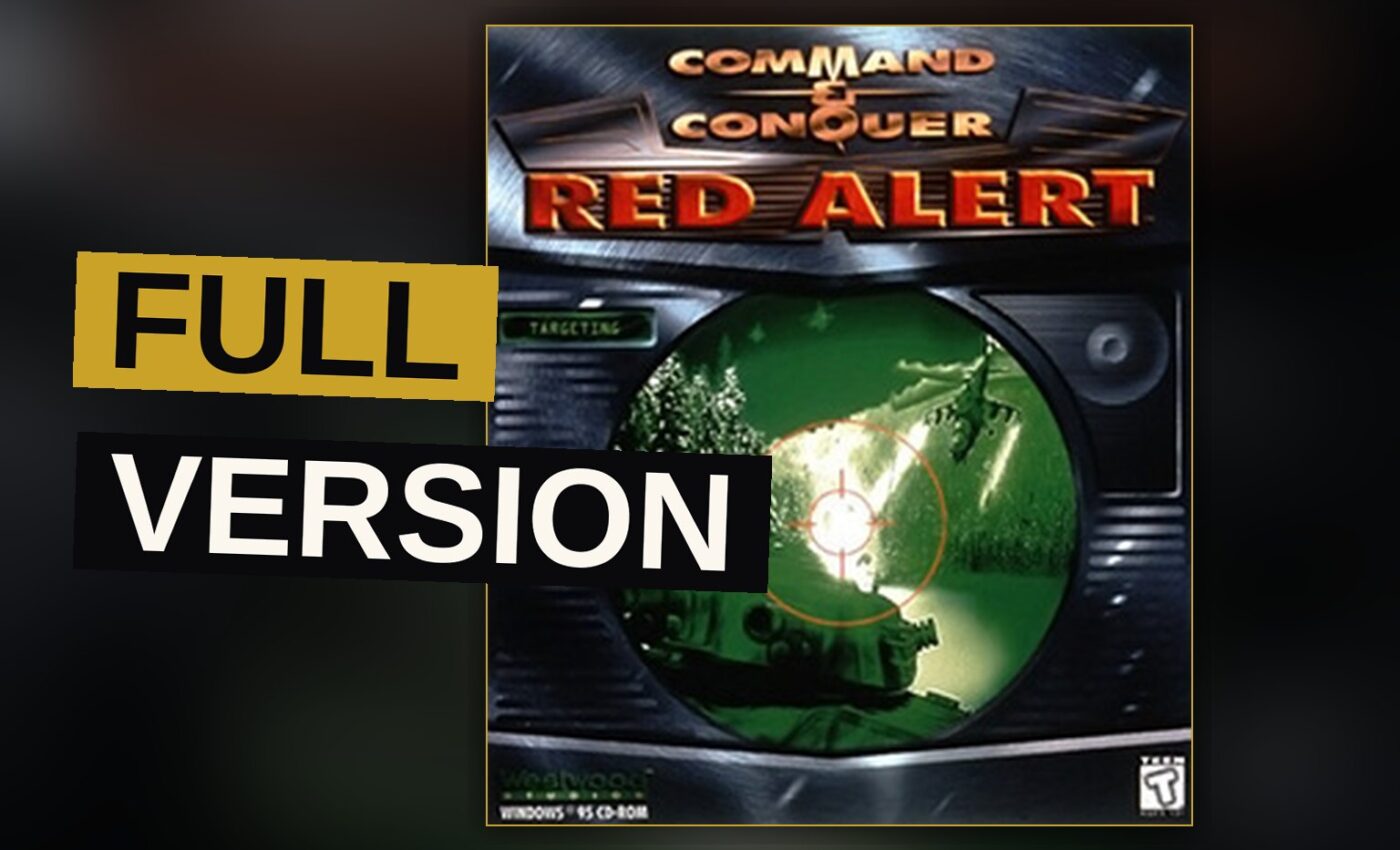
Command & Conquer: Red Alert arrives on the PlayStation as a full version of the game, not a cut-down port. That choice sets the tone for everything that follows. Players get the whole campaign, the same units, the same maps, and the same mission design that made the series a hit on PC. What changes is how it looks and feels to play.
The Look Of The PlayStation Version
The PlayStation hardware demands a different pace. Frames drop during fights with large armies, and the game asks for patience that some players will not want to give. Menus are slower to move through than on PC, and the camera can feel tight in narrow spaces. None of this breaks the game, but none of it makes the transition invisible either.
The graphics hold up well against other games on the console. Buildings look distinct, units animate clearly, and explosions carry weight. The scale of a big battle still reads well on screen, even when the frame rate drops under pressure. Sound design carries the same polish, with unit calls and music that match the series’ identity.
How The Campaign Holds Up
The campaign sends players through a series of missions built around Allied and Soviet objectives. Missions ask for careful planning rather than fast action, and the difficulty curve rewards players who pay attention to economy over pure force. That balance holds across both sides of the conflict, giving the campaign replay value for those who want to see the other side’s missions.
Multiplayer remains a strong draw. Matches against human opponents carry the same tension as on PC, since the core systems have not changed. Playing online against friends is where the PlayStation version shows its strengths most clearly, since the core gameplay is familiar ground for anyone who knows the series.
Where The Differences Show
Several elements stand out as places where the PlayStation version diverges from the PC original:
- Frame rate drops during heavy fighting.
- Menus feel slower to navigate.
- Camera movement can feel restricted in tight spaces.
- The full campaign is included, mission by mission.
- Multiplayer holds up well against human opponents.
None of these points break the experience, but each adds friction for players used to the PC version’s smooth pace.
A Running Order For A Typical Mission
Here is how a standard mission plays out, broken down by stage:
| Stage | Activity |
|---|---|
| 1 | Objective briefing |
| 2 | Base building and economy setup |
| 3 | Early scout missions |
| 4 | Enemy contact and first engagement |
| 5 | Mid-mission economy check |
| 6 | Late-game push toward the objective |
| 7 | Mission completion |
This order holds true for most missions, though individual levels add twists and new objectives that change the pacing slightly.
Command & Conquer: Red Alert succeeds because it respects the core formula that made the series work. The campaign tells a story worth following, and the multiplayer holds up as a serious competitive space. The technical rough edges are real, but they sit on top of a solid foundation rather than underneath it.
For players willing to accept a slower pace, the PlayStation version offers a complete package. For those chasing the exact rhythm of the PC original, the frame rate issues will sting. Neither group is wrong.
The score: 7.5 of 10.