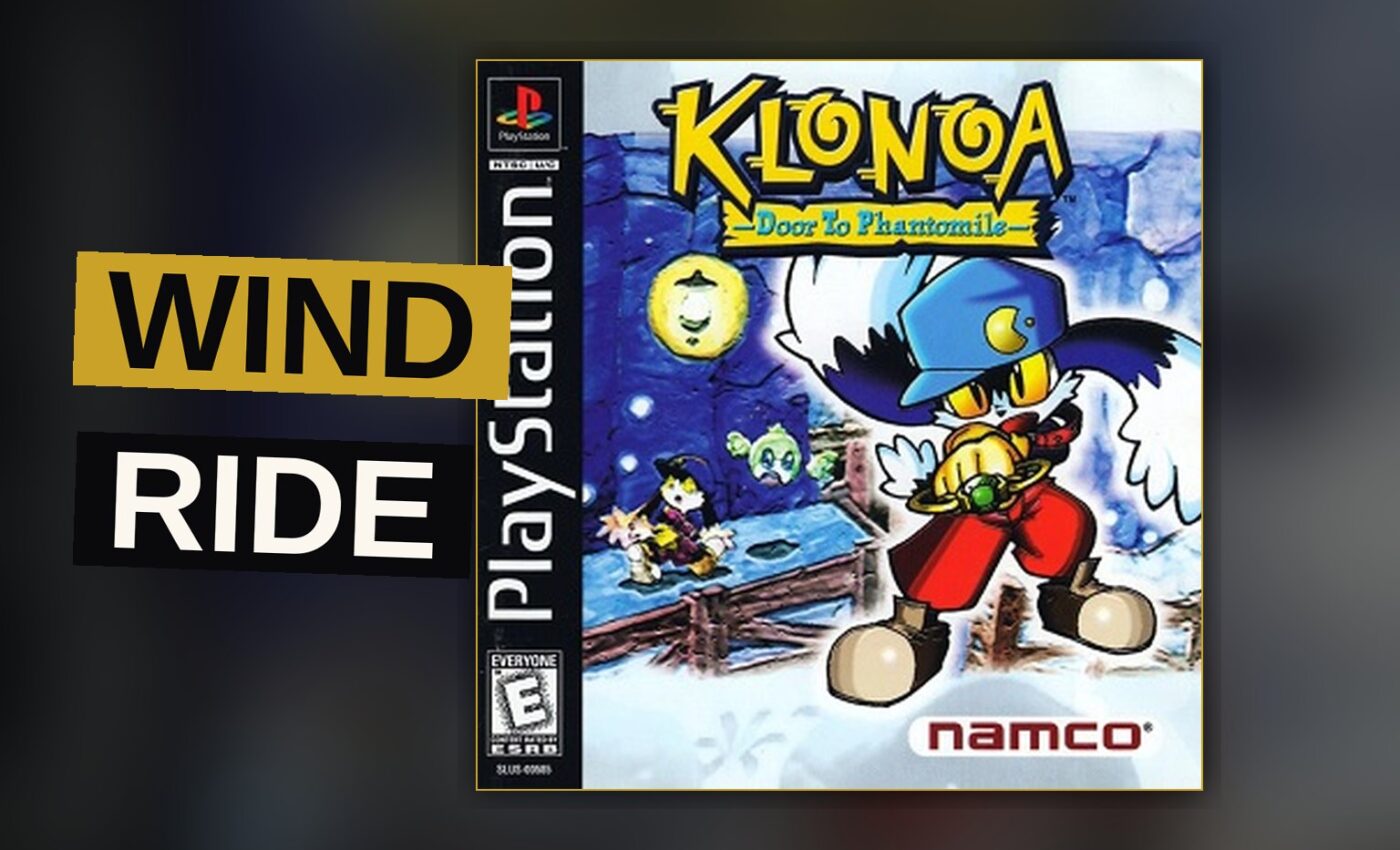
Klonoa: Door to Phantomile arrived on the original PlayStation as a platformer built around a small flying creature who can ride a large companion through the air. The game asks players to guide Klonoa and his friend through levels filled with wind and enemies, using a simple set of controls that reward patience over haste.
Riding Through the Wind
The wind mechanic is the game’s main draw. Players can hold a button to catch a gust, then let go to drop down again, chaining rises and falls across open spaces. It takes a few tries to get the timing right, but once learned it opens up a way of playing that sets Klonoa apart from other platformers on the system.
The levels themselves are built around this system. Many stages ask players to cross narrow paths or avoid falling hazards by catching the wind at the right moment, rewarding careful reading of the screen over quick reactions.
Sound and Look
The music carries a light, cheerful tone that matches the game’s setting, and the character art is bright without being too busy. The world is full of color, though some stages repeat textures across long stretches.
Some parts of the game feel thin, especially toward the back half, where the pace slows and the wind trick becomes less central to each stage. Difficulty also rises unevenly across the game, with some boss fights feeling harder than the levels leading to them.
What Works Best
- The wind riding system remains fun throughout
- Levels are well built around the mechanic
- Music and look keep the game pleasant to play
- Some stages feel thin and repeated
Where It Falls Short
- Difficulty rises unevenly
- Some boss fights feel harder than the levels before them
- The back half of the game loses momentum
Taken together, these points point to a game that is strongest in its early hours and weaker as it moves forward. The wind riding system holds up as the game’s best idea, even when the levels around it grow thin.
Klonoa: Door to Phantomile is a solid, if not perfect, entry in the genre. Its central idea is strong enough to carry the game, even as its later stages lose some of the energy of the opening hours.