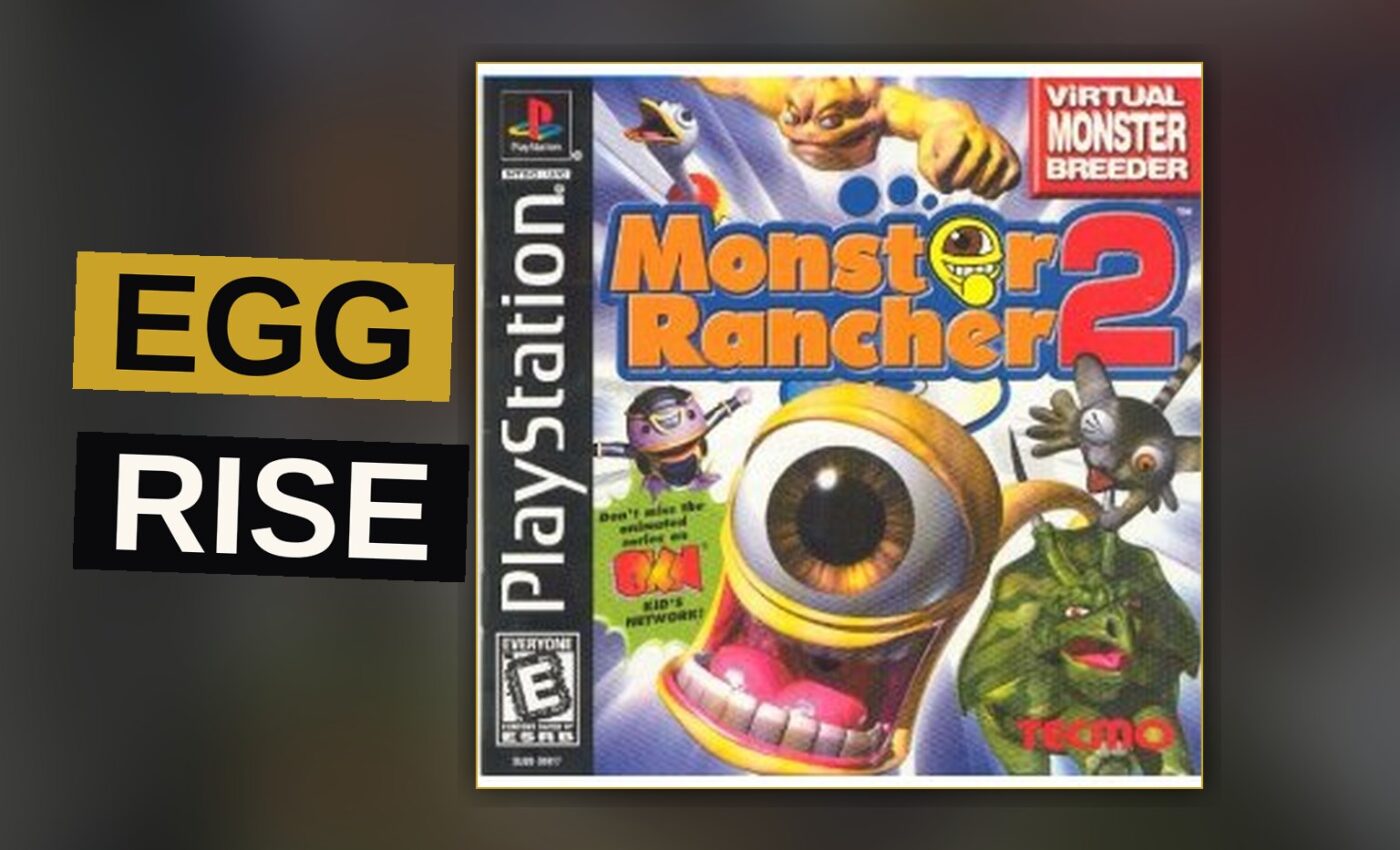
Monster Rancher 2 is a game about raising a creature that does not exist until you feed it a disc. That was the hook in 1999, and it is still the strangest, most generous idea Tecmo ever shipped on the original PlayStation.
The sequel builds on the first game’s premise without sanding off its edges. You are a trainer, nameless and unseen. Colt, your official assistant, handles every conversation, with her toucan Joy perched alongside. Menu options carry your choices. The game never breaks that frame, and it does not need to.
Colt and Joy Do the Talking
The absence of a visible protagonist is not a limitation. It is a design decision that keeps the focus where it belongs: on the monster.
Colt delivers the dialog and the action. Joy sits on her shoulder. Tecmo could have given the player a sprite and a name. Instead the player is a set of decisions, and the game treats that as enough. It is.
Monster Rancher 2 launched on the PlayStation in 1999, developed and published by Tecmo. It is the second installment in the series for North America and Japan. In Europe and other PAL territories, it arrived in October 2000 as the first game in the franchise, published under the plain title Monster Rancher. Regional naming stripped the number, which means European players met the series at its second entry without knowing it.
Guts, Ranges and the IMa Cup
Battles run on guts. Every move costs some, and guts regenerate constantly while the fight continues. That single rule shapes everything. A monster cannot spam its best attack. It has to wait, position, and pick a moment.
Range matters just as much. Each move only works within a particular distance from the opponent. From close range, a monster can knock the other one back. That knockback is not decoration — it moves the fight, resets the spacing, and forces both sides to re-earn their position.
Monsters start with a small number of moves and learn more through training. Tournaments run throughout the year and pay out money, items and fame. But only an IMa Official Cup win moves a breeder and monster up in rank. Four of those cups are held each year. Rank opens the door to higher-level tournaments, which is the whole ladder in one sentence.
Unlocking the Roster
The starting monster types are only the beginning. Monster Rancher 2 hides a large roster behind three unlock paths: plot events, expedition, and errantry.
The most common route is an item. Gain the item, use it when combining monsters, and the new type appears. After that, CDs can produce monsters of that type. The disc-based generation system was the series’ signature, and the sequel keeps it as the spine of collection rather than a gimmick bolted to the side.
The Big Four and the IMa vs. FIMBA Meet
The story is largely non-linear. Events trigger when requirements are met — a battle won, a rank reached. It opens with the main character registering as a trainer. Colt appears there as the new official assistant.
The “end” arrives when a monster beats the Big Four, the four highest-ranked battles in the game. A video about the history of the monsters plays. A monster that has cleared all four S class tournaments can then compete in a special match against champion monsters like itself.
Monster Rancher 2 sits in close time proximity to the first game but on a different continent. MR2 is set in the IMa area; MR1 is set in FIMBA. That split pays off in a special battle against Holly, the assistant from the first game. The IMa vs. FIMBA meet runs every four years, much like the Summer Olympics, and entry requires a monster of a certain rank. It always takes place in the last week of August. The qualifying entry tournament always lands in the last week of July.
Beating the Major 4 tournaments and the Legend Cup does not unlock every monster. Each main breed has its own steps. The game is not finished when the credits logic says it is.
What the Re-release Changed
A port for Nintendo Switch, iOS and Android arrived in Japan on September 17, 2020, from Koei Tecmo, Tecmo’s successor. An updated version for iOS, Nintendo Switch and Microsoft Windows via Steam followed worldwide on December 9, 2021, bundled with the first game as Monster Rancher 1 & 2 DX.
That DX package is the practical way to play now. The original PlayStation release is the historical artifact; the compilation is the accessible one.
This game involves raising, fighting, and breeding monsters.
The critical consensus settled at 8.3 out of 10, with a Metacritic score of 83. That number holds up because the game’s systems still hold up. Guts management and range control give every battle a texture that later monster-raising games mostly traded away for speed. The unlock structure respects the player’s time in a way that is almost quaint now — you earn a type, you keep it, and the disc library becomes your collection.
The weakness is friction. Three unlock paths, item-gated breeds, and a four-year meet cycle mean the game asks for patience it does not always reward on a schedule. The non-linear story is thin on its own; the Big Four and the IMa vs. FIMBA meet carry the narrative weight, and everything between them is upkeep. That is a real cost, not a quirk to wave away.
But the friction is the point. Monster Rancher 2 is a game about a relationship with a creature you built from a CD and a decision. Colt and Joy talk because you do not. The monster fights because you trained it. Nothing here is handed over.
Key facts
– Release: 1999, PlayStation
– Developer/publisher: Tecmo
– PAL release: October 2000, titled Monster Rancher
– Japan Switch/iOS/Android port: September 17, 2020
– Monster Rancher 1 & 2 DX: December 9, 2021, iOS, Nintendo Switch, Windows via Steam
– Score: 8.3/10 (Metacritic 83)
Monster Rancher 2 earns its 8.3. The disc-to-monster system is the headline, but the guts economy and the range rules are what keep it playable decades later. If you only know the series from the anime or the later entries, start here — or start with the DX compilation, which is the same game with fewer excuses. Score: 8.3 of 10.
Get the Notebook.
The day's best stories and every fresh verdict, in plain English, in your inbox by seven. One email a day, no more.