
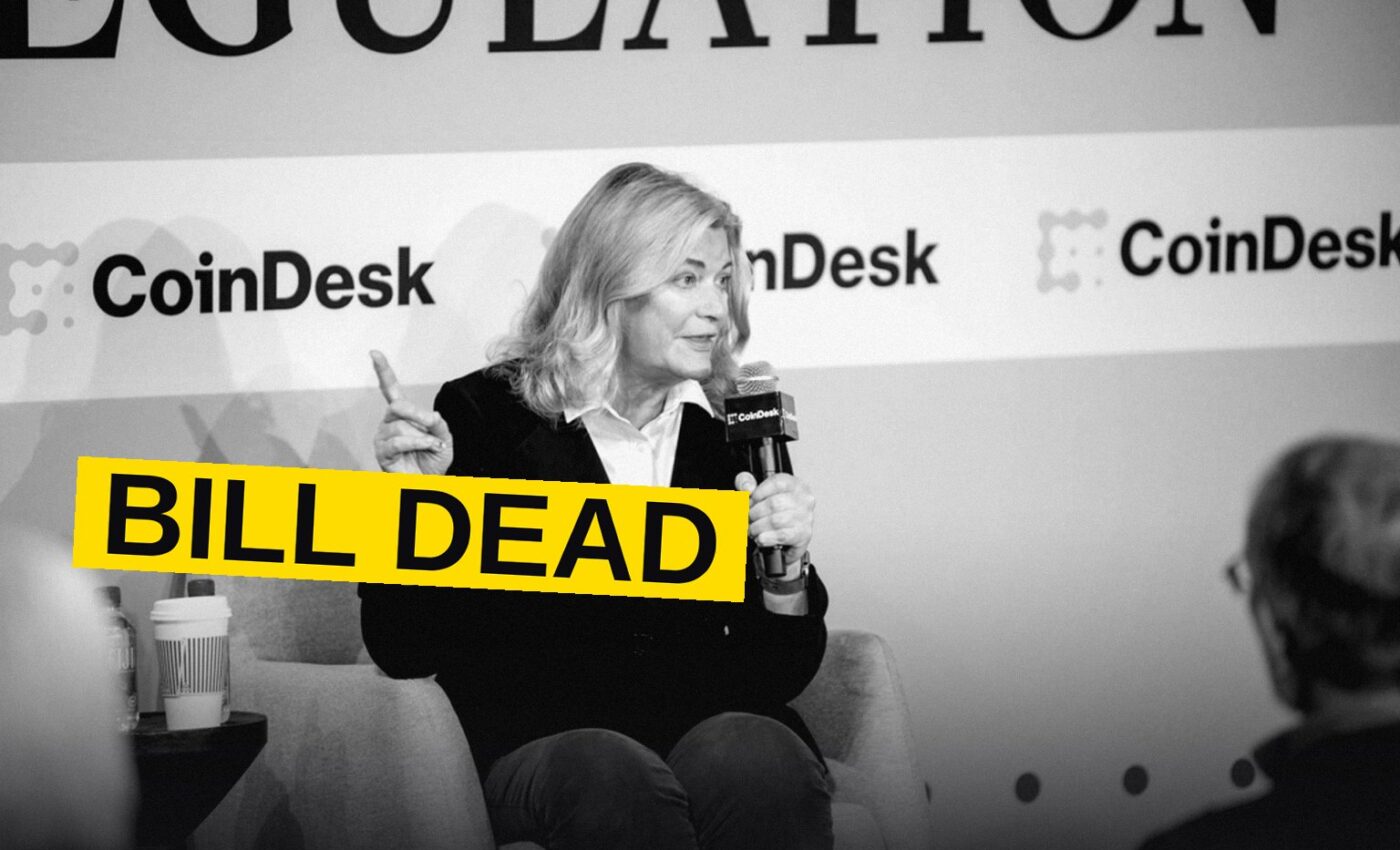
The Digital Asset Market Clarity Act has fallen apart, and the people who spent months building it can hardly believe it. The bill aimed to define how the SEC and CFTC would regulate the roughly $3 trillion crypto sector. It failed to pass after a key Senate procedural vote earlier this month, and the reasons behind the collapse are as tangled as the legislative process that produced it.
More than a dozen industry participants and legislative aides interviewed over the past 10 days cited a confluence of factors killing the bill. The Senate ignored the House’s version, which passed with a massive bipartisan vote. The Senate version was constructed in a piecemeal fashion. U.S. President Donald Trump and his White House complicated negotiations. The crypto industry conducted a scattershot engagement with lawmakers throughout the process. Democrats rejected an ethics deal they felt fell short of their demands. Time ran short heading into a midterm election.
The Senate’s Piecemeal Approach
The bill’s failure began with how it got to the floor. The House version passed with broad support, but the Senate chose to build its own version from scratch. That approach left the final product untested and incomplete.
“The deal will be completed before this goes to the floor.”
That line, from Cody Carbone, head of the Digital Chamber, was spoken after the Banking Committee advanced the bill in May. It promised resolution before the vote. Instead, the Senate proceeded without finishing the work.
The result was a bill that never quite settled the question it was meant to settle: where the SEC’s authority ends and the CFTC’s begins. The two agencies have long argued over jurisdiction, and the bill was supposed to sort it out. Instead, it left the matter unresolved.
Trump’s Profits and the Ethics Fight
Democrats were never going to let the bill move forward without addressing Trump’s crypto business interests. In May 2025, Sen. Ruben Gallego and eight other Democrats said they would not vote for the GENIUS Act because of Trump’s profits from the sector. The GENIUS Act was a predecessor to the Clarity Act, and the objections carried over.
Trump told “Meet the Press” in May that he was “not profiting from anything … I want crypto because a lot of people, you know millions of people want it.” That statement did not convince anyone. His June financial disclosure admitted to making $1.4 billion from his various crypto ventures during his first year back in office. That figure is more than half of the $2.2 billion total he raked in in 2025.
Crypto had poured millions into his 2024 campaign, inaugural balls, a ballroom to replace the demolished White House East Wing, a military parade and his political action committee. Democrats wanted to restrain him from profiting from the sector, and they wanted the bill to include that restraint.
Sen. Kirsten Gillibrand told CoinDesk’s Consensus 2026 attendees in May that the bill would not advance without an ethics provision. Sen. Angela Alsobrooks voted for the bill during a Senate Banking Committee hearing but said she would not vote for further advancement without additional work.
The Scattershot Engagement
The crypto industry did not help its own cause. Throughout the process, it engaged lawmakers in a way that was fragmented and inconsistent.
That disarray made it easier for opponents to find openings. When the industry does not present a united front, it loses leverage. The bill’s collapse shows what happens when a sector spends its political capital without a clear strategy.
What Happened on the Floor
The Senate’s procedural vote earlier this month left the Clarity Act in limbo. The bill’s fate is now uncertain.
The failure leaves the sector without clarity on regulation. Joint advisories published earlier this year laid out agency views on crypto markets instead, but those are not laws. They are statements of position.
The bill would have sorted out where the SEC’s authority ends and the CFTC’s begins. Without it, the industry remains in a gray area.
The Cost of the Collapse
The collapse of the Clarity Act is a loss for the crypto industry. The bill would have provided certainty on regulation, and it would have sorted out jurisdiction questions between the SEC and the CFTC. Without it, the industry remains in a gray area.
The Senate’s piecemeal approach left the bill unfinished. Trump’s profits created an ethics fight that Democrats could not resolve. And time ran short heading into the midterms.
A Bill Left Unfinished
The Clarity Act was a chance for the industry to shape its own regulatory framework. It failed, and the reasons are clear. The Senate’s process was piecemeal, and the industry did not fix it.
The bill’s failure is a warning. The crypto sector has the resources to engage with Washington, but it needs to do so with discipline and unity.
Here is how the bill’s path unfolded:
| Date | Event |
|---|---|
| May 2025 | Sen. Ruben Gallego and eight other Democrats say they will not vote for the GENIUS Act because of Trump’s crypto profits |
| May | Trump tells “Meet the Press”: “not profiting from anything” |
| May | Cody Carbone speaks after the Banking Committee advances the bill: “the deal will be completed before this goes to the floor” |
| May | Sen. Kirsten Gillibrand says the bill will not advance without an ethics provision |
| June | Trump’s financial disclosure admits to making $1.4 billion from crypto |
| Earlier this month | The Senate’s procedural vote leaves the bill in limbo |
The Clarity Act is dead. The fight over crypto regulation is not. The industry will need to learn from this one.
Where the paper stands
The paper backs the small crypto businesses against the SEC and CFTC, and is against any broad new rulebook those agencies might impose, especially one the biggest firms helped write. The collapse of the Digital Asset Market Clarity Act shows what happens when a bill gets built piecemeal, with unfinished jurisdiction questions left open, and when the biggest firms’ profits become a reason to hold up the whole thing. The Senate’s process left the bill unfinished, and the industry’s scattered engagement made it harder to close the gaps.
The paper wants narrow oversight aimed at real harm, not a broad new rulebook written by the largest firms. Where a business directly harms people or the environment, there should be oversight — but it should be aimed at the harm, not at the whole market. The industry should learn from this collapse, and it should engage with Washington with discipline and unity rather than a scattered approach that makes it easy for opponents to find openings.
Source material: “How months of work on the Clarity Act all fell apart,” CoinDesk.
Get the Notebook.
The day's best stories and every fresh verdict, in plain English, in your inbox by seven. One email a day, no more.