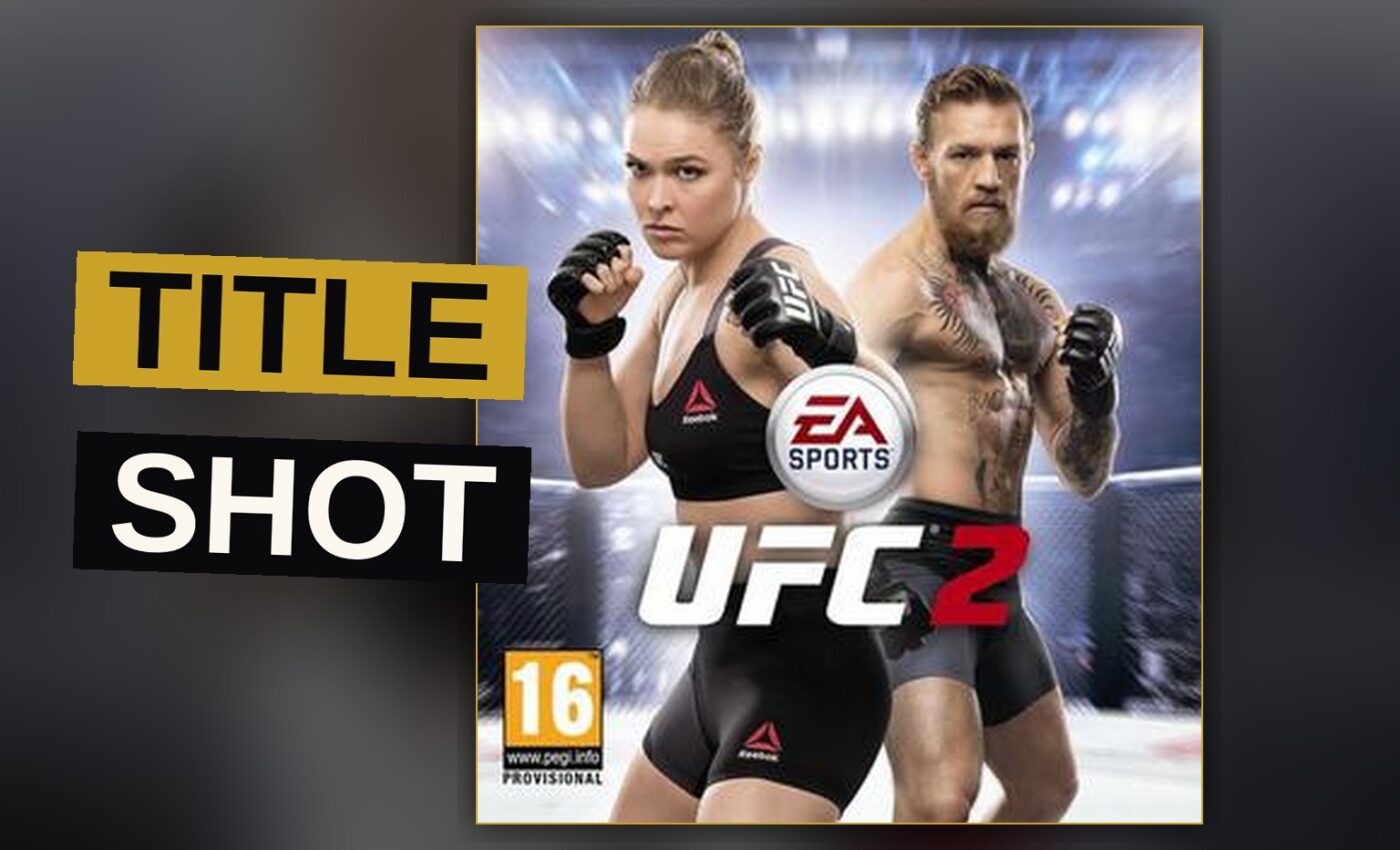
EA Sports UFC 2 landed in March 2016 with a simple promise: make the fight feel real. EA Canada built the sequel on the Ultimate Fighting Championship brand, shipped it for PlayStation 4 and Xbox One, and put Ronda Rousey and Conor McGregor on the cover. The result is a game that looks the part better than it plays it — and that gap is the whole story.
Trailer, via EA SPORTS MADDEN NFL.
Ronda Rousey and Conor McGregor on the Cover
The roster is the headline feature. More than 250 fighters are playable, and both male and female fighters are included. That breadth matters. A UFC game lives or dies on whether the fighter you want is in it, and EA Canada mostly solved that problem here.
The sequel followed 2014’s EA Sports UFC, a game that took real criticism. EA Canada said it weighed a large amount of fan feedback from that first release and hoped listening would make the follow-up drastically improved. Many additions were made to prove it.
Kicks, Punches, Submissions and Takedowns
Fights play out close to the real thing. You pick a fighter and customize the bout — opponent, venue, rules. Attacks cover kicks, punches, grapples, submissions and takedowns. Stamina, damage and positioning all feed into how a fight ends.
The presentation sells it. Fighters show visible damage as a bout wears on. A crowd fills the arena, referees work the cage, octagon girls and an announcer handle the walkouts, and Joe Rogan and Mike Goldberg call the action. That commentary booth is a real asset — it is the sound of the sport, not a generic sports-game drone.
Career Mode, Ultimate Team and Knockout Mode
The mode list is where EA Sports UFC 2 spreads itself thin. Ranked by how much time each one justifies:
- Career mode — create a fighter and climb the UFC ranks; you can also run a real fighter through it.
- Ultimate team mode — build a deck of cards representing fighters and play other players’ decks, earning coins after each fight to customize and upgrade.
- Knockout mode — win only by knockout, with stamina bars removed so the focus stays on strikes rather than grapples or submissions.
- Practice mode — drill skills against an idle opponent.
- Online modes — the standard multiplayer set.
Career mode is the strongest of the bunch, and it is not close. Ultimate team mode is the one that feels bolted on.
The Visuals Carry It
Reviews at release were generally positive, and the consensus landed in one place: the visuals were the game’s strongest aspect. Publications also praised the improvements over the previous game and the size of the roster. The main criticisms concerned the lack of depth in some modes.
That split is fair. The gap between how this game looks and how much there is to do inside it is the defining fact of EA Sports UFC 2. The fights are convincing. The structure around them is thinner than the roster suggests.
What the Fan Feedback Fixed
The clearest win is the correction of the first game’s problems. EA Canada went back to the people who bought EA Sports UFC and rebuilt around what they said. The roster grew, the presentation sharpened, and the fighting itself got closer to the sport it is imitating.
What the feedback did not fix is the mode design. Ultimate team mode asks you to care about cards and coins in a game whose entire appeal is the immediacy of a fight. Knockout mode strips out stamina and grappling, which makes it a novelty rather than a destination. Practice mode does its job and nothing more.
Joe Rogan and Mike Goldberg in the Booth
The commentary is worth its own note. Rogan and Goldberg are the voices of the real UFC, and their presence does more for the atmosphere than any lighting effect. The crowd, the referees and the announcer all serve the same goal: making a video game feel like a broadcast.
It works. The fights are convincing. The structure around them is thinner than the roster suggests.
The Verdict on EA Sports UFC 2
EA Sports UFC 2 is the best-looking fighting game of its moment and a genuinely good fighting game underneath. More than 250 fighters, real damage, real commentary, and a career mode worth the time. It is also a game that never quite figures out what to do with all of that outside the cage.
The visuals were the strongest aspect at release, and they still are. That is a compliment and a limit at once. When a fighting game’s best feature is how it looks, the fights had better be good — and here they are. The modes are the noise. The fighting is the signal.
Key facts
- Release: March 2016
- Developer: EA Canada
- Publisher: Electronic Arts
- Platforms: PlayStation 4, Xbox One
- Roster: more than 250 fighters
- Critic aggregate: 7.4/10 (13 outlets)
Get the Notebook.
The day's best stories and every fresh verdict, in plain English, in your inbox by seven. One email a day, no more.