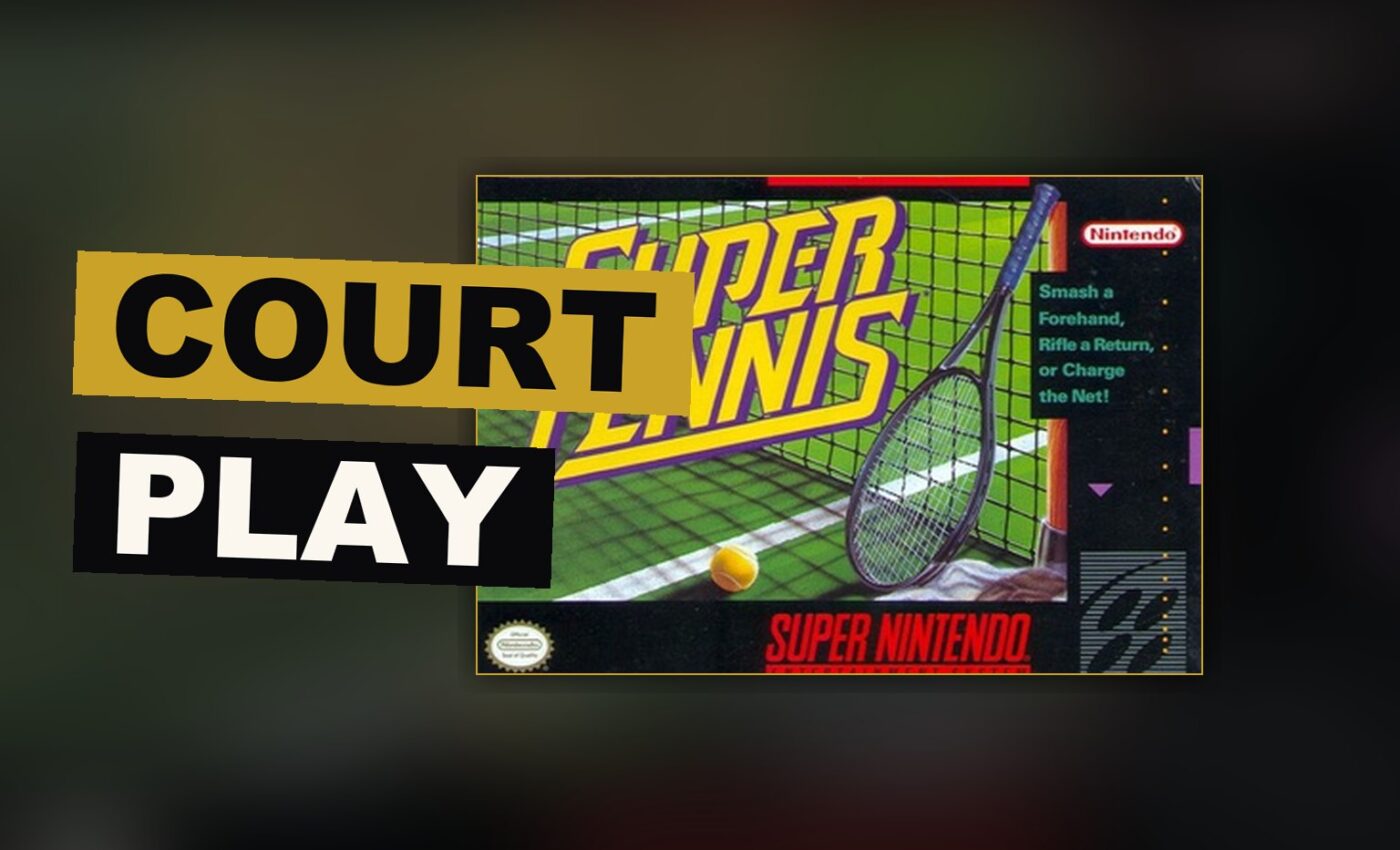
Super Tennis is a tennis game for the SNES, issued early in the console’s library, and it holds up as a solid game of tennis.
Key Facts Box
- Platform: SNES
- Genre: Sports (tennis simulation)
- Modes: Singles, doubles, tournament play
- Camera: Behind-the-player view that changes as the ball moves
Control And Feel
The controls are simple to learn but hard to master. Players move a small figure around the court with the direction buttons, timing shots with a single button for standard returns and a second for high, arching shots and soft, gentle ones. The game answers each press without delay, and the feel is fair throughout.
Ball physics carry real weight. Shots hit with a twist bend and drop; shots hit hard and low travel fast across the court. Players who put in time will feel the difference between a rushed return and a shot placed with care.
Presentation
The look is plain by today’s standard but clear for its time. Character sprites are small, yet the animation reads well: a shot to the side looks different from a high strike aimed toward the ground. The court surfaces vary in color and in how fast the ball moves off them, giving each setting a distinct feel.
Sound is limited but does its job. The sound of people watching rises and falls with the action, and the sound of the ball being struck is pleasing without excess.
Modes And Replay Value
Super Tennis offers singles and doubles play, along with a tournament mode that carries players through a set of matches. The doubles mode stands out, since teamwork with a computer or human partner adds a layer the singles game does not have.
Below is a simple list ranking the game’s modes by lasting appeal, based on variety and replay value:
- Doubles Tournament
- Singles Tournament
- Practice Doubles
- Practice Singles
Playing Against A Friend
Play with a second person is where the game is at its best. Matches against a friend show the depth of the shot system in a way the computer’s play cannot always match. Long points play out, players change plans as the match goes on, and the simple control scheme means neither person is fighting the game instead of the other player.
This is a game built for two people sharing a room and a pair of controllers.
The computer players show clear habits after a few matches. Once a player learns these habits, matches against the machine alone lose their edge fast. The lack of any way to build a custom player or add extra features also limits how far the tournament mode can carry a single player over time. There is no story, no change to any character over time, nothing beyond the court itself. For a sports title built only around tennis, this is not a weak point so much as a choice, but it does mean the game’s worth rests entirely on the strength of the play itself.
Super Tennis succeeds because the core game of tennis, reduced to motion of a different kind, timing, and choice of shot, is built with care. It does not try to be anything beyond a tennis game, and on that narrow aim, it delivers.