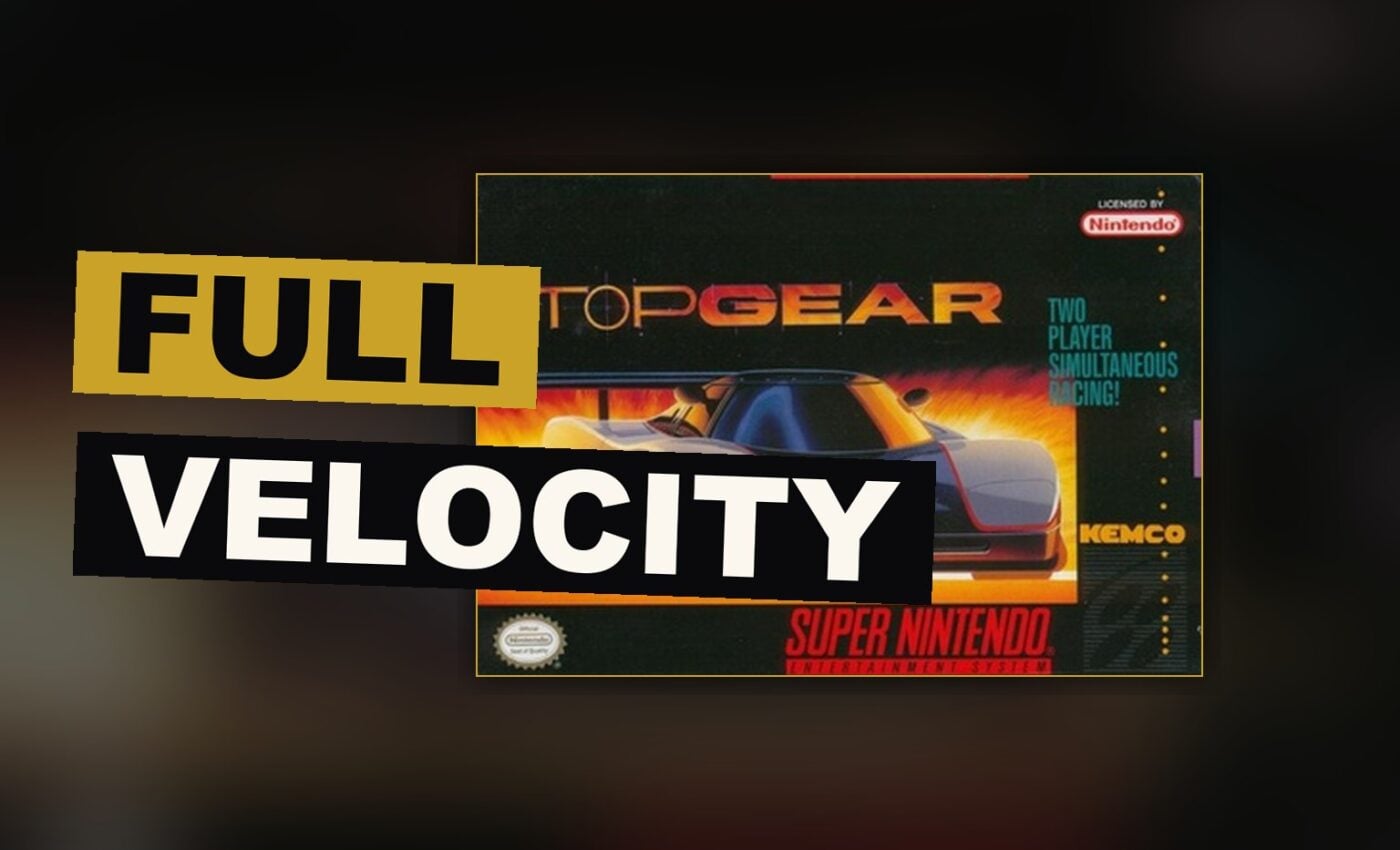
Top Gear landed on the Super Nintendo console as one of the first big racing games built for that machine, and it still gets talked about today for one reason above all: how fast it moves. The game puts players behind the wheel across a set of countries, racing against the clock and against rivals, with a simple goal — finish high enough to keep going.
The Question of Velocity
Top Gear moves at a pace that surprised players when it first appeared. Almost too quick, some said, since the frame rate struggles to keep up with the game’s own ambition once several cars gather close together on screen. Distant scenery often appears only once the player is nearly upon it, and the mode 7 scaling that makes the road rush toward the driver can grow indistinct at top velocity.
That said, the feeling of rapid motion is also the game’s strongest point. Few racers on the Super Nintendo at the time matched the pure sensation of motion Top Gear delivers, even if the picture quality sometimes gives way under the strain.
Music That Held Up
The soundtrack, written for the game’s arcade-style racing, has aged better than the picture quality. Players still name the music as one of the best parts of the work, and it is a large reason the game is remembered with affection outside pure gameplay terms.
The music shows the sense of motion the game is built around, even for players who otherwise find the game’s difficulty hard to bear.
Two Drivers, One Screen
The divided screen mode for two drivers stands out. Racing a friend directly, rather than just chasing a ghost clock, gives Top Gear a social side many rival racers of the time did not offer. It is simple, but it works, and it remains one of the parts most worth returning to.
Top Gear does not go easy on new players either. The gas management system, which forces drivers to balance velocity against gas stops, adds a layer of thought that some found clever and others found harsh. Strike another car too often, run out of gas, or fall too far behind, and the run ends. There is little room for error once the difficulty rises in later stages.
Here is how the game’s core modes compare against each other:
| Mode | Focus | Best For |
|---|---|---|
| Championship | Full tour through each country in turn, gas management, ranking pressure | Players who want the complete experience |
| Two Drivers | Divided screen racing against a friend | Players who want direct competition |
Each mode uses the same handling and the same tracks, but the pressure changes depending on which one a player picks. Championship mode asks for patience. Racing a friend asks for courage.
Where It Stands Now
Judged by today’s standards, Top Gear shows its age. The frame rate trouble is more visible on modern screens, and the gas system can feel like a burden rather than a clever twist. But judged as a work of its time, it holds up as an important early example of what Super Nintendo racing games could do.
The car selection, while limited by today’s standards, gave players enough variety to matter, and the arrangement built around separate countries gave the game a sense of scale that remained with players long after finishing it. Top Gear is not the smoothest racer from its time, but it is one of the most worth remembering.
Top Gear earns its reputation as an imperfect but important racer — quick, loud, at times hard to bear, and never dull.
The score: 7.6 of 10.