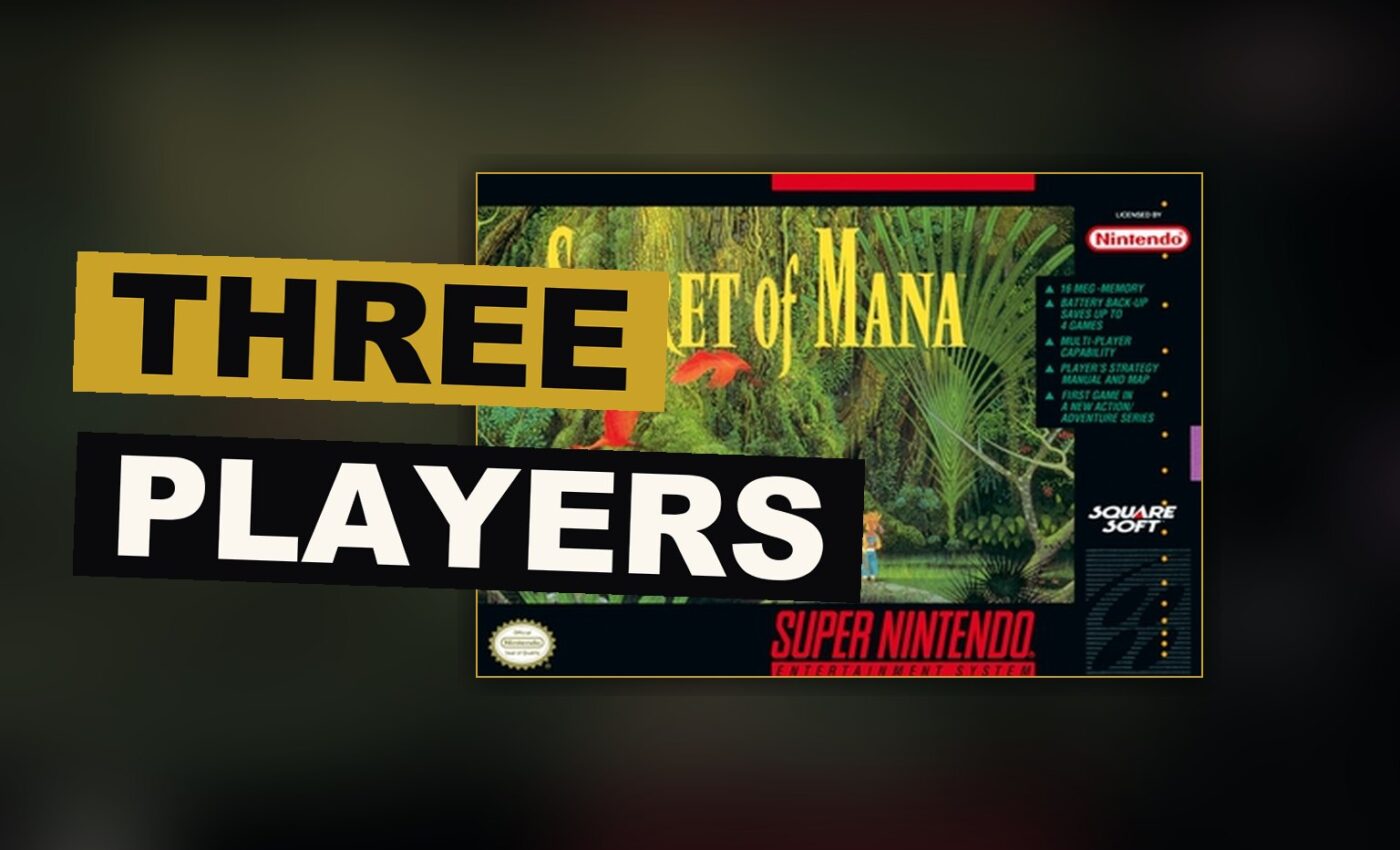
Secret of Mana puts three players on screen at once, and that simple choice still gives the game its charge. It came out for the Super Nintendo and lets a second and third person join the quest with extra controllers, cutting through menus and turns to keep the action live. That choice shapes everything else about the game, for better and for worse.
The Ring Menu
Fighting runs in real time, not turns. A player strikes with a sword, watches a meter fill, and waits for it to reach full power before an attack lands with real force. Magic and items sit inside a ring menu that pops up around the character, letting a player stop the action, pick a spell, and drop back into the fight without searching through screen after screen.
The system rewards patience. Striking before the meter fills wastes the hit, so players learn to watch the meter as closely as they watch the enemy.
Three Players, One Party
The cast is small: a hero, a girl, and a sprite, each with their own sword and magic gains. Bringing a friend or two into the game changes its feel, since attacks can be timed together and healing duties can be shared rather than carried by one person alone.
Not every part of this holds up well. The view and hit detection sometimes struggle to track three moving characters at once, and a player working without company can feel the pace grow heavy without a second set of hands to share the work.
| Feature | Alone | With Friends |
|---|---|---|
| Pace | Heavy, one character handling every task | Faster, tasks split across players |
| Timing of attacks | Player handles sword and magic by hand | Attacks and spells can be timed together |
| Ring menu | Stops the action for one player | Stops the action for the player who opens it |
The World and Its Music
The world is bright and full of change, moving from forest to desert to frozen ground without much trouble. The music carries much of the mood; songs change between quiet passages and urgent fighting themes without losing the feel of the game around them.
The tale is simple by design. A hero draws a sword from a stone, setting a great change of magical forces into motion, and the story mostly gives reason to move from one place to the next.
That simplicity works in the game’s favor. It never gets in the way of the action, and the pace between towns, dungeons, and boss fights stays quick.
Where It Struggles
The charge system, while pleasing at its best, can feel awkward against faster enemies. Some boss fights ask for exact timing that the controls do not always support well. Waits between screens are small but easy to see, minor breaks in an otherwise smooth game.
None of these faults take away from what the game gets right. The shared play, the quick fighting, and the strength of the music weigh far more than the rough edges.
Secret of Mana remains a high point for shared action games on the Super Nintendo. Its aim — three players sharing one quest in real time — was rare for its time, and the game largely delivers on it despite some awkward fighting moments and view trouble. It earns its place among the console’s best shared titles.