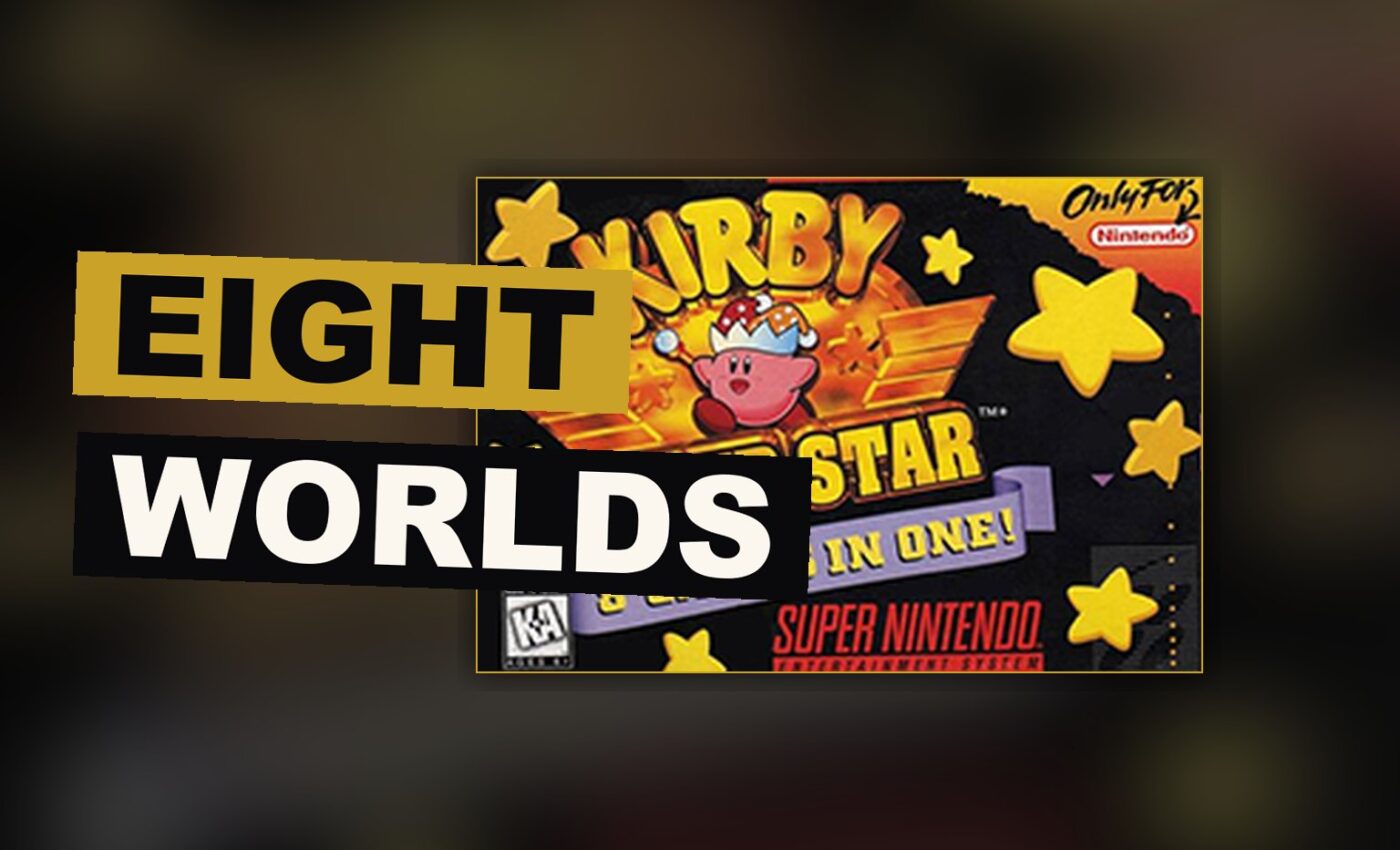
Kirby Super Star packs eight separate games on one Super Nintendo cartridge, and somehow none of them feel like filler.
A Cast of Small Games
The cartridge splits into distinct modes instead of one long quest. Spring Breeze tells the original Kirby adventure again, but shorter. Another mode sends Kirby across a longer adventure with several stages. The Great Cave Offensive turns the formula into a treasure hunt, rewarding players who take their time instead of rushing ahead.
Each mode has its own pace and length, so the game never settles into one rhythm for long. That variety is the strongest reason to play it today.
Copy Abilities and Helpers
The copy ability system returns and goes further than before. Kirby can still swallow enemies to take their powers, but now each ability comes with its own set of moves, reached through simple button combinations. Sword, Wheel, and Ice each play in their own way, and reward players willing to try things out.
The Helper system is the bigger change. Kirby can turn a copied ability into a second character, controlled by a friend using a second controller. This makes the game one of the few titles on the system built for two people to play together from start to finish.
Sound and Sight
The look of the game holds up well. Sprites are large, motion is smooth, and boss designs stay in the mind long after each fight. The music, written for the cartridge, includes themes that later appeared across the Kirby series for years afterward.
- Platform: Super Nintendo
- Content: eight distinct game modes on one cartridge
- Two players: the Helper system lets a friend join in
- Score: 8.1 of 10
How the Modes Compare
| Mode | Focus | Length |
|---|---|---|
| Spring Breeze | Classic Kirby adventure, made shorter | Short |
| Longer adventure mode | Adventure told across several stages | Medium |
| The Great Cave Offensive | Searching for treasure at an easy pace | Longer |
The format does come with a cost. Because each mode is short, none of them grow into the kind of long adventure some players expect from a single cartridge. Players looking for one continuous story may find the split into separate modes less satisfying than one long journey.
That same choice is also what makes the game what it is. Kirby Super Star trades length for variety, packing more ideas into one cartridge than most platformers of its time attempted. The Helper system alone gives it lasting worth as a game meant for two, and the mix of modes means there is always a different way to play.
Kirby Super Star earns its place as one of the more original platformers on the Super Nintendo. It scores 8.1 of 10.