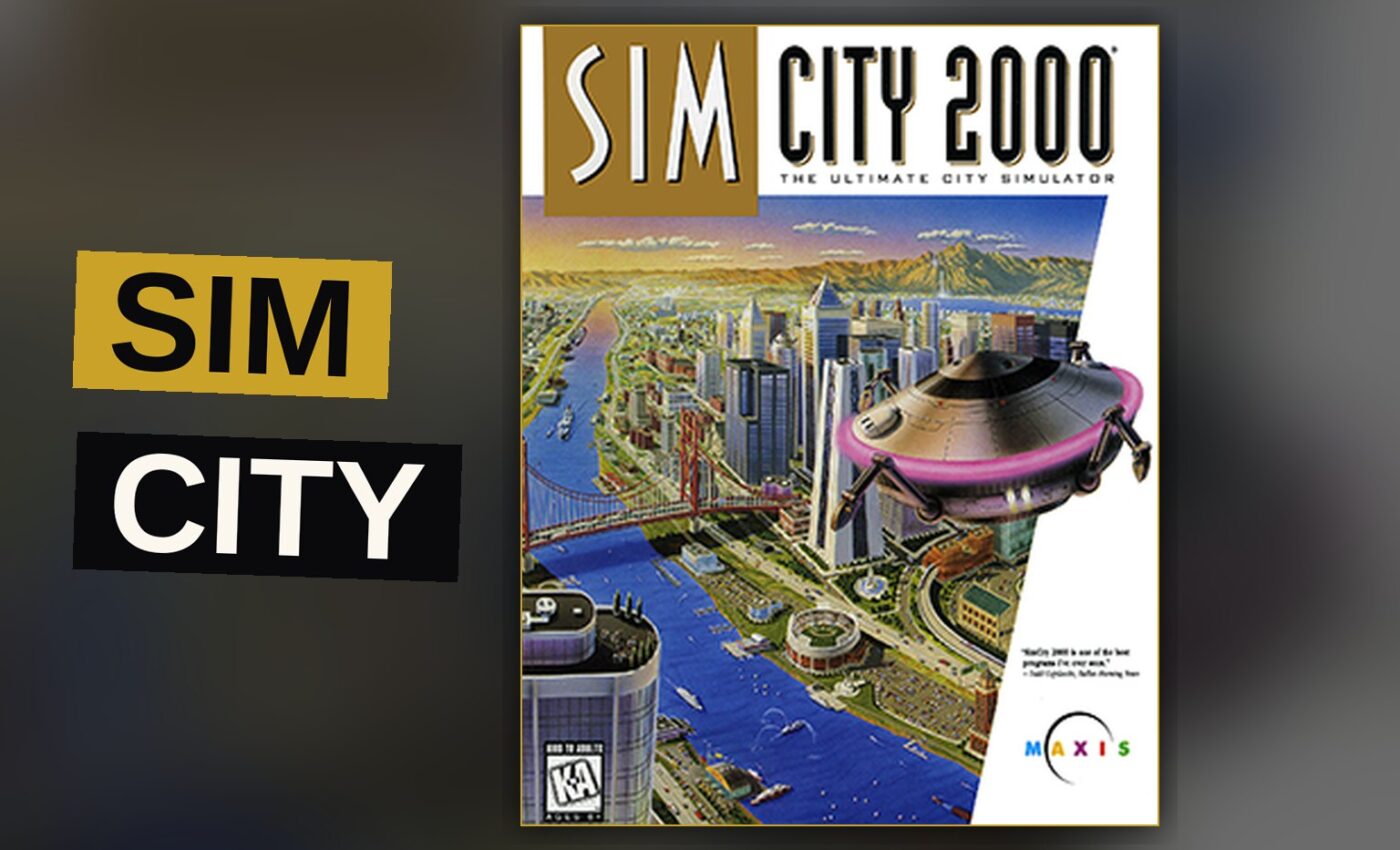
Sim City 2000 lands on Nintendo’s console as a city grows or falls apart under the player’s hand. The console version trims some depth from its sister version on computer, but the core simulation still holds up.
Building The City
Players lay down streets, power lines, and water lines, then watch small buildings rise and grow into high buildings if conditions are right. Fires break out. Crime rises slowly in neglected districts, and traffic backups form when streets are laid without a plan.
The game rewards patience. A city that looks good after twenty minutes can fall apart a few hours later if money goes out of balance or bad air is left alone. Every choice about districts, money owed to the city, and public services shows up later in the numbers.
Controls And Sound
Menus that once relied on a pointer and keyboard have been built again for a hand controller, and the change works better than expected. A pointer moves across the grid with the direction keys, and a circular menu system lets players pick tools without much trouble.
There is a small cost. Setting down individual squares takes a beat longer than it would with a pointer and keyboard, so players used to the computer version may notice the difference at first. Most learn the new method within an hour or two.
The console’s sound hardware gives the game a soundtrack that fits its tone: light, a little cheerful, never distracting. Music changes quietly as a city grows from a small town into a growing metropolis, which gives long play sessions a sense of progress even when the screen looks mostly the same.
The look is plain rather than fancy. Buildings are easy to read at a glance, and the variety of color makes it simple to tell a thriving business district from a poor, worn district close by. Sudden trouble, when it comes, is shown with just enough detail to feel like a threat without turning into noise on screen.
What Is Left Out, And What Lasts
Some features from the computer version do not make the move to this cartridge. There is less detail available here than on computer.
| Feature | Computer Version | Console Version |
|---|---|---|
| Control method | Pointer and keyboard | Hand controller, menus built again |
| Depth of money menus | Full detail | Made simple |
| Grid size choices | Larger | Smaller |
| Soundtrack | Standard | Made anew for the console’s sound hardware |
The changes make sense for a console audience, but they do cut some of the careful control that made the original city work so engaging. Serious players of the earlier version may miss the detailed money screens most.
A city builder lives or dies on how long it holds interest, and this version holds up well past the first few sessions. There is always more trouble to plan for, another neighborhood to build again, another budget crisis to manage.
The lack of a fixed ending helps rather than hurts. Players set their own goals, whether that means building the highest row of buildings possible or keeping crime near none across a wide plan.
Not every city lasts. That is part of the appeal.
Sim City 2000, brought over for a console audience, proves that a deep simulation can move from computer to cartridge, even with some features cut along the way. The hand controller system works better than expected, and the simulation itself remains as engaging as it was on computers.
Some depth is lost in the move, and serious players of the original will notice missing menus and a smaller limit on grid size. But for players coming to city building for the first time, or those without use of a computer able to run the original, this version delivers most of what made Sim City 2000 good.