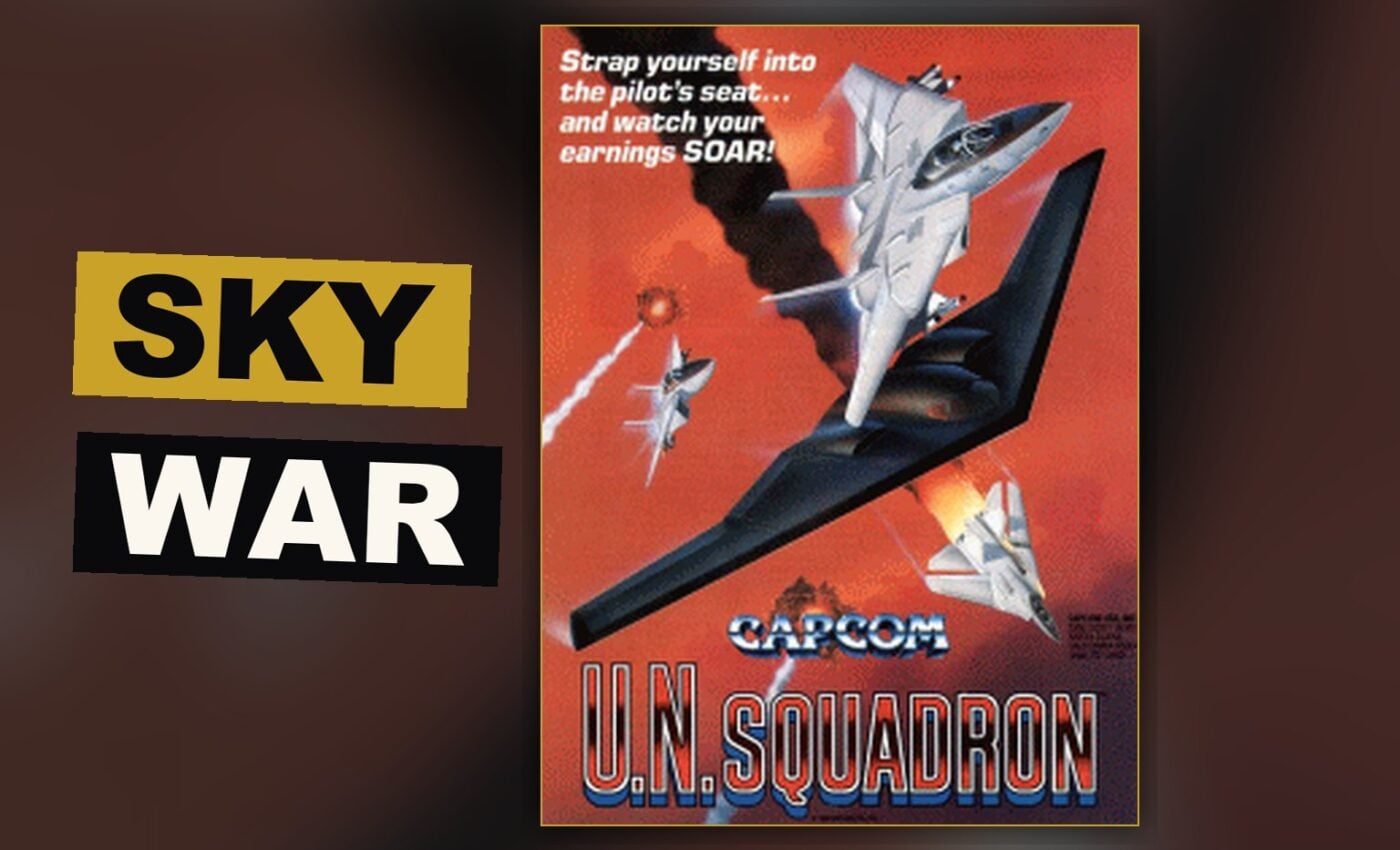
U.N. Squadron puts players in the seat of a fighter aircraft and asks them to clear one sky full of fire after another. It is a scrolling shooter built for arcade-style play, running on the Super Nintendo with a quick, loud and demanding pace. There is no wasted time here.
The Aircraft and Arms
Several aircraft are available across the game, each with its own feel and its own spaces for guns. Money earned from downed enemies buys upgrades between stages, so choices about which aircraft to fly and which guns to carry hold weight into the next fight. The system rewards planning as much as quick hands.
| Gun Type | Best Use | Weakness |
|---|---|---|
| Standard shot | General enemy waves | Weak against armored foes |
| Wide shot | Full screens | Shorter distance |
| Homing rounds | Enemies that move and turn quickly | Limited supply, costs more to fill again |
Money handling becomes its own kind of skill test. Spend too freely early on and later stages punish a weak setup; save too much and players go into hard fights without the strength they need.
The Fights Ahead
The game does not ease players in. Enemy tactics grow harder fast, and the fights against skilled pilots and large ships demand learning by repetition as much as skill. Deaths send players back with lessons learned rather than plain anger, since the upgrade system means a second try often plays out in a new way.
The broad shape of a run follows a rough rise in pressure rather than a fixed script of set battles.
| Part of the Game | General Feel |
|---|---|
| Early | Lighter waves, room to learn the controls |
| Middle | Greater enemy numbers, harder aircraft to face |
| Late | Sustained pressure, little room for mistakes |
Each part of the game brings a new way of attacking rather than simply repeating old enemies, which keeps the fighting fresh even as the difficulty grows.
The console keeps the game’s fire and sprite work clear, and the graphics stay easy to read even when the screen fills with fire. Music matches the pace, driving forward during big fights without drowning out the sound effects players need to hear to stay alive. Nothing here breaks new ground in its graphics, but nothing holds the game back either.
The core order, fly, fire, earn, upgrade, repeat, stays satisfying because the game trusts players to get better rather than handing out easy paths. That trust pays off, and it is a large part of why the game still feels worth returning to.
U.N. Squadron holds up as one of the better shooters on the Super Nintendo, built on tight controls, a rewarding upgrade system, and stage design that keeps pushing players to improve. It asks for patience and accuracy in equal measure, and it gives back a real sense of progress for both.