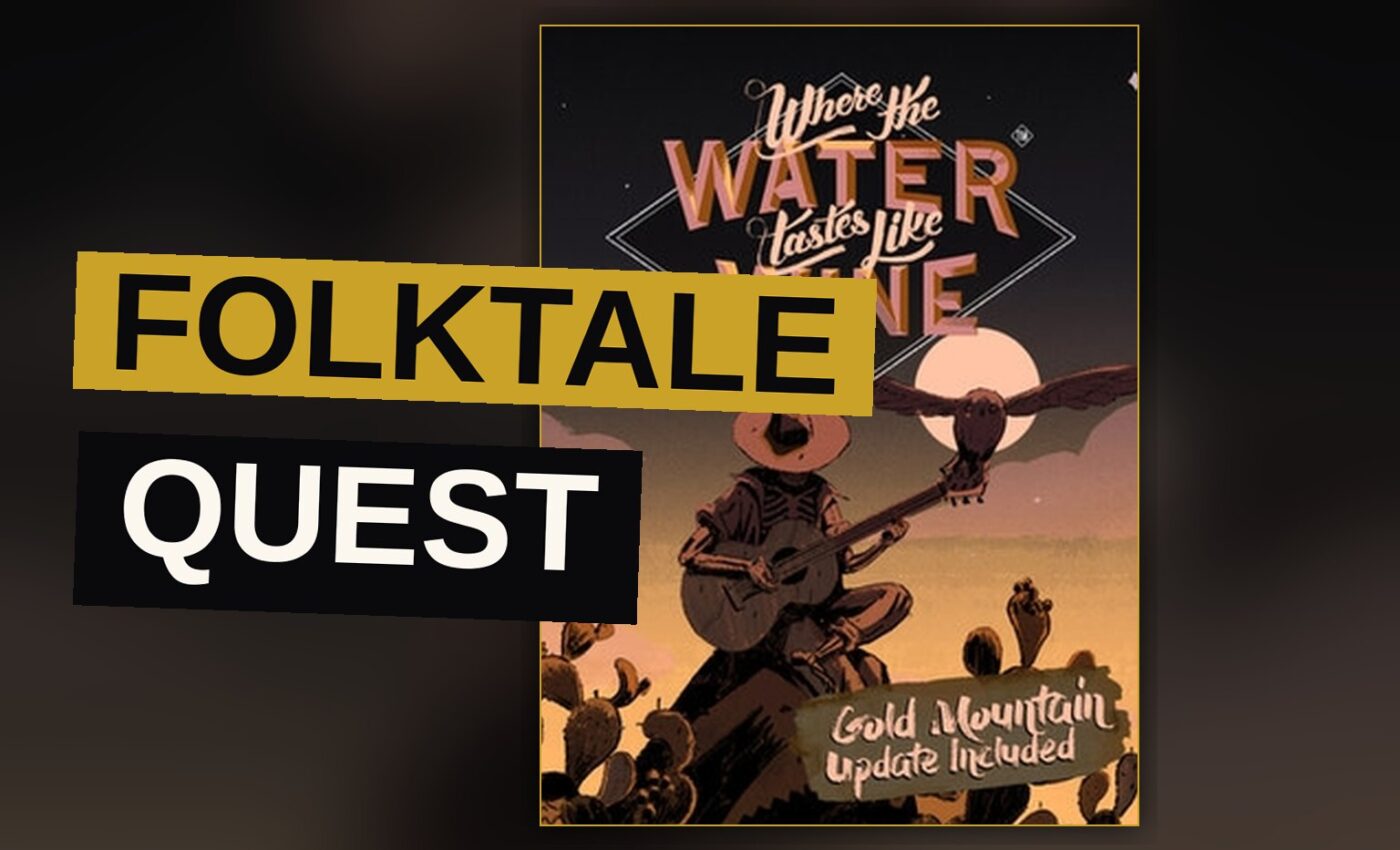
Where the Water Tastes Like Wine asks players to wander America, talk to strangers, and gather folktales. That pitch sounds simple. It is not. The game, available on PS4, Linux, PC and Mac, sends its characters across a Depression-era United States filled with tall tales, ghost stories and folk legends. It wants to teach history through fiction. Sometimes it succeeds. Mostly it frustrates.
Trailer, via Good Shepherd Entertainment.
The World and Its Walk
The game drops players into a map of the United States during the Great Depression. Cities, towns and open roads fill the world. Players walk, drive and ride trains between locations, meeting people along the way. Each character carries a story, and finding them out becomes the core loop. The map itself is the stage, and the game trusts players to explore it freely.
“Where the Water Tastes Like Wine”
That title comes from the game’s own lore, a tale about a man who drinks from a spring and gains strange knowledge. It fits a game built around oral tradition and shared memory. The game leans on this idea heavily, tying its quests and side conversations back to the idea of stories passed down.
The People Players Meet
Every town holds a few characters, each with a tale to share. Some are kind. Some are cruel. Some are indifferent. The game asks players to listen, remember and repeat what they hear. This system works well when it is focused. It falls apart when it asks players to recall details across multiple visits to the same town.
The writing is sharp in places. Characters speak with distinct voices, and the game’s dialogue captures the rhythms of Depression-era speech. In the best scenes, the game feels alive. In the worst, it feels like a list of facts dressed up as conversation.
The Loop That Drags
The core loop of walking, talking and collecting tales repeats often. It can be rewarding. It can also be tedious. Finding the right person to talk to takes patience, and the game does not always make clear which path leads where. Players will spend minutes searching for a single character, only to find they were in the wrong town entirely.
The game’s difficulty rises quickly. Some tasks ask for specific items or knowledge that are never explained clearly. Players may wander the map for hours before realizing they missed a step somewhere earlier. The game rarely points this out directly, leaving players to guess where they went wrong.
Folktales and Their Weight
The game’s central mechanic involves gathering folktales told by the people met along the way. These stories reward attention. They explain the world, the people in it and the legends that shaped both. Some are funny. Some are sad. Some are genuinely unsettling. The game handles these stories with care, letting them sit quietly alongside the main quest.
The folktales also tie into the game’s larger themes. Stories are treated as currency, memory and warning all at once. A player who pays attention learns more than one who rushes through. The game rewards curiosity, even when the systems around it do not.
Sound and Sight
The art style leans on hand-drawn backgrounds and pixel-art characters. It is pleasant to look at, though not striking enough to carry the game on its own. The music matches the period, mixing folk instruments with quiet piano pieces. Together, the visuals and sound create a mood that fits the Depression setting well.
“Where the Water Tastes Like Wine”
The game’s presentation works best in its quieter moments. A lone train crossing a bridge at night, a campfire lit by a stranger sharing a story — these are the images that stay with players. The busier scenes, full of movement and action, feel less memorable.
Where It Falls Short
The pacing suffers from repetition. Side quests often ask players to return to a location they have already visited, sometimes several times. The game does not mark completed tasks clearly, so players may walk the same road twice without knowing it. This is a small complaint, but it adds up over dozens of hours.
The game also struggles with accessibility. Menus are dense, and the text is small on some platforms. Players with vision problems may find themselves straining to read descriptions. The game does not offer many options to fix this, which limits its appeal for a wider audience.
Final Word
Where the Water Tastes Like Wine is a game with a strong idea and a weak execution. Its ambition shows in every corner, from the map design to the writing. But the systems that should support that ambition fall short. The loop grows dull, the puzzles grow opaque, and the presentation fails to hold attention when the content stalls.
The game deserves credit for trying something different. Few games attempt to teach history through storytelling in this way. Fewer succeed as fully as this one does. Where the Water Tastes Like Wine is a game worth playing for its ideas, even when those ideas are not carried out perfectly.