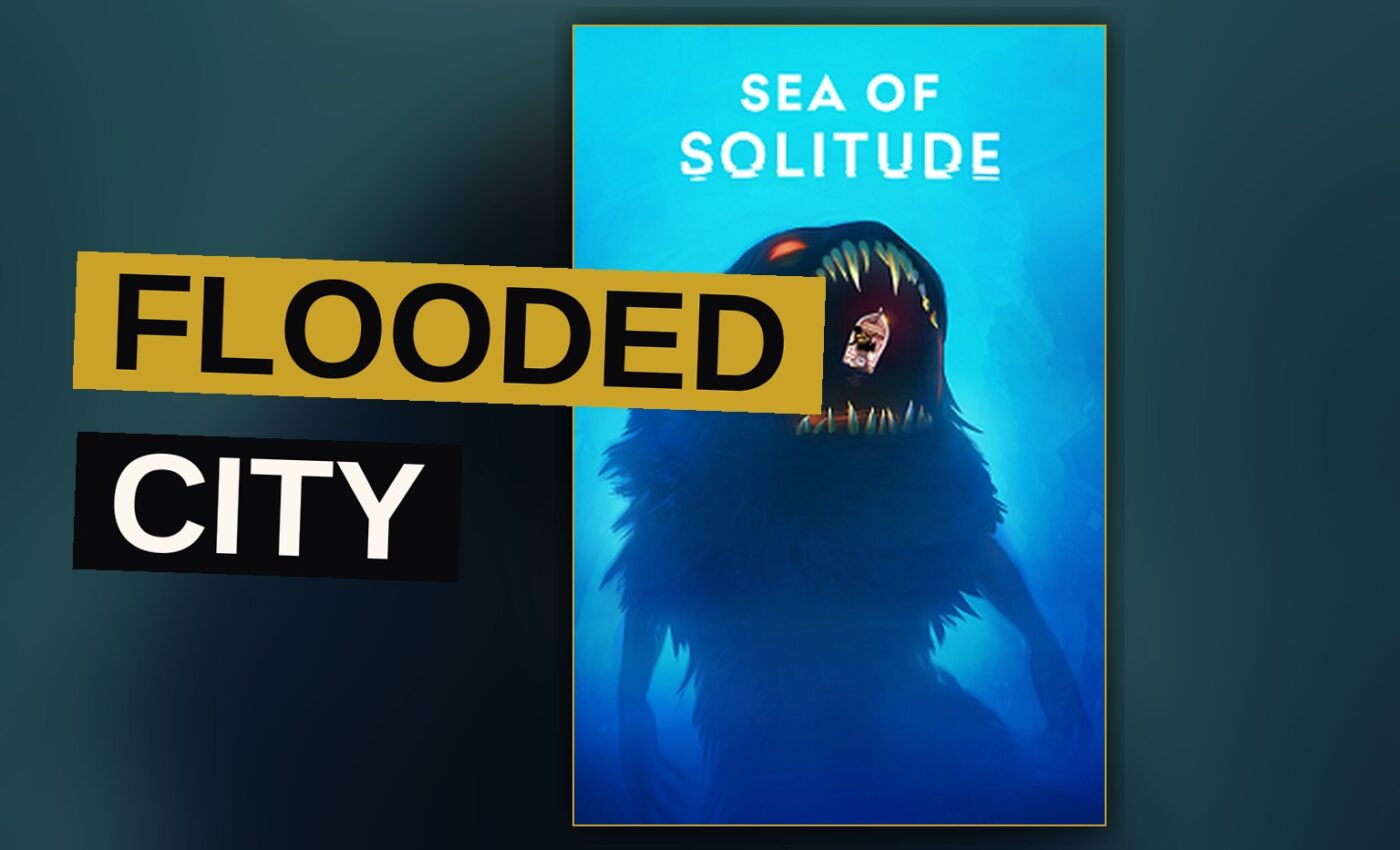
Sea of Solitude asks players to walk through a flooded city as a girl named Kay, and let her loneliness become a monster that rises beside her whenever she feels too much. The game wants to teach you something about isolation, and it mostly succeeds, even when its mechanics struggle to keep pace with its ideas.
Trailer, via Electronic Arts.
Kay and the Monster
Kay’s loneliness is the engine of Sea of Solitude. She carries it everywhere she goes, and the game makes sure you see it: the city around her is half-submerged, the buildings are cracked, and the people who once lived there are gone. Her monster grows larger when she feels small, and shrinks back when she finds connection. That loop is simple, but it is also the game’s clearest strength.
The Walk Through the City
The world is built with care. The flooded streets, the empty houses, the ruined bridges — each area reads as a place that once held life, now emptied out. Exploring it on foot, following Kay’s path through the city, gives the game room to breathe. It is quiet, and it works.
The Monster Mechanics
Where Sea of Solitude stumbles is in the systems built around Kay’s monster. Players can ride it across water, push it into enemies, and grow it larger to reach new heights. None of it feels deep. The combat is thin, the puzzles are slight, and the growth system rarely gives players a reason to return to old areas. The game is more interested in mood than in challenge, and that choice shows.
Sound and Look
The music swells at key moments, and the art direction leans on color to mark shifts in mood. Kay’s movements are smooth, and the city’s drowned look stays consistent from start to finish. It is a handsome game, even when it is not doing much else.
The Story’s Pace
The narrative moves slowly. Kay meets other characters, hears their stories, and watches the city shift around her. Some of these scenes land. Others drag. The pacing is uneven, and the game’s middle stretch is where it loses focus.
What Works Best
Three elements stand out:
- The visual design of the flooded city.
- The way Kay’s monster responds to her feelings.
- The quieter moments of character interaction.
These three things carry the game when the systems beneath them falter.
What Needs Work
Two issues keep Sea of Solitude from greatness:
- The combat and growth systems feel shallow.
- The pacing drags in the middle of the story.
Neither problem breaks the game, but both keep it from being as strong as its premise suggests it could be.
“Loneliness is the monster we all carry.”
That line sums up what Sea of Solitude tries to do. It does not always do it well, but it does try.
Final Score
Sea of Solitude is a game that understands its subject better than it understands its own systems. The flooded city, the monster that grows from loneliness, and the quiet moments between Kay and those around her — these are the parts that work. The combat, the puzzles, and the pacing are weaker. Taken together, the game lands somewhere in the middle.
Get the Notebook.
The day's best stories and every fresh verdict, in plain English, in your inbox by seven. One email a day, no more.